School of Health Sciences, University of Ballarat, Mt Helen, Australia.
PLoS One. 2013 Jul 31;8(7):e69377. doi: 10.1371/journal.pone.0069377. Print 2013.
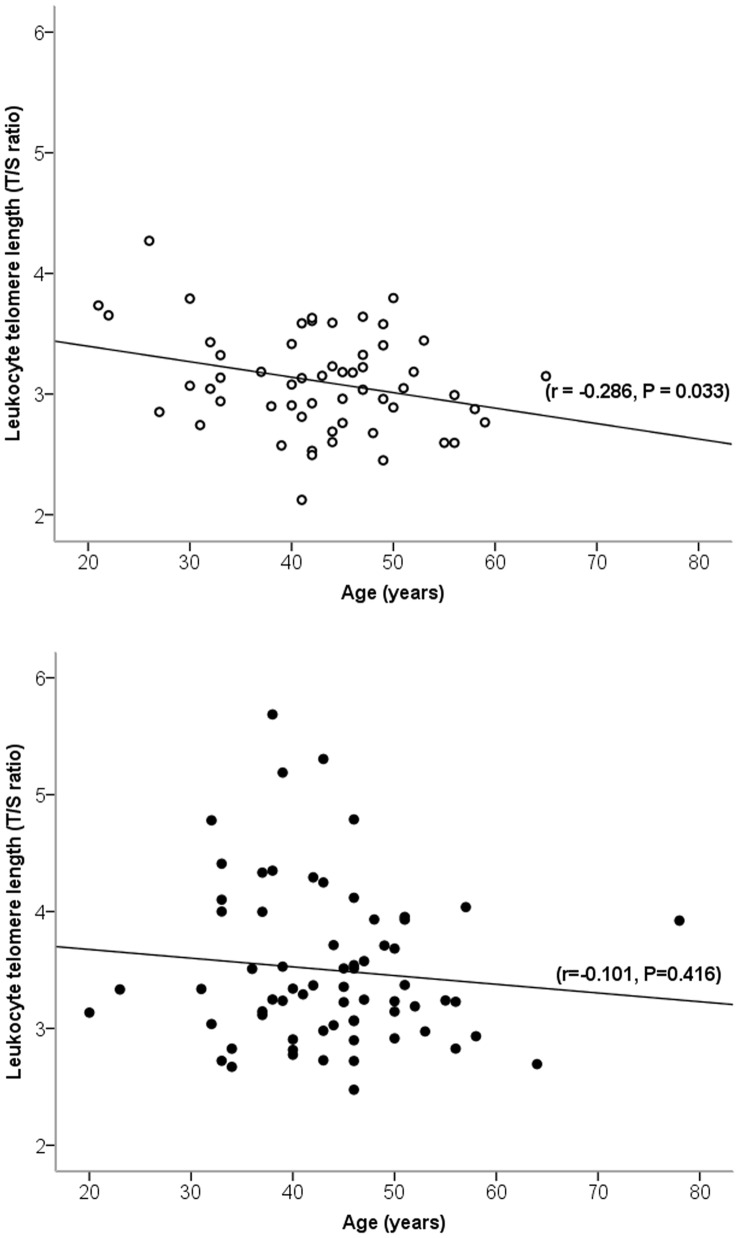
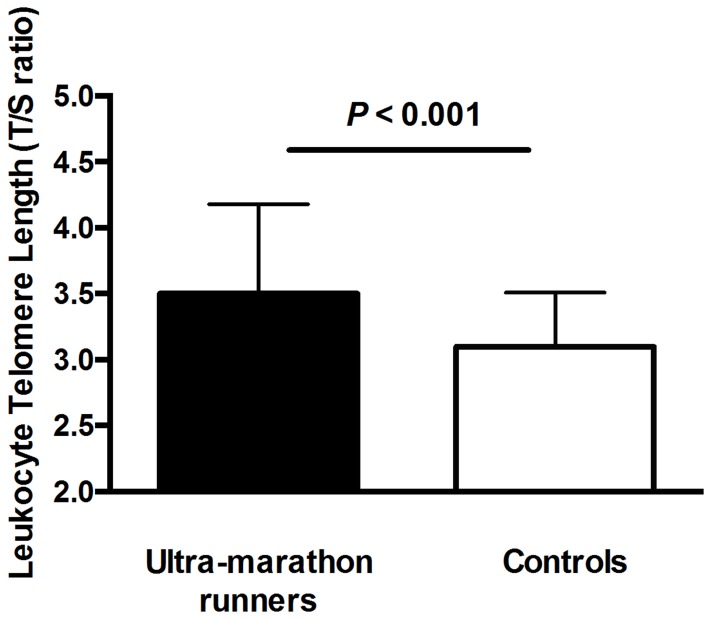
Telomere length is recognized as a marker of biological age, and shorter mean leukocyte telomere length is associated with increased risk of cardiovascular disease. It is unclear whether repeated exposure to ultra-endurance aerobic exercise is beneficial or detrimental in the long-term and whether it attenuates biological aging. We quantified 67 ultra-marathon runners' and 56 apparently healthy males' leukocyte telomere length (T/S ratio) using real-time quantitative PCR. The ultra-marathon runners had 11% longer telomeres (T/S ratio) than controls (ultra-marathon runners: T/S ratio = 3.5±0.68, controls: T/S ratio = 3.1±0.41; β = 0.40, SE = 0.10, P = 1.4×10(-4)) in age-adjusted analysis. The difference remained statistically significant after adjustment for cardiovascular risk factors (P = 2.2×10(-4)). The magnitude of this association translates into 16.2±0.26 years difference in biological age and approximately 324-648bp difference in leukocyte telomere length between ultra-marathon runners and healthy controls. Neither traditional cardiovascular risk factors nor markers of inflammation/adhesion molecules explained the difference in leukocyte telomere length between ultra-marathon runners and controls. Taken together these data suggest that regular engagement in ultra-endurance aerobic exercise attenuates cellular aging.
端粒长度被认为是生物年龄的标志物,白细胞端粒长度较短与心血管疾病风险增加有关。目前尚不清楚重复进行超耐力有氧运动在长期内是有益还是有害,以及它是否能减缓生物衰老。我们使用实时定量 PCR 定量测定了 67 名超长距离跑步者和 56 名健康男性的白细胞端粒长度(T/S 比值)。与对照组相比,超长距离跑步者的端粒长 11%(T/S 比值)(超长距离跑步者:T/S 比值=3.5±0.68,对照组:T/S 比值=3.1±0.41;β=0.40,SE=0.10,P=1.4×10(-4)),在年龄调整分析中。在调整心血管危险因素后,这种差异仍然具有统计学意义(P=2.2×10(-4))。这种关联的幅度意味着超长距离跑步者和健康对照组之间的生物年龄差异为 16.2±0.26 年,白细胞端粒长度差异约为 324-648bp。传统心血管危险因素和炎症/黏附分子标志物均不能解释超长距离跑步者和对照组之间白细胞端粒长度的差异。综合这些数据表明,定期进行超耐力有氧运动可减缓细胞衰老。