Department of Biochemistry and Molecular Biology, Medical University of South Carolina, Charleston, South Carolina, USA.
PLoS One. 2013 Jul 30;8(7):e70062. doi: 10.1371/journal.pone.0070062. Print 2013.
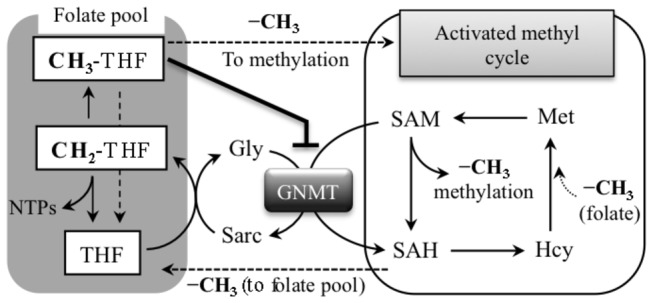
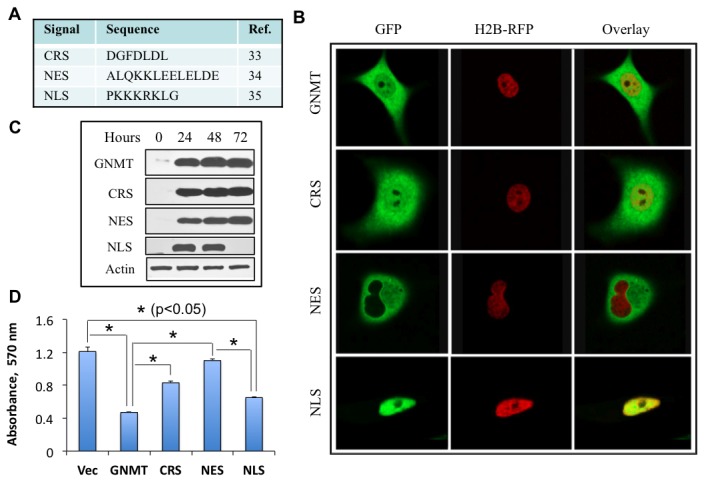
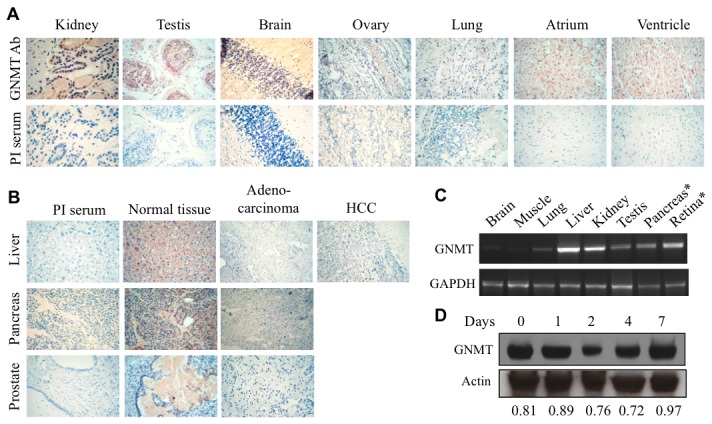
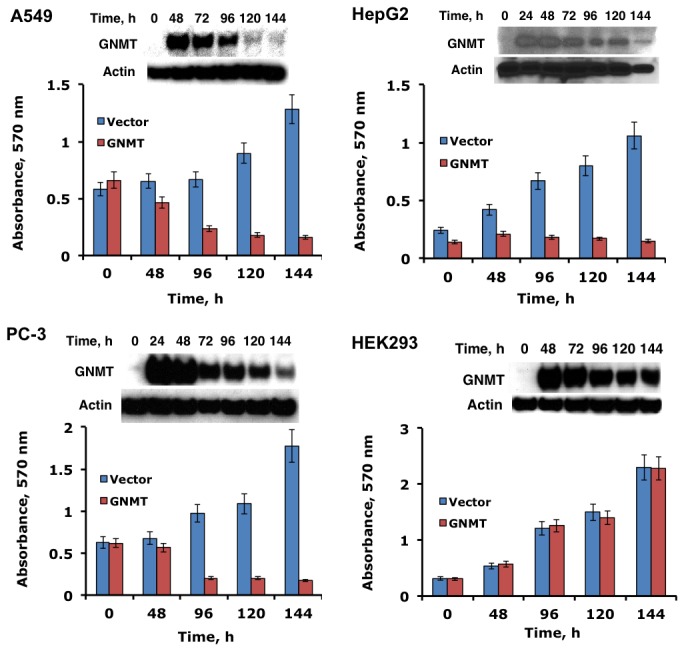
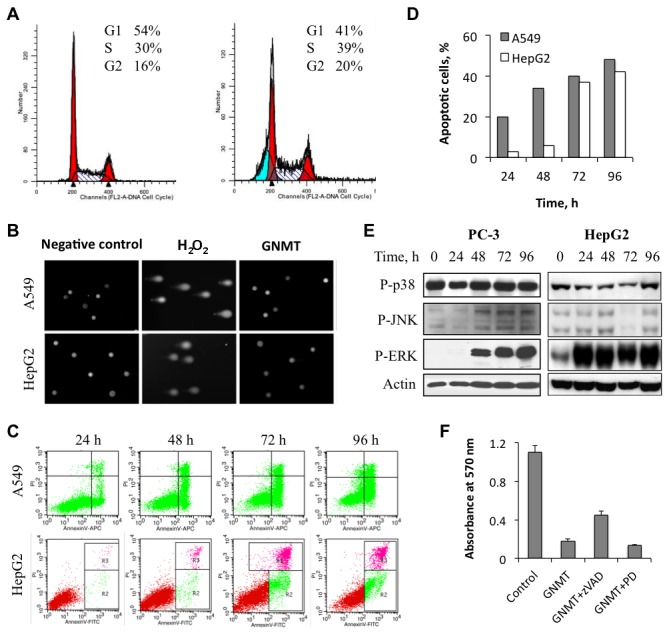
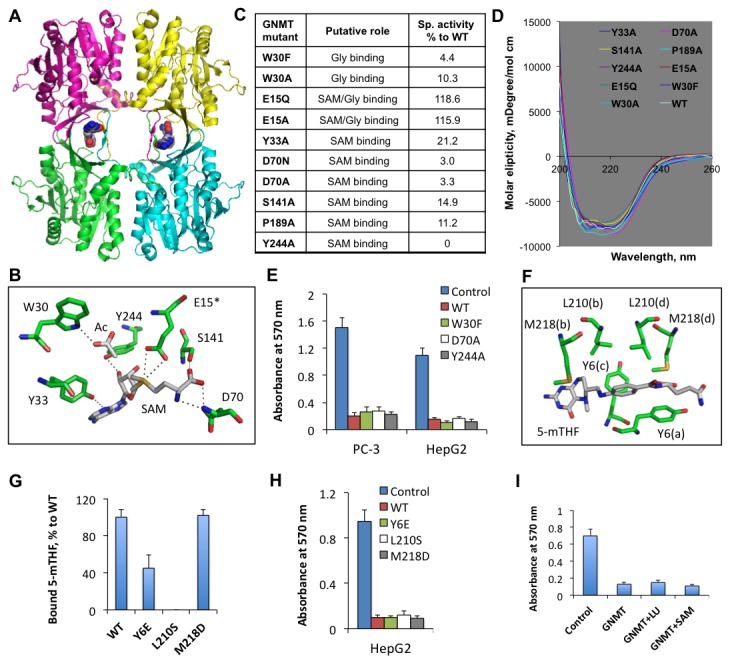
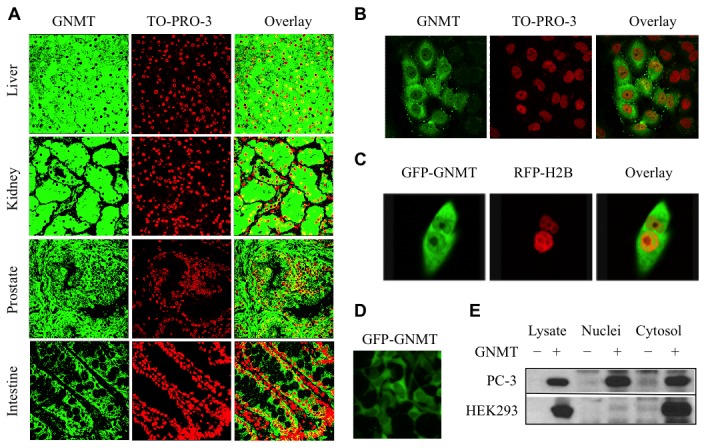
Glycine N-methyltransferase (GNMT), an abundant cytosolic enzyme, catalyzes the transfer of a methyl group from S-adenosylmethionine (SAM) to glycine generating S-adenosylhomocysteine and sarcosine (N-methylglycine). This reaction is regulated by 5-methyltetrahydrofolate, which inhibits the enzyme catalysis. In the present study, we observed that GNMT is strongly down regulated in human cancers and is undetectable in cancer cell lines while the transient expression of the protein in cancer cells induces apoptosis and results in the activation of ERK1/2 as an early pro-survival response. The antiproliferative effect of GNMT can be partially reversed by treatment with the pan-caspase inhibitor zVAD-fmk but not by supplementation with high folate or SAM. GNMT exerts the suppressor effect primarily in cells originated from malignant tumors: transformed cell line of non-cancer origin, HEK293, was insensitive to GNMT. Of note, high levels of GNMT, detected in regenerating liver and in NIH3T3 mouse fibroblasts, do not produce cytotoxic effects. Importantly, GNMT, a predominantly cytoplasmic protein, was translocated into nuclei upon transfection of cancer cells. The presence of GNMT in the nuclei was also observed in normal human tissues by immunohistochemical staining. We further demonstrated that the induction of apoptosis is associated with the GNMT nuclear localization but is independent of its catalytic activity or folate binding. GNMT targeted to nuclei, through the fusion with nuclear localization signal, still exerts strong antiproliferative effects while its restriction to cytoplasm, through the fusion with nuclear export signal, prevents these effects (in each case the protein was excluded from cytosol or nuclei, respectively). Overall, our study indicates that GNMT has a secondary function, as a regulator of cellular proliferation, which is independent of its catalytic role.
甘氨酸 N-甲基转移酶(GNMT)是一种丰富的细胞质酶,催化 S-腺苷甲硫氨酸(SAM)的甲基转移到甘氨酸上,生成 S-腺苷同型半胱氨酸和肌氨酸(N-甲基甘氨酸)。该反应受 5-甲基四氢叶酸的调节,后者抑制酶催化。在本研究中,我们观察到 GNMT 在人类癌症中强烈下调,在癌细胞系中无法检测到,而在癌细胞中瞬时表达该蛋白会诱导细胞凋亡,并导致 ERK1/2 的激活作为早期的生存促进反应。GNMT 的抗增殖作用可部分被泛半胱天冬酶抑制剂 zVAD-fmk 逆转,但不能通过补充高叶酸或 SAM 逆转。GNMT 主要在来源于恶性肿瘤的细胞中发挥抑制作用:非癌症来源的转化细胞系 HEK293 对 GNMT 不敏感。值得注意的是,在再生肝脏和 NIH3T3 小鼠成纤维细胞中检测到的高水平 GNMT 不会产生细胞毒性作用。重要的是,GNMT,一种主要存在于细胞质中的蛋白质,在转染癌细胞时被转移到细胞核中。免疫组织化学染色也在正常人类组织中观察到 GNMT 的存在。我们进一步证明,凋亡的诱导与 GNMT 的核定位有关,但与它的催化活性或叶酸结合无关。通过与核定位信号融合,GNMT 靶向细胞核,仍然发挥强烈的抗增殖作用,而通过与核输出信号融合,将其限制在细胞质中,则阻止这些作用(在每种情况下,蛋白质分别被排除在细胞质或细胞核之外)。总体而言,我们的研究表明,GNMT 具有作为细胞增殖调节剂的次要功能,与它的催化作用无关。