Brain & Mind Research Institute, The University of Sydney, Sydney, New South Wales, Australia.
PLoS One. 2013 Jul 30;8(7):e70468. doi: 10.1371/journal.pone.0070468. Print 2013.
Polyvagal theory emphasizes that autonomic nervous system functioning plays a key role in social behavior and emotion. The theory predicts that psychiatric disorders of social dysfunction are associated with reduced heart rate variability, an index of autonomic control, as well as social inhibition and avoidance. The purpose of this study was to examine whether heart rate variability was reduced in treatment-seeking patients diagnosed with social anxiety disorder, a disorder characterized by social fear and avoidance.
Social anxiety patients (n = 53) were recruited prior to receiving psychological therapy. Healthy volunteers were recruited through the University of Sydney and the general community and were matched by gender and age (n = 53). Heart rate variability was assessed during a five-minute recording at rest, with participants completing a range of self-report clinical symptom measures.
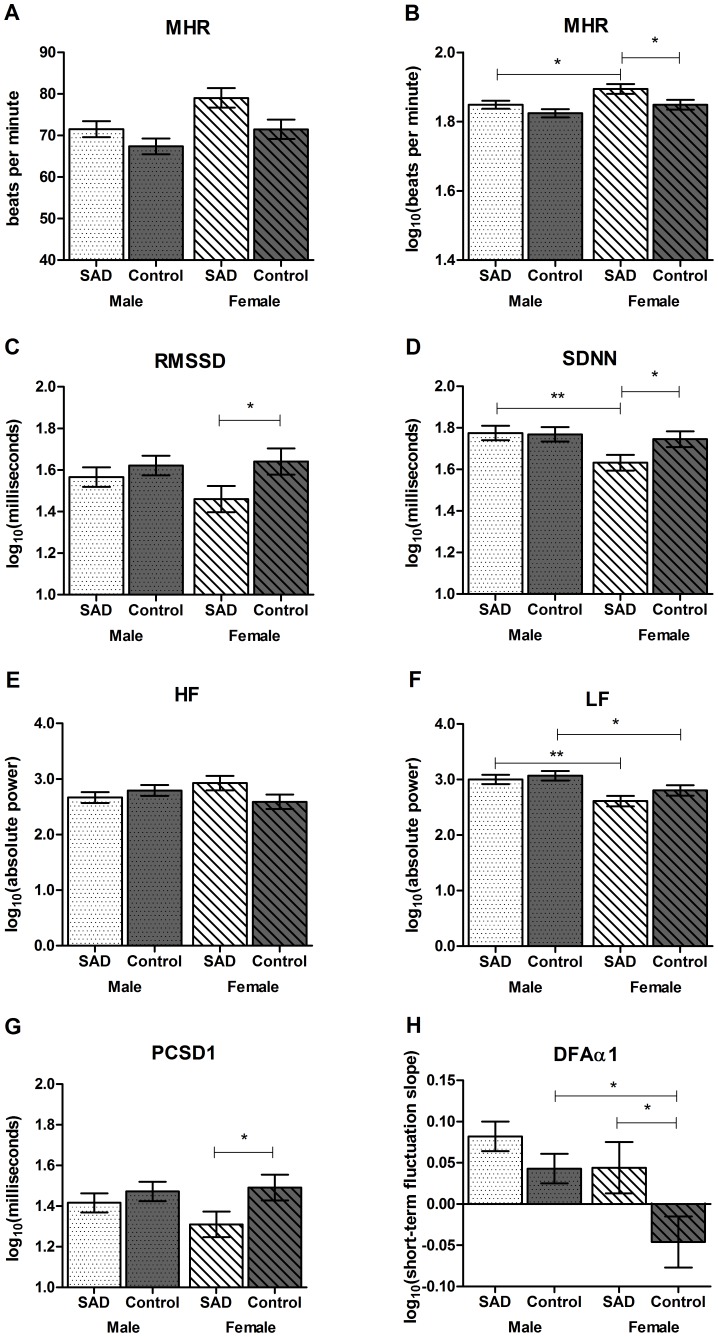
Compared to controls, participants with social anxiety exhibited significant reductions across a number of heart rate variability measures. Reductions in heart rate variability were observed in females with social anxiety, compared to female controls, and in patients taking psychotropic medication compared to non-medicated patients. Finally, within the clinical group, we observed significant associations between reduced heart rate variability and increased social interaction anxiety, psychological distress, and harmful alcohol use.
The results of this study confirm that social anxiety disorder is associated with reduced heart rate variability. Resting state heart rate variability may therefore be considered a marker for social approach-related motivation and capacity for social engagement. Additionally, heart rate variability may provide a useful biomarker to explain underlying difficulties with social approach, impaired stress regulation, and behavioral inhibition, especially in disorders associated with significant impairments in these domains.
自主神经系统的功能在社会行为和情绪中起着关键作用,多感觉理论强调了这一点。该理论预测,社交功能障碍的精神障碍与心率变异性降低有关,心率变异性是自主控制的一个指标,以及社交抑制和回避。本研究的目的是检验在寻求治疗的社交焦虑症患者中,心率变异性是否降低,社交焦虑症的特征是社交恐惧和回避。
在接受心理治疗之前,招募了社交焦虑症患者(n=53)。健康志愿者通过悉尼大学和普通社区招募,并按性别和年龄与患者匹配(n=53)。在休息时进行五分钟的记录来评估心率变异性,参与者完成了一系列自我报告的临床症状测量。
与对照组相比,社交焦虑症患者在许多心率变异性指标上都有显著降低。与女性对照组相比,女性社交焦虑症患者的心率变异性降低,与非用药患者相比,服用精神药物的患者的心率变异性降低。最后,在临床组中,我们观察到心率变异性降低与社交互动焦虑、心理困扰和有害酒精使用增加之间存在显著关联。
本研究的结果证实,社交焦虑症与心率变异性降低有关。因此,静息状态下的心率变异性可以被认为是与社交接近相关的动机和社交参与能力的标志物。此外,心率变异性可能为解释社交接近、压力调节受损和行为抑制方面的潜在困难提供有用的生物标志物,特别是在与这些领域严重受损相关的疾病中。