Department of Immunology of Infectious Diseases, Ludwik Hirszfeld Institute of Immunology and Experimental Therapy, Polish Academy of Sciences, Wroclaw, Poland.
PLoS One. 2013 Aug 5;8(8):e70539. doi: 10.1371/journal.pone.0070539. Print 2013.
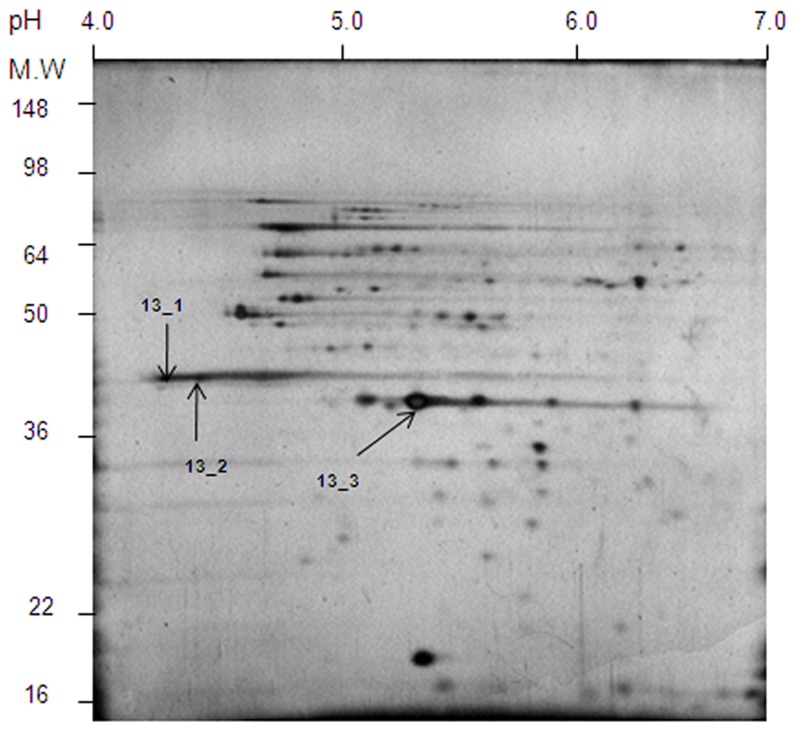
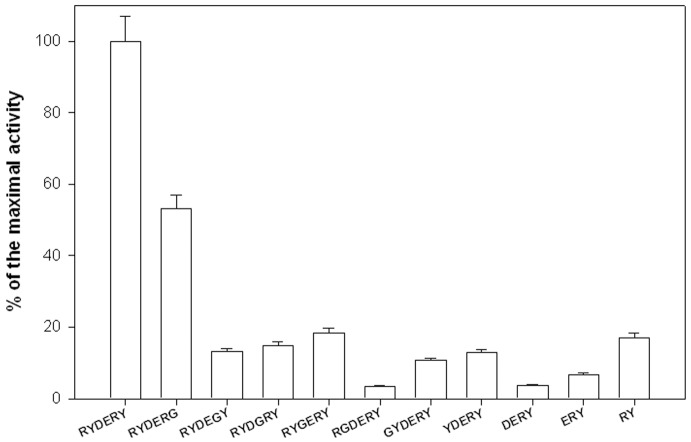
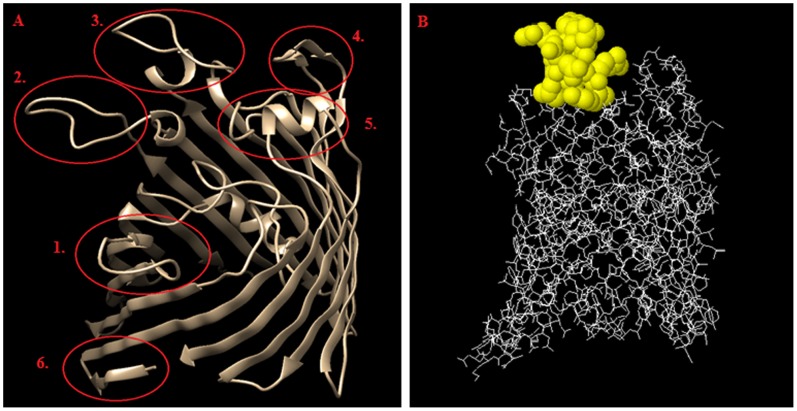
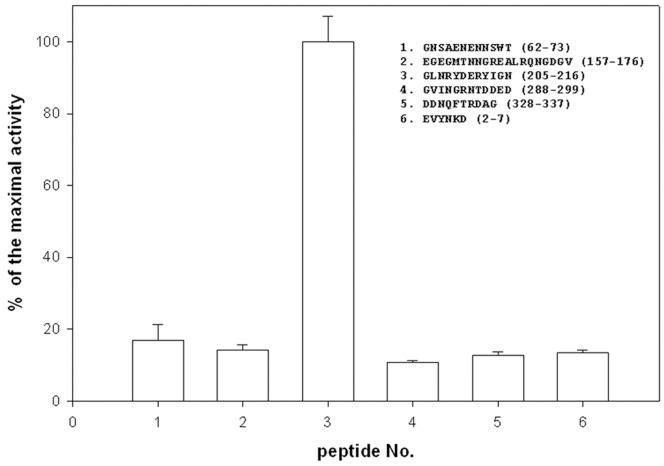
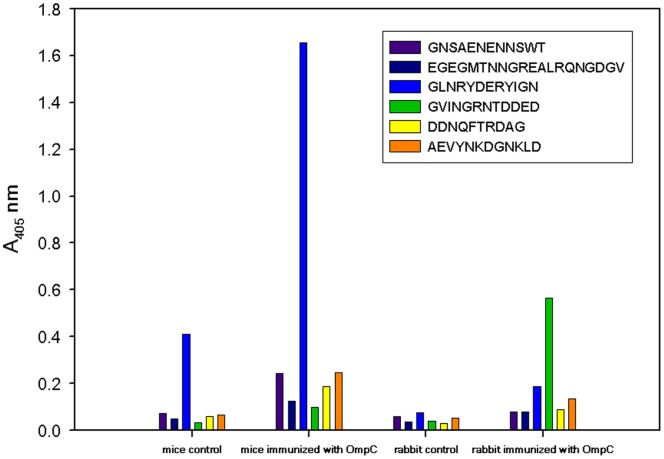
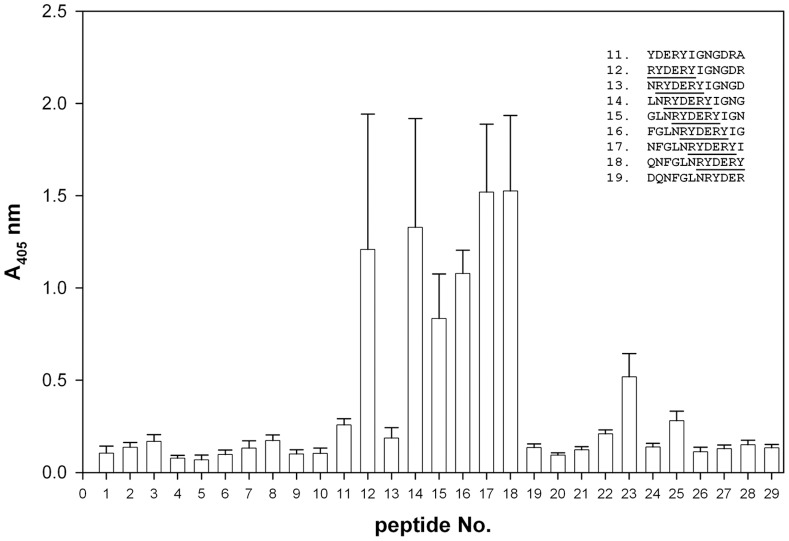
Shigella flexneri 3a is one of the five major strains of the Shigella genus responsible for dysentery, especially among children, in regions of high poverty and poor sanitation. The outer membrane proteins (OMP) of this bacterium elicit immunological responses and are considered a prime target for vaccine development. When injected into mice they elicit a protective immunological response against a lethal dose of the pathogen. The OMPs from S. flexneri 3a were isolated and resolved by two-dimension-SDS-PAGE. Two 38-kDa spots were of particular interest since in our earlier studies OMPs of such molecular mass were found to interact with umbilical cord sera. These two spots were identified as OmpC by ESI-MS/MS spectrometry. By DNA sequencing, the ompC gene from S. flexneri 3a was identical to ompC from S. flexneri 2a [Gene Bank: 24113600]. A 3D model of OmpC was built and used to predict B-cell type (discontinuous) antigenic epitopes. Six epitopes bearing the highest score were selected and the corresponding peptides were synthesized. Only the peptides representing loop V of OmpC reacted strongly with the umbilical cord serum immunoglobulins. To determine which amino acids are essential for the antigenic activity of the epitope, the loop V was scanned with a series of dodecapeptides. The peptide RYDERY was identified as a minimal sequence for the loop V epitope. Truncation at either the C- or N-terminus rendered this peptide inactive. Apart from C-terminal tyrosine, substitution of each of the remaining five amino acids with glycine, led to a precipitous loss of immunological activity. This peptide may serve as a ligand in affinity chromatography of OmpC-specific antibodies and as a component of a vaccine designed to boost human immune defenses against enterobacterial infections.
福氏志贺菌 3a 是志贺氏菌属的五个主要菌株之一,可引起痢疾,尤其是在贫困和卫生条件差的地区的儿童中。该细菌的外膜蛋白 (OMP) 可引发免疫反应,被认为是疫苗开发的主要目标。当将其注射到小鼠中时,它们会引发针对病原体致死剂量的保护性免疫反应。通过二维 SDS-PAGE 分离和解析福氏志贺菌 3a 的 OMP。两个 38kDa 斑点特别引人注目,因为在我们早期的研究中,发现这种分子量的 OMP 与脐带血清相互作用。通过 ESI-MS/MS 光谱鉴定这两个斑点为 OmpC。通过 DNA 测序,福氏志贺菌 3a 的 ompC 基因与福氏志贺菌 2a 的 ompC 完全相同[基因库:24113600]。构建了 OmpC 的 3D 模型,并用于预测 B 细胞类型(不连续)抗原表位。选择了得分最高的六个表位,并合成了相应的肽。只有代表 OmpC 环 V 的肽与脐带血清免疫球蛋白强烈反应。为了确定哪些氨基酸对表位的抗原活性至关重要,用一系列十二肽扫描环 V。鉴定出 RYDERY 肽是环 V 表位的最小序列。C 端或 N 端的截断使该肽失去活性。除了 C 端酪氨酸外,用甘氨酸替换其余五个氨基酸中的每一个,都会导致免疫活性急剧丧失。该肽可用作 OmpC 特异性抗体亲和层析的配体,也可用作增强人体对肠杆菌感染免疫防御的疫苗的组成部分。