Fujita Yoshio, Taguchi Hiroaki
Faculty of Pharmaceutical Sciences, Suzuka University of Medical Science, 3500-3, Minami-Tamagaki, Suzuka 513-8670, MIE, Japan.
Chem Cent J. 2011 Aug 23;5(1):48. doi: 10.1186/1752-153X-5-48.
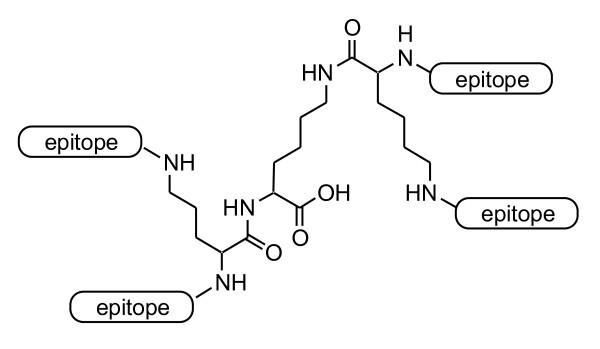
Many studies are currently investigating the development of safe and effective vaccines to prevent various infectious diseases. Multiple antigen-presenting peptide vaccine systems have been developed to avoid the adverse effects associated with conventional vaccines (i.e., live-attenuated, killed or inactivated pathogens), carrier proteins and cytotoxic adjuvants. Recently, two main approaches have been used to develop multiple antigen-presenting peptide vaccine systems: (1) the addition of functional components, e.g., T-cell epitopes, cell-penetrating peptides, and lipophilic moieties; and (2) synthetic approaches using size-defined nanomaterials, e.g., self-assembling peptides, non-peptidic dendrimers, and gold nanoparticles, as antigen-displaying platforms. This review summarizes the recent experimental studies directed to the development of multiple antigen-presenting peptide vaccine systems.
目前,许多研究正在探索开发安全有效的疫苗以预防各种传染病。人们已经开发出多种抗原呈递肽疫苗系统,以避免与传统疫苗(即减毒活疫苗、灭活疫苗或死病原体疫苗)、载体蛋白和细胞毒性佐剂相关的不良反应。最近,开发多种抗原呈递肽疫苗系统主要采用了两种方法:(1)添加功能成分,如T细胞表位、细胞穿透肽和亲脂性部分;(2)使用尺寸确定的纳米材料的合成方法,如自组装肽、非肽树枝状大分子和金纳米颗粒,作为抗原展示平台。这篇综述总结了近期针对多种抗原呈递肽疫苗系统开发的实验研究。