Department of Pharmaceutical and Biomedical Sciences, The University of Georgia, Athens, Georgia, United States of America.
PLoS One. 2013 Aug 6;8(8):e71196. doi: 10.1371/journal.pone.0071196. Print 2013.
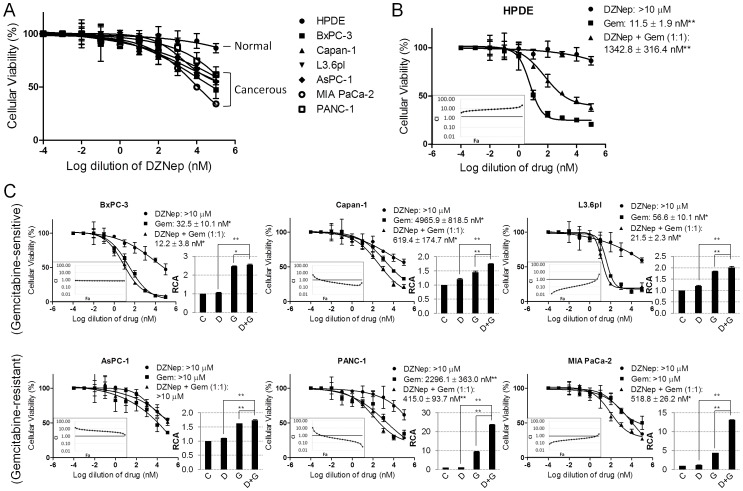
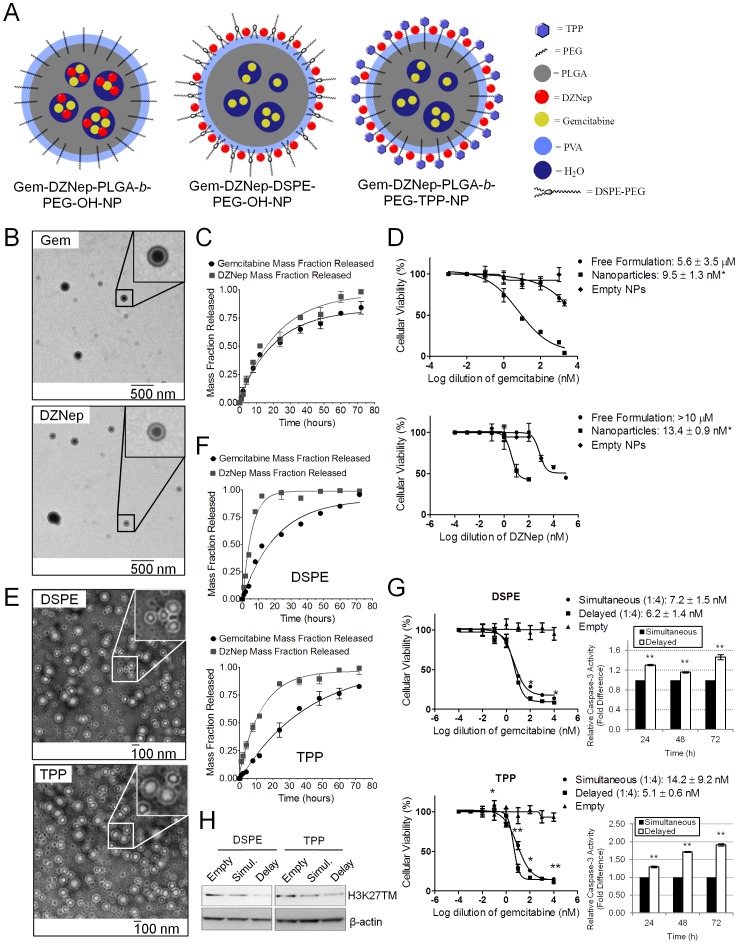
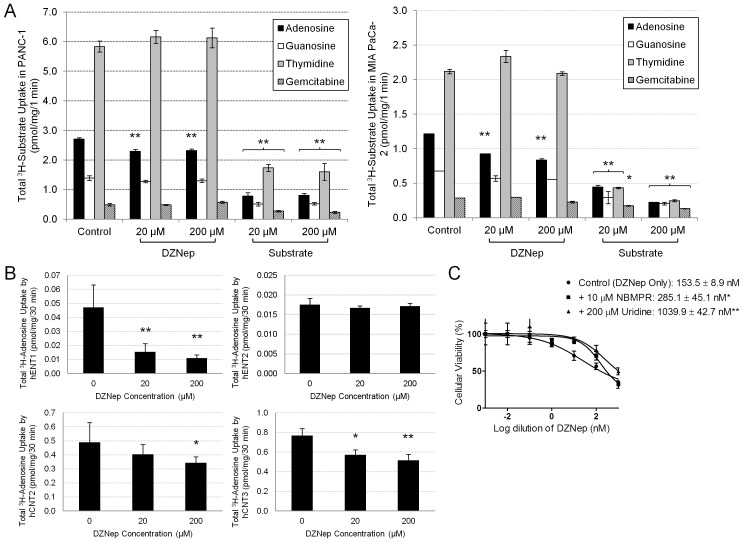
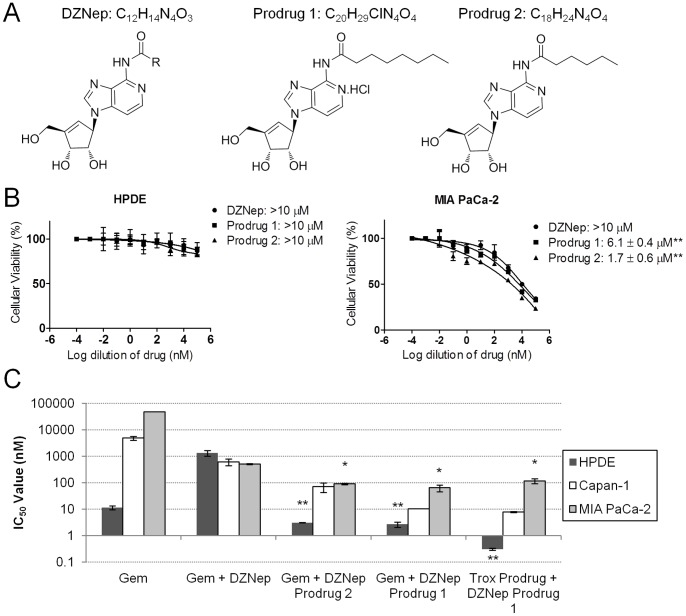
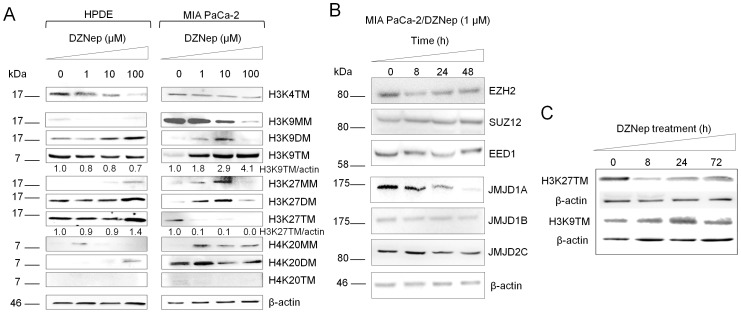
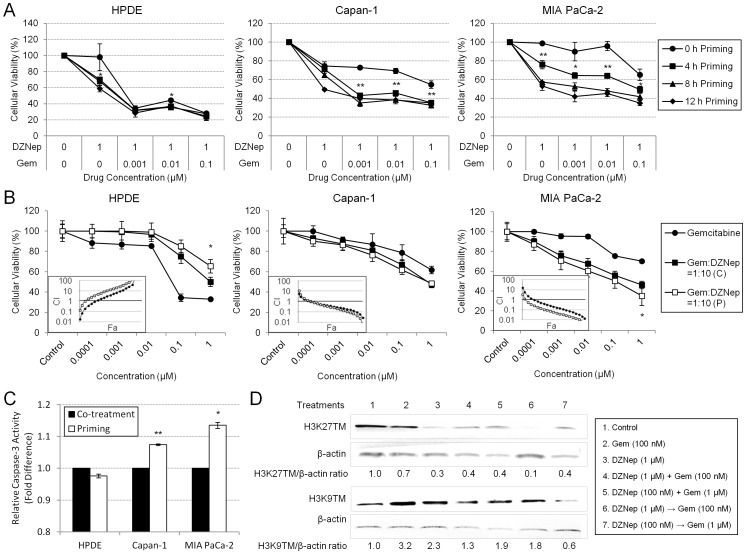
We evaluated the potential of an investigational histone methylation reversal agent, 3-deazaneplanocin A (DZNep), in improving the chemosensitivity of pancreatic cancer to nucleoside analogs (i.e., gemcitabine). DZNep brought delayed but selective cytotoxicity to pancreatic cancer cells without affecting normal human pancreatic ductal epithelial (HPDE) cells. Co-exposure of DZNep and gemcitabine induced cytotoxic additivity or synergism in both well- and poorly-differentiated pancreatic cell lines by increased apoptosis. In contrast, DZNep exerted antagonism with gemcitabine against HPDE cells with significant reduction in cytotoxicity compared with the gemcitabine-alone regimen. DZNep marginally depended on purine nucleoside transporters for its cytotoxicity, but the transport dependence was circumvented by acyl derivatization. Drug exposure studies revealed that a short priming with DZNep followed by gemcitabine treatment rather than co-treatment of both agents to produce a maximal chemosensitization response in both gemcitabine-sensitive and gemcitabine-resistant pancreatic cancer cells. DZNep rapidly and reversibly decreased trimethylation of histone H3 lysine 27 but increased trimethylation of lysine 9 in an EZH2- and JMJD1A/2C-dependent manner, respectively. However, DZNep potentiation of nucleoside analog chemosensitization was found to be temporally coupled to trimethylation changes in lysine 27 and not lysine 9. Polymeric nanoparticles engineered to chronologically release DZNep followed by gemcitabine produced pronounced chemosensitization and dose-lowering effects. Together, our results identify that an optimized DZNep exposure can presensitize pancreatic cancer cells to anticancer nucleoside analogs through the reversal of histone methylation, emphasizing the promising clinical utilities of epigenetic reversal agents in future pancreatic cancer combination therapies.
我们评估了一种实验性组蛋白甲基化逆转剂 3-去氮杂胞苷(DZNep),以提高胰腺癌对核苷类似物(即吉西他滨)的化疗敏感性的潜力。DZNep 对胰腺癌细胞具有延迟但选择性的细胞毒性,而不影响正常的人胰腺导管上皮(HPDE)细胞。DZNep 与吉西他滨共同暴露在分化良好和分化不良的胰腺细胞系中诱导细胞毒性相加或协同作用,通过增加细胞凋亡。相比之下,DZNep 与吉西他滨对 HPDE 细胞产生拮抗作用,与吉西他滨单药方案相比,细胞毒性显著降低。DZNep 对其细胞毒性的嘌呤核苷转运体略有依赖性,但通过酰基衍生化可以避免这种依赖性。药物暴露研究表明,DZNep 的短暂预暴露,然后用吉西他滨治疗,而不是两者同时暴露,可在吉西他滨敏感和吉西他滨耐药的胰腺癌细胞中产生最大的化疗增敏反应。DZNep 迅速且可逆地降低组蛋白 H3 赖氨酸 27 的三甲基化,但分别以 EZH2 和 JMJD1A/2C 依赖性方式增加赖氨酸 9 的三甲基化。然而,发现 DZNep 增强核苷类似物化疗增敏作用与赖氨酸 27 的三甲基化变化而不是赖氨酸 9 的三甲基化变化有关。工程化的聚合物纳米颗粒,按时间顺序释放 DZNep 然后释放吉西他滨,可产生显著的化疗增敏和剂量降低作用。总之,我们的结果表明,优化的 DZNep 暴露可以通过逆转组蛋白甲基化使胰腺癌细胞对抗癌核苷类似物预先敏感,强调了表观遗传逆转剂在未来胰腺癌联合治疗中的有前途的临床应用。