Department of Veterinary Disease Biology, Faculty of Health and Medical Sciences, University of Copenhagen, Frederiksberg C, Denmark.
PLoS One. 2013 Aug 6;8(8):e71439. doi: 10.1371/journal.pone.0071439. Print 2013.
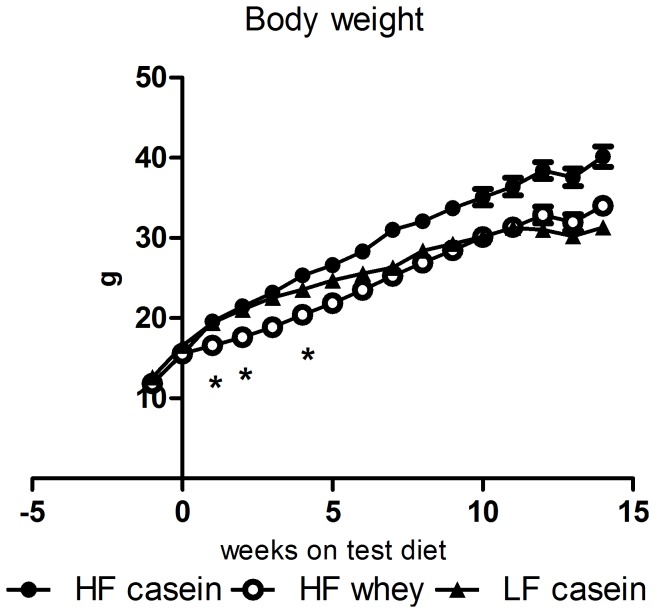
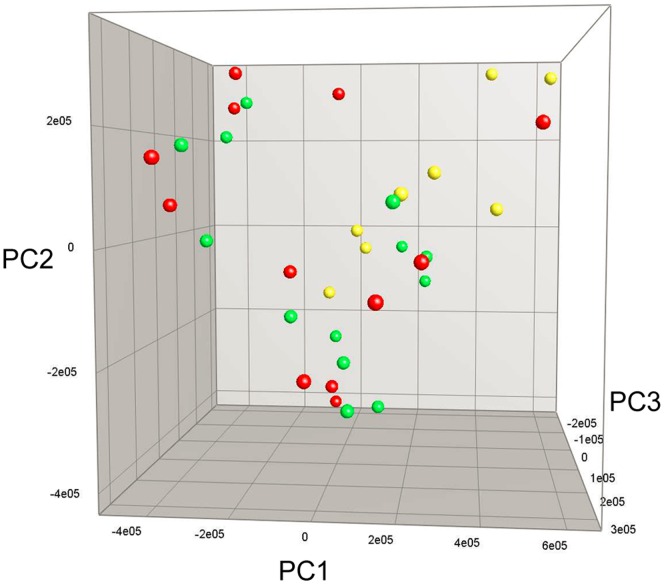
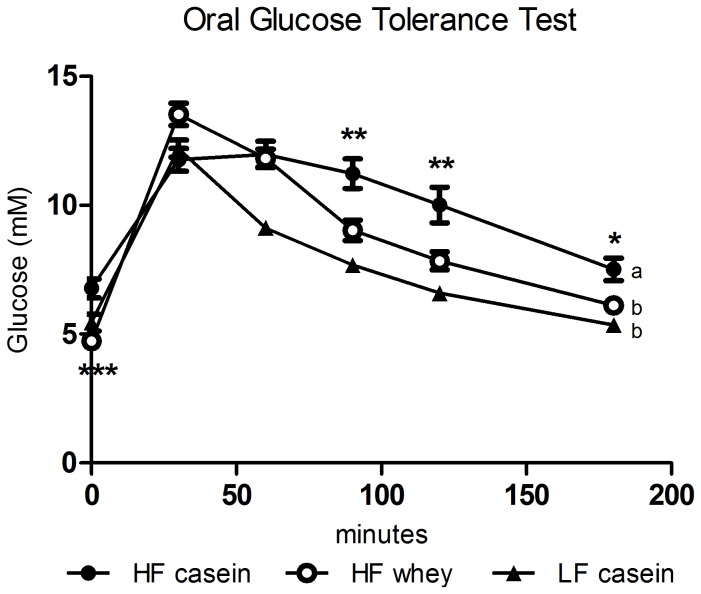
An increasing number of studies indicate that dairy products, including whey protein, alleviate several disorders of the metabolic syndrome. Here, we investigated the effects of whey protein isolate (whey) in mice fed a high-fat diet hypothesising that the metabolic effects of whey would be associated with changes in the gut microbiota composition. Five-week-old male C57BL/6 mice were fed a high-fat diet ad libitum for 14 weeks with the protein source being either whey or casein. Faeces were collected at week 0, 7, and 13 and the fecal microbiota was analysed by denaturing gradient gel electrophoresis analyses of PCR-derived 16S rRNA gene (V3-region) amplicons. At the end of the study, plasma samples were collected and assayed for glucose, insulin and lipids. Whey significantly reduced body weight gain during the first four weeks of the study compared with casein (P<0.001-0.05). Hereafter weight gain was similar resulting in a 15% lower final body weight in the whey group relative to casein (34.0±1.0 g vs. 40.2±1.3 g, P<0.001). Food intake was unaffected by protein source throughout the study period. Fasting insulin was lower in the whey group (P<0.01) and glucose clearance was improved after an oral glucose challenge (P<0.05). Plasma cholesterol was lowered by whey compared to casein (P<0.001). The composition of the fecal microbiota differed between high- and low-fat groups at 13 weeks (P<0.05) whereas no difference was seen between whey and casein. In conclusion, whey initially reduced weight gain in young C57BL/6 mice fed a high-fat diet compared to casein. Although the effect on weight gain ceased, whey alleviated glucose intolerance, improved insulin sensitivity and reduced plasma cholesterol. These findings could not be explained by changes in food intake or gut microbiota composition. Further studies are needed to clarify the mechanisms behind the metabolic effects of whey.
越来越多的研究表明,乳制品,包括乳清蛋白,可以缓解代谢综合征的多种疾病。在这里,我们研究了乳清蛋白分离物(乳清)对高脂肪饮食喂养的小鼠的影响,假设乳清的代谢作用将与肠道微生物群落组成的变化相关。5 周龄雄性 C57BL/6 小鼠自由喂食高脂肪饮食 14 周,蛋白质来源为乳清或酪蛋白。在第 0、7 和 13 周收集粪便,并通过变性梯度凝胶电泳分析 PCR 衍生的 16S rRNA 基因(V3 区)扩增子分析粪便微生物群。在研究结束时,收集血浆样品并检测血糖、胰岛素和脂质。与酪蛋白相比,乳清在研究的前四周显著降低了体重增加(P<0.001-0.05)。此后,体重增加相似,导致乳清组的最终体重比酪蛋白组低 15%(34.0±1.0 g 与 40.2±1.3 g,P<0.001)。整个研究期间,蛋白质来源对食物摄入没有影响。乳清组的空腹胰岛素水平较低(P<0.01),口服葡萄糖耐量试验后葡萄糖清除率得到改善(P<0.05)。与酪蛋白相比,乳清降低了血浆胆固醇(P<0.001)。13 周时,高脂肪和低脂肪组粪便微生物群的组成不同(P<0.05),而乳清和酪蛋白之间没有差异。总之,与酪蛋白相比,乳清最初减少了高脂肪饮食喂养的年轻 C57BL/6 小鼠的体重增加。尽管对体重增加的影响停止,但乳清减轻了葡萄糖不耐受,改善了胰岛素敏感性并降低了血浆胆固醇。这些发现不能用食物摄入量或肠道微生物群组成的变化来解释。需要进一步的研究来阐明乳清代谢作用的机制。