Centre for Environmental and Marine Studies, Department of Biology, Lisbon University, Campo Grande C2, Lisboa, Portugal.
PLoS One. 2013 Aug 7;8(8):e71527. doi: 10.1371/journal.pone.0071527. Print 2013.
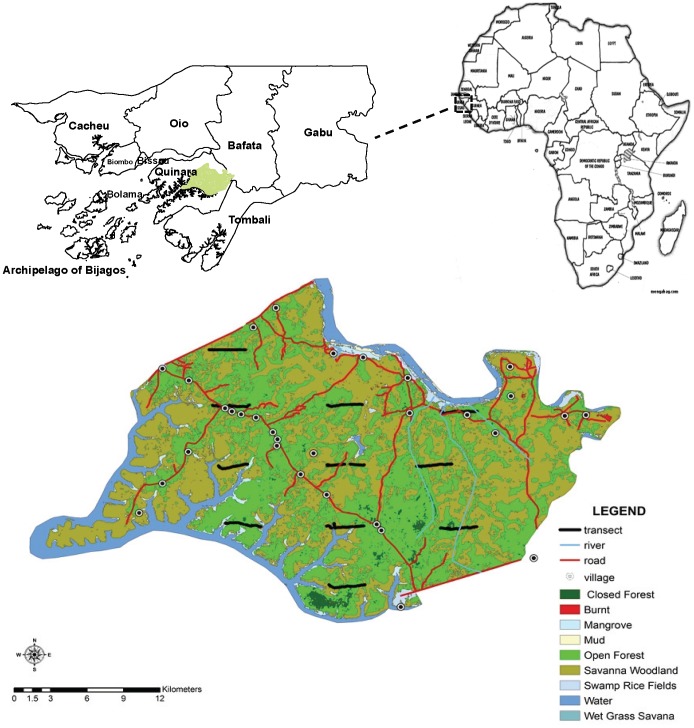
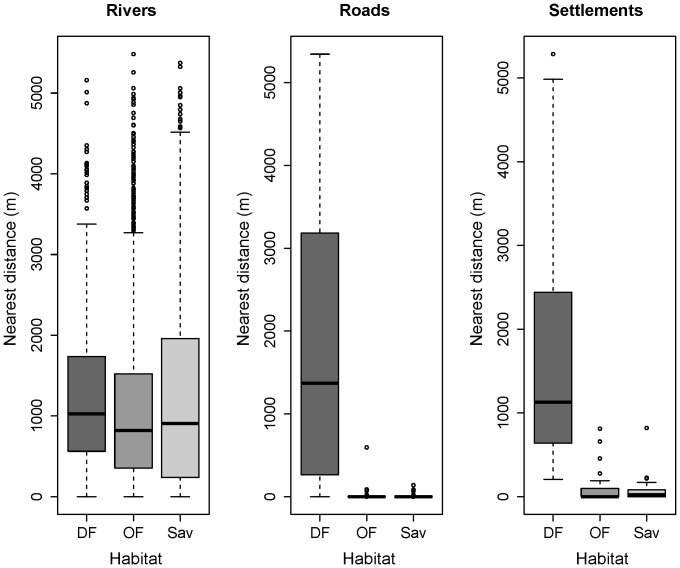
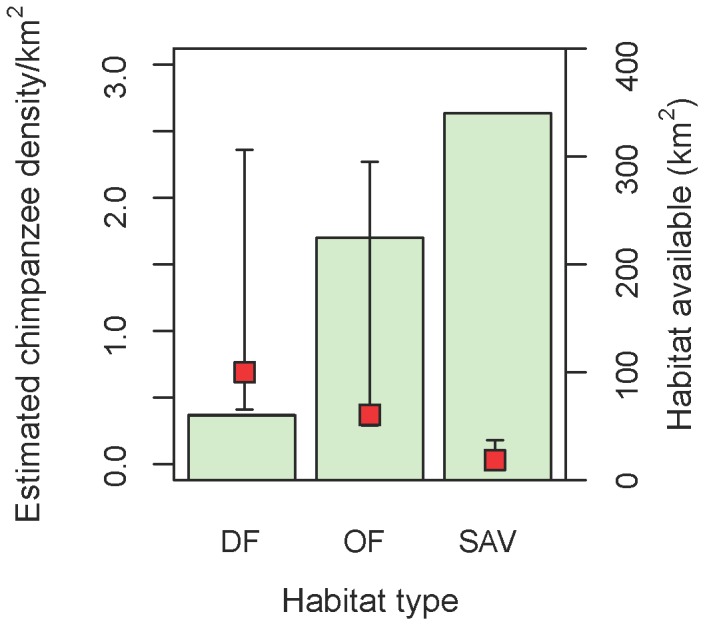
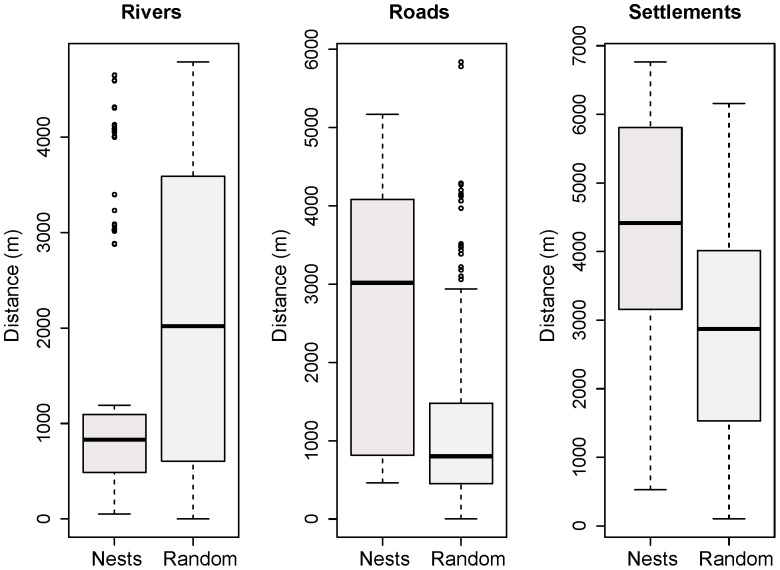
The western chimpanzee, Pan troglodytes verus, has been classified as Endangered on the IUCN Red List since 1988. Intensive agriculture, commercial plantations, logging, and mining have eliminated or degraded the habitats suitable for P. t. verus over a large part of its range. In this study we assessed the effect of land-use change on the population size and density of chimpanzees at Lagoas de Cufada Natural Park (LCNP), Guinea-Bissau. We further explored chimpanzee distribution in relation to landscape-level proxies of human disturbance. Nest count and distance-sampling methods were employed along 11 systematically placed linear transects in 2010 and 2011. Estimated nest decay rate was 293.9 days (%CV = 58.8). Based on this estimate of decay time and using the Standing-Crop Nest Count Method, we obtained a habitat-weighted average chimpanzee density estimate for 2011 of 0.22 nest building chimpanzees/km(2) (95% CI 0.08-0.62), corresponding to 137 (95% CI 51.0-390.0) chimpanzees for LCNP. Human disturbance had a negative influence on chimpanzee distribution as nests were built farther away from human settlements, roads, and rivers than if they were randomly distributed, coinciding with the distribution of the remaining patches of dense canopy forest. We conclude that the continuous disappearance of suitable habitat (e.g. the replacement of LCNP's dense forests by monocultures of cashew plantations) may be compromising the future of one of the most threatened Guinean coastal chimpanzee populations. We discuss strategies to ensure long-term conservation in this important refuge for this chimpanzee subspecies at its westernmost margin of geographic distribution.
西部黑猩猩(Pan troglodytes verus)自 1988 年以来被世界自然保护联盟濒危物种红色名录列为濒危物种。集约化农业、商业种植园、伐木和采矿已经在其大部分分布范围内消除或破坏了适合 P. t. verus 的栖息地。在这项研究中,我们评估了土地利用变化对 Lagoas de Cufada 自然公园(LCNP),几内亚比绍黑猩猩种群数量和密度的影响。我们还进一步探讨了黑猩猩的分布与景观水平人类干扰的关系。2010 年和 2011 年,我们在 11 条系统放置的线性样带上采用了巢计数和距离抽样方法。估计的巢腐烂率为 293.9 天(%CV=58.8)。根据这个腐烂时间的估计值,我们使用固定巢存量巢计数法,得出 2011 年栖息地加权平均黑猩猩密度估计值为 0.22 个有巢筑黑猩猩/km²(95%置信区间为 0.08-0.62),对应于 LCNP 的 137 只(95%置信区间为 51.0-390.0)黑猩猩。人类干扰对黑猩猩的分布有负面影响,因为与随机分布相比,黑猩猩的巢建得离人类住区、道路和河流更远,这与剩余的密集树冠森林斑块的分布一致。我们得出结论,适宜栖息地的持续消失(例如,LCNP 的茂密森林被腰果种植园的单一栽培所取代)可能危及几内亚最受威胁的沿海黑猩猩种群之一的未来。我们讨论了确保这个亚种在其最西端地理分布边缘的重要避难所的长期保护的策略。