Department of Virology, Institute of Tropical Medicine, GCOE program, Leading Graduate School Program, Nagasaki University, Nagasaki, Nagasaki, Japan.
PLoS One. 2013 Aug 5;8(8):e71643. doi: 10.1371/journal.pone.0071643. Print 2013.
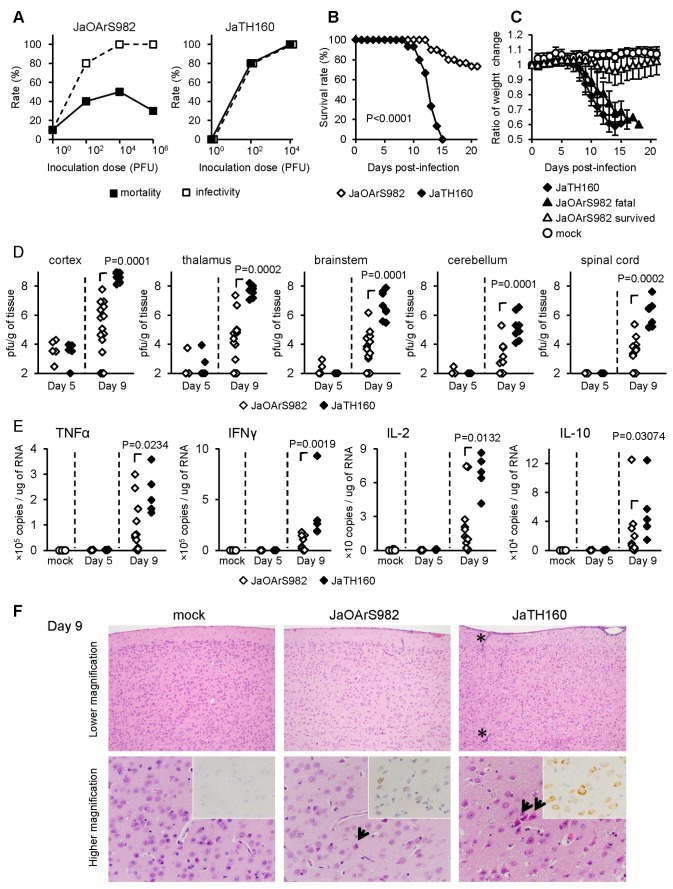
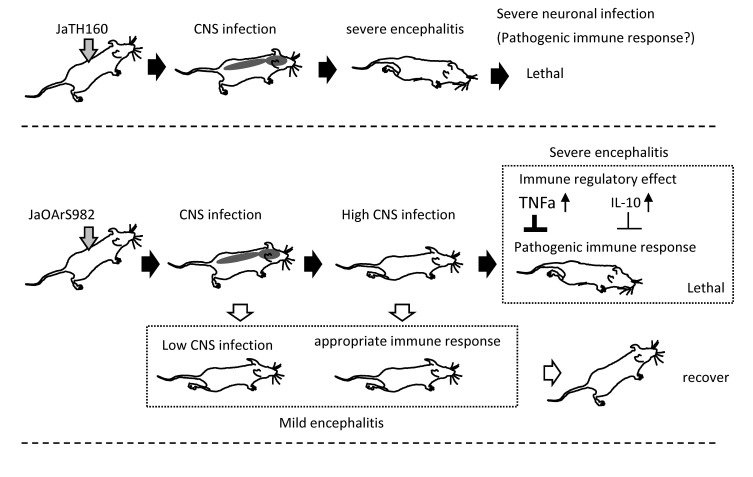
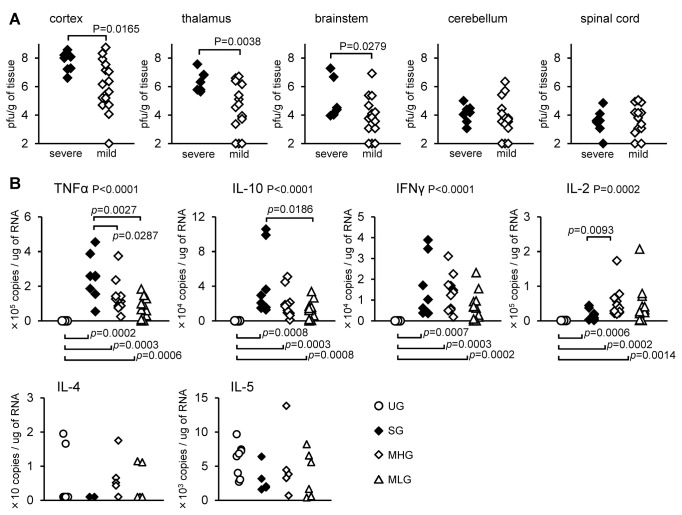
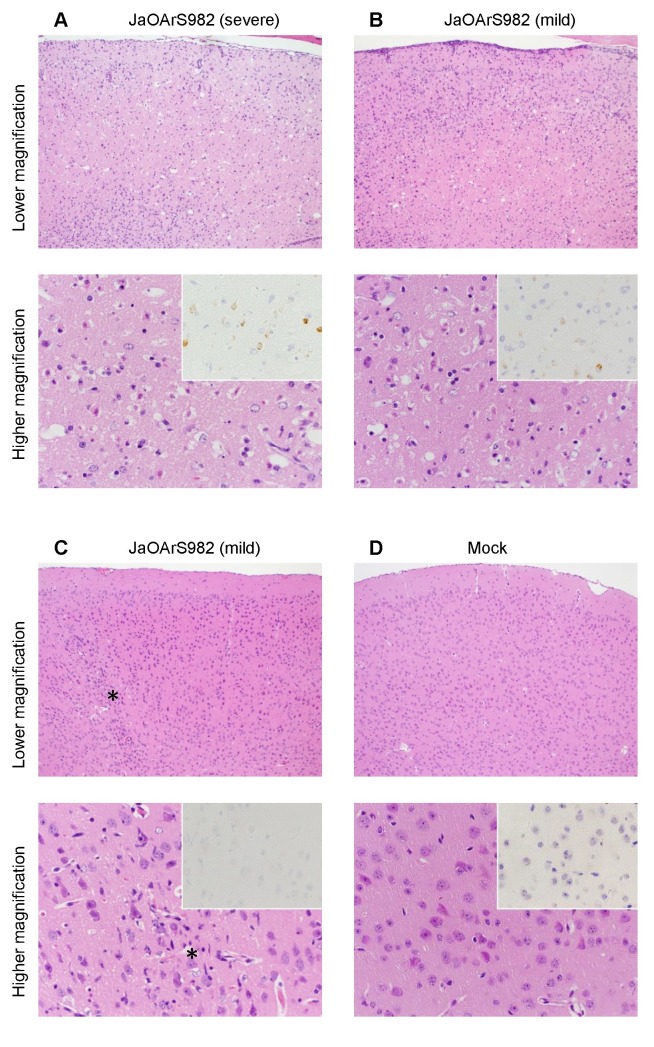
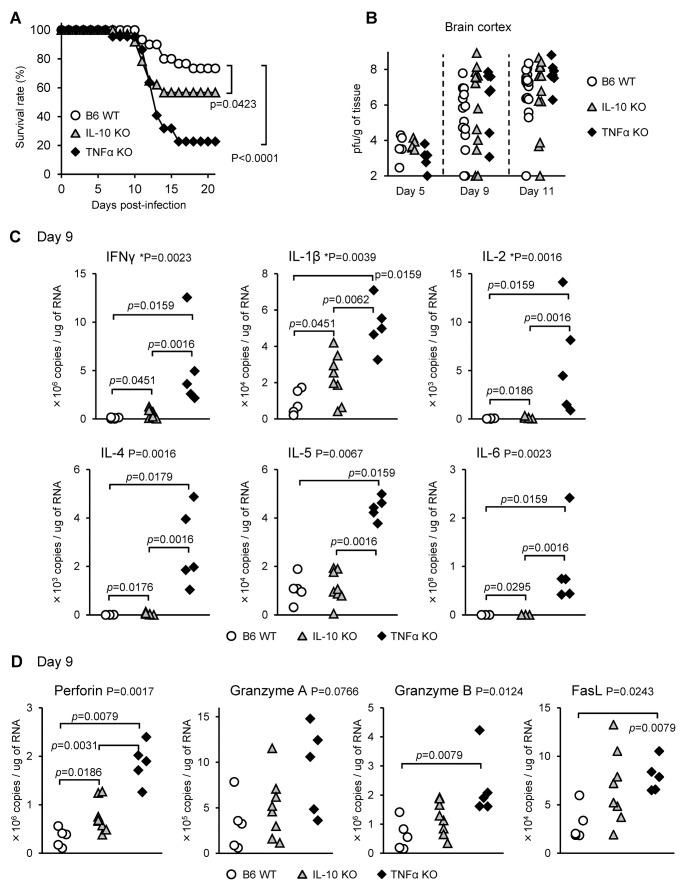
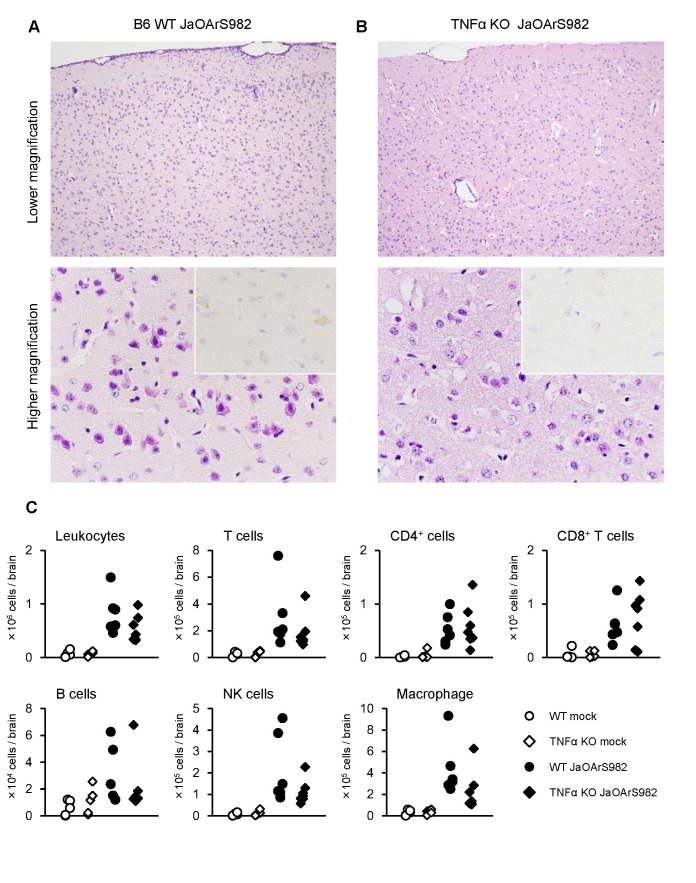
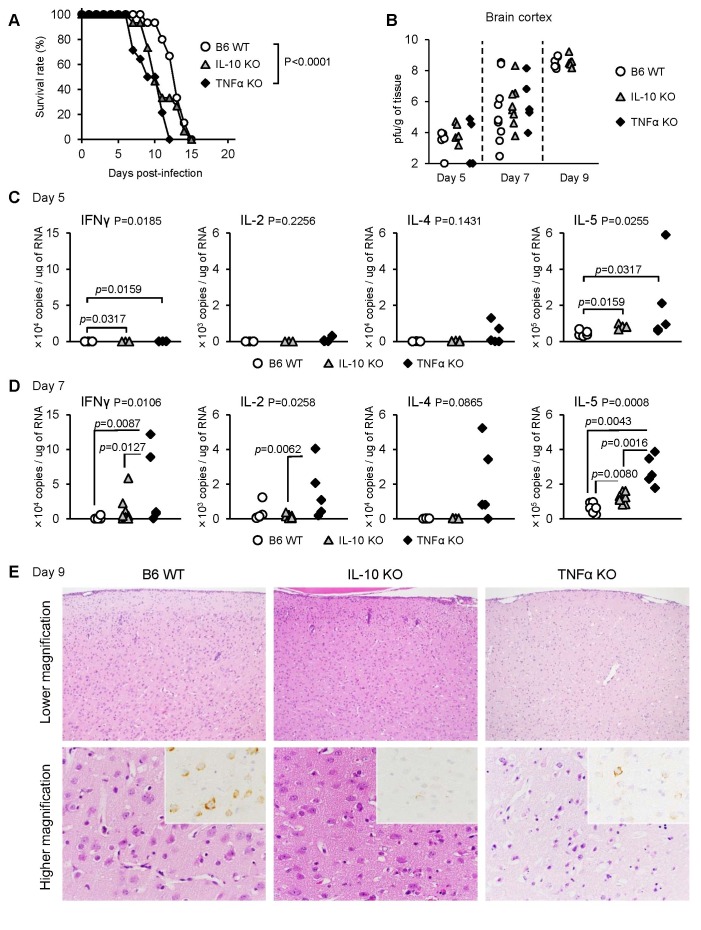
Japanese encephalitis virus (JEV) causes acute central nervous system (CNS) disease in humans, in whom the clinical symptoms vary from febrile illness to meningitis and encephalitis. However, the mechanism of severe encephalitis has not been fully elucidated. In this study, using a mouse model, we investigated the pathogenetic mechanisms that correlate with fatal JEV infection. Following extraneural infection with the JaOArS982 strain of JEV, infected mice exhibited clinical signs ranging from mild to fatal outcome. Comparison of the pathogenetic response between severe and mild cases of JaOArS982-infected mice revealed increased levels of TNF-α in the brains of severe cases. However, unexpectedly, the mortality rate of TNF-α KO mice was significantly increased compared with that of WT mice, indicating that TNF-α plays a protective role against fatal infection. Interestingly, there were no significant differences of viral load in the CNS between WT and TNF-α KO mice. However, exaggerated inflammatory responses were observed in the CNS of TNF-α KO mice. Although these observations were also obtained in IL-10 KO mice, the mortality and enhanced inflammatory responses were more pronounced in TNF-α KO mice. Our findings therefore provide the first evidence that TNF-α has an immunoregulatory effect on pro-inflammatory cytokines in the CNS during JEV infection and consequently protects the animals from fatal disease. Thus, we propose that the increased level of TNF-α in severe cases was the result of severe disease, and secondly that immunopathological effects contribute to severe neuronal degeneration resulting in fatal disease. In future, further elucidation of the immunoregulatory mechanism of TNF-α will be an important priority to enable the development of effective treatment strategies for Japanese encephalitis.
日本脑炎病毒(JEV)可引起人类急性中枢神经系统(CNS)疾病,其临床症状从发热性疾病到脑膜炎和脑炎不等。然而,严重脑炎的发病机制尚未完全阐明。在这项研究中,我们使用小鼠模型研究了与致命 JEV 感染相关的发病机制。在用 JEV 的 JaOArS982 株进行神经外感染后,感染小鼠表现出从轻症到致命结果的临床症状。严重和轻度 JaOArS982 感染小鼠的发病机制反应比较表明,严重病例的大脑中 TNF-α 水平升高。然而,出乎意料的是,TNF-α KO 小鼠的死亡率与 WT 小鼠相比显著增加,表明 TNF-α在对抗致命感染中起保护作用。有趣的是,WT 和 TNF-α KO 小鼠的中枢神经系统中的病毒载量没有明显差异。然而,在 TNF-α KO 小鼠的中枢神经系统中观察到炎症反应加剧。尽管在 IL-10 KO 小鼠中也观察到了这些观察结果,但 TNF-α KO 小鼠的死亡率和增强的炎症反应更为明显。因此,我们的研究结果首次提供了证据,表明 TNF-α在 JEV 感染期间对 CNS 中的促炎细胞因子具有免疫调节作用,从而使动物免受致命疾病的侵害。因此,我们提出严重病例中 TNF-α水平升高是严重疾病的结果,其次免疫病理作用导致严重的神经元变性导致致命疾病。在未来,进一步阐明 TNF-α的免疫调节机制将是制定有效日本脑炎治疗策略的重要优先事项。