Jiangsu Key Laboratory of Anesthesiology, Xuzhou Medical College, Jiangsu 221004, China.
Cell Death Dis. 2013 Aug 15;4(8):e771. doi: 10.1038/cddis.2013.299.
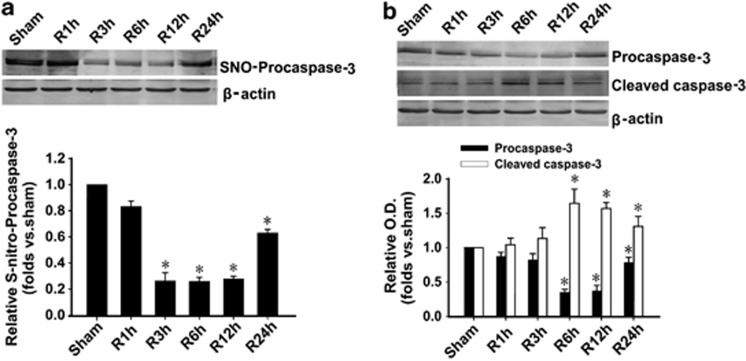
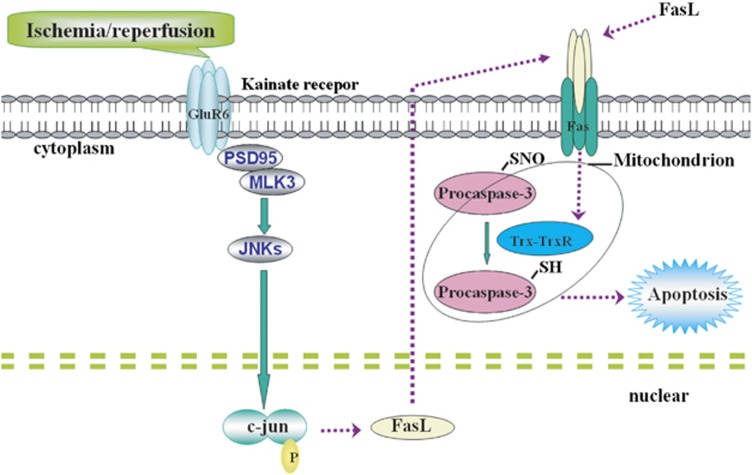
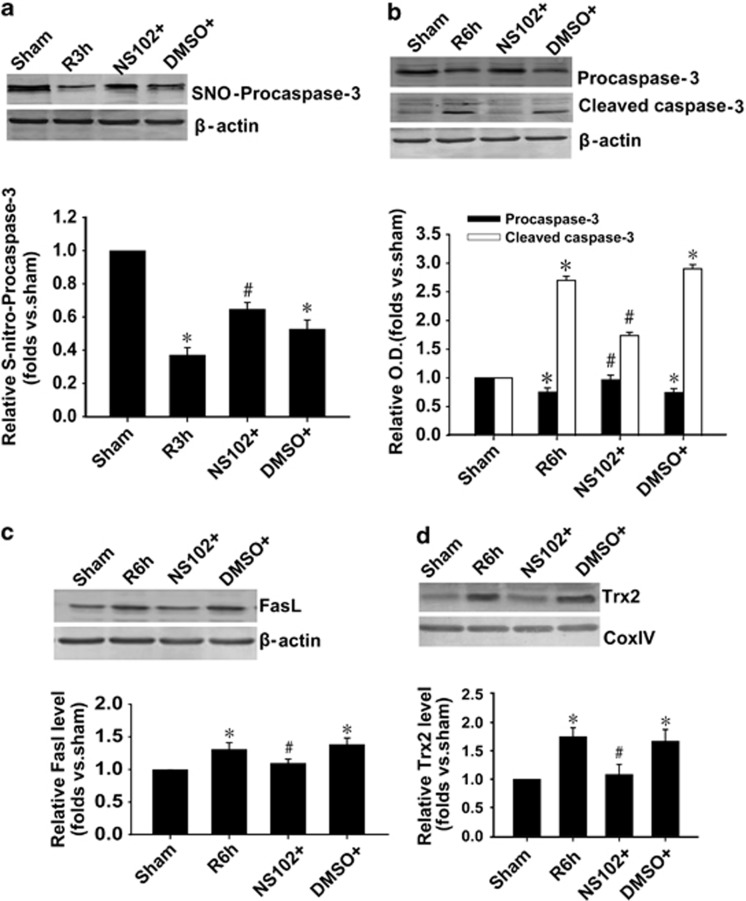
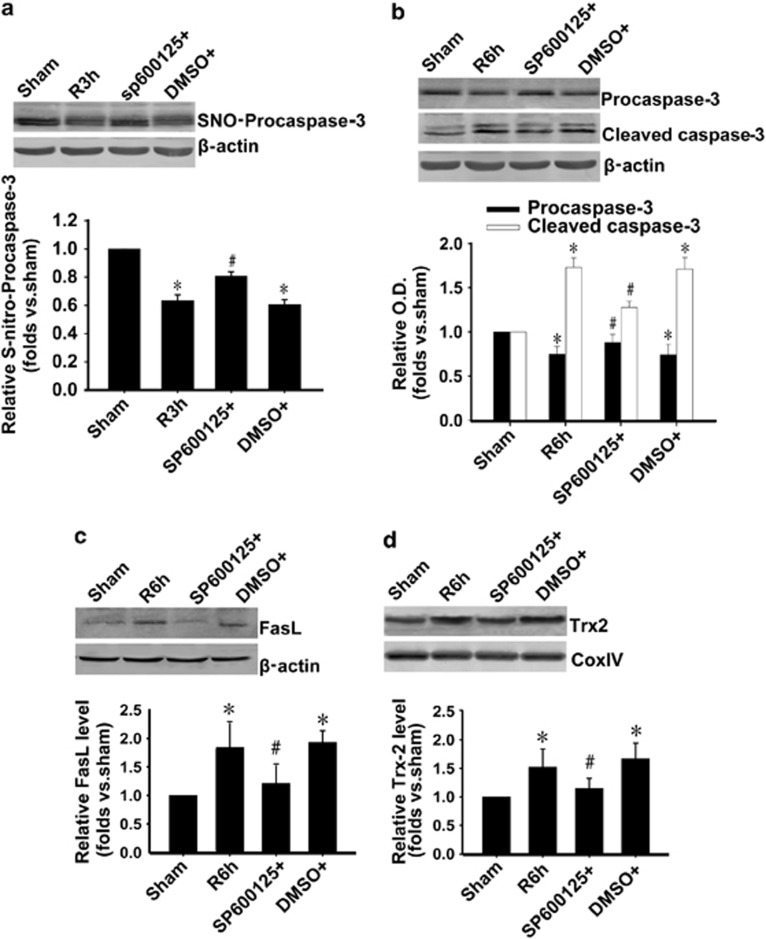
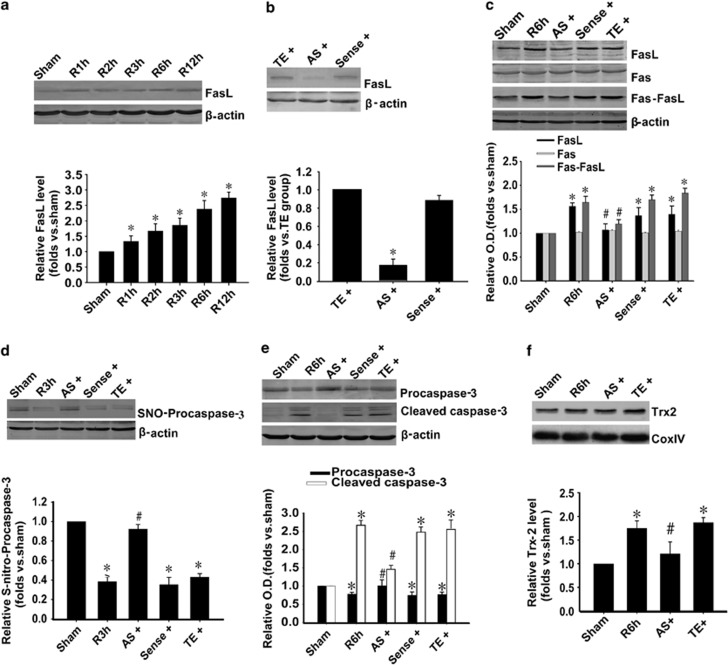
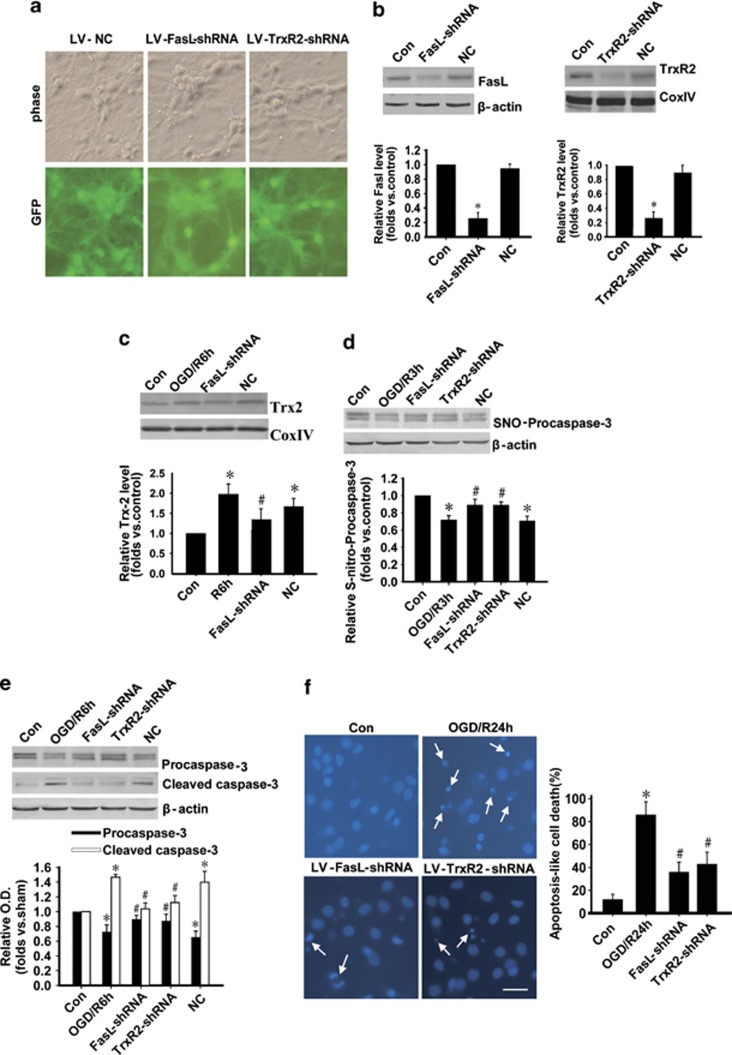
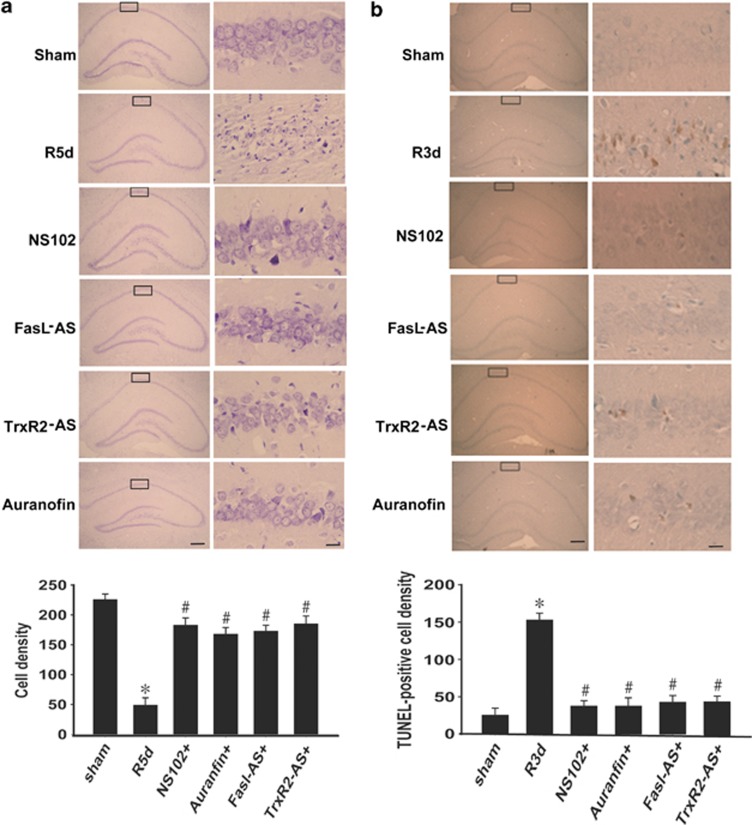
Global cerebral ischemia/reperfusion (I/R) facilitates the activation of procaspase-3 and promotes apoptosis in hippocampus. But the mechanisms have remained uncharacterized. Protein S-nitrosylation and denitrosylation is an important reversible posttranslational modification, which is a common mechanism in signal transduction and affects numerous physiological and pathophysiological events. However, it is not known whether S-nitrosylation/denitrosylation modification of procaspase-3 serves as a component of apoptosis and cell death induced by cerebral I/R. Here we show that procaspase-3 is significantly denitrosylated and activated after I/R in rat hippocampus. NS102, a glutamate receptor 6 (GluR6) antagonist, can inhibit the denitrosylation of procaspase-3 and diminish the increased Fas ligand (FasL) and thioredoxin (Trx)-2 expression induced by cerebral I/R. Moreover, downregulation of FasL expression by antisense oligodeoxynucleotides inhibits the denitrosylation and activation of procaspase-3. Auranofin, a TrxR inhibitor or TrxR2 antisense oligodeoxynucleotide, has similar effects. In primary hippocampal cultures, Lentiviral-mediated knockdown of FasL and TrxR2 before the oxygen and glucose deprivation/reoxygenation further verifies that FasL and TrxR2 are involved in the denitrosylation of procaspase-3. In situ TUNEL staining and cresyl violet staining validate that inhibiting denitrosylation of procaspase-3 may exert neuroprotective effect on apoptosis and cell death induced by cerebral I/R in hippocampal CA1 pyramidal neurons. This is the first evidence that cerebral I/R mediates procaspase-3 denitrosylation and activation through GluR6-FasL-Trx2 pathway, which leads to neuronal apoptosis and cell death.
全脑缺血/再灌注(I/R)促进海马区 procaspase-3 的激活,促进细胞凋亡。但其机制尚不清楚。蛋白质 S-亚硝基化和去亚硝基化是一种重要的可逆转的翻译后修饰,是信号转导的常见机制,影响众多生理和病理生理事件。然而,procaspase-3 的 S-亚硝基化/去亚硝基化修饰是否作为脑 I/R 诱导的细胞凋亡和细胞死亡的组成部分尚不清楚。本研究显示,脑 I/R 后大鼠海马区 procaspase-3 明显去亚硝基化和激活。谷氨酸受体 6 (GluR6) 拮抗剂 NS102 可抑制 procaspase-3 的去亚硝基化,并减少脑 I/R 诱导的 Fas 配体 (FasL) 和硫氧还蛋白 (Trx)-2 表达的增加。此外,反义寡核苷酸下调 FasL 表达可抑制 procaspase-3 的去亚硝基化和激活。硫氧还蛋白还原酶 (TrxR) 抑制剂金诺芬或 TrxR2 反义寡核苷酸也有类似作用。在原代海马培养物中,在氧葡萄糖剥夺/复氧前用慢病毒介导的 FasL 和 TrxR2 敲低,进一步证实 FasL 和 TrxR2 参与 procaspase-3 的去亚硝基化。原位 TUNEL 染色和台盼蓝染色验证抑制 procaspase-3 的去亚硝基化可能对脑 I/R 诱导的海马 CA1 锥体神经元凋亡和细胞死亡具有神经保护作用。这是脑 I/R 通过 GluR6-FasL-Trx2 途径介导 procaspase-3 去亚硝基化和激活,导致神经元凋亡和细胞死亡的第一个证据。