Department of Pharmaceutical Chemistry, University of California, San Francisco, California, USA.
Nat Biotechnol. 2013 Oct;31(10):916-21. doi: 10.1038/nbt.2672. Epub 2013 Aug 18.
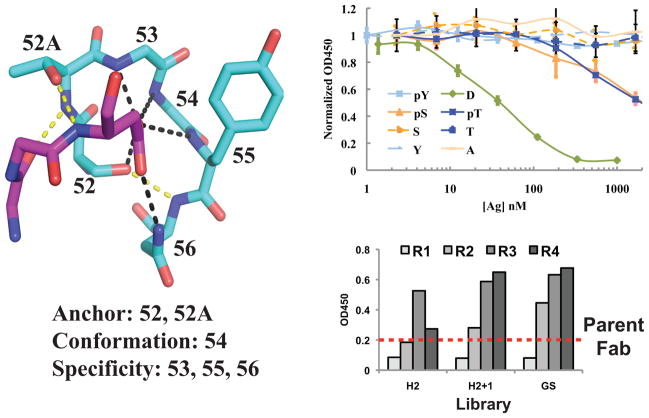
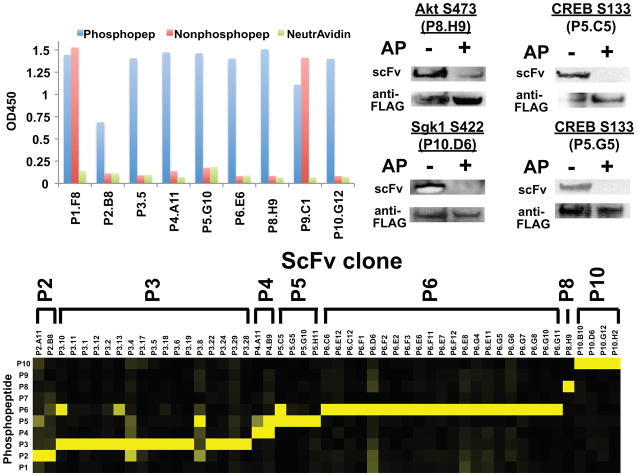
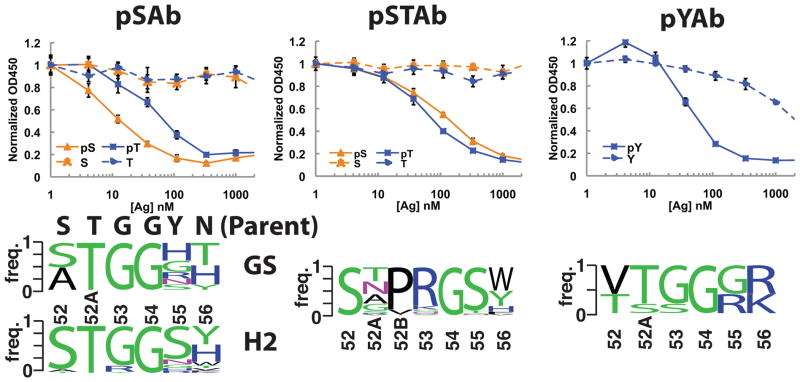
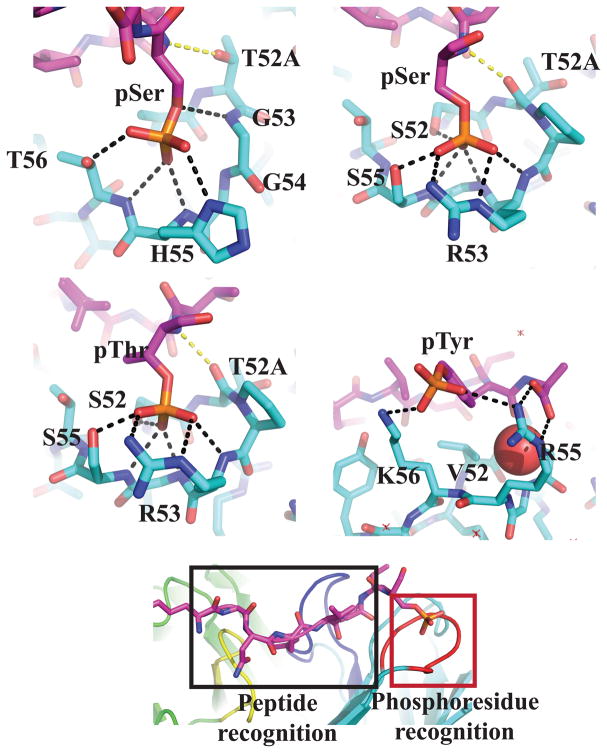
Aberrant changes in post-translational modifications (PTMs) such as phosphate groups underlie a majority of human diseases. However, detection and quantification of PTMs for diagnostic or biomarker applications often require PTM-specific monoclonal antibodies (mAbs), which are challenging to generate using traditional antibody-selection methods. Here we outline a general strategy for producing synthetic, PTM-specific mAbs by engineering a motif-specific 'hot spot' into an antibody scaffold. Inspired by a natural phosphate-binding motif, we designed and selected mAb scaffolds with hot spots specific for phosphoserine, phosphothreonine or phosphotyrosine. Crystal structures of the phospho-specific mAbs revealed two distinct modes of phosphoresidue recognition. Our data suggest that each hot spot functions independently of the surrounding scaffold, as phage display antibody libraries using these scaffolds yielded >50 phospho- and target-specific mAbs against 70% of target peptides. Our motif-specific scaffold strategy may provide a general solution for rapid, robust development of anti-PTM mAbs for signaling, diagnostic and therapeutic applications.
翻译后修饰(PTMs)如磷酸基团的异常改变是大多数人类疾病的基础。然而,为了诊断或生物标志物应用而检测和定量 PTMs 通常需要 PTM 特异性单克隆抗体(mAbs),而使用传统的抗体选择方法来生成这些 mAbs 具有挑战性。在这里,我们通过在抗体支架中设计和选择针对磷酸丝氨酸、磷酸苏氨酸或磷酸酪氨酸的具有热点的特定 PTM 的 mAb 支架,概述了一种产生合成 PTM 特异性 mAb 的一般策略。受天然磷酸结合基序的启发,我们设计并选择了具有针对磷酸丝氨酸、磷酸苏氨酸或磷酸酪氨酸的热点的 mAb 支架。磷酸特异性 mAbs 的晶体结构揭示了两种不同的磷酸残基识别模式。我们的数据表明,每个热点独立于周围的支架发挥作用,因为使用这些支架的噬菌体展示抗体文库产生了针对 70%的目标肽的 >50 种磷酸化和靶标特异性 mAbs。我们的基序特异性支架策略可能为快速、稳健地开发用于信号转导、诊断和治疗应用的抗 PTM mAb 提供了一种通用解决方案。