Department of Integrative Neurophysiology, Center for Neurogenomics and Cognitive Research, VU University Amsterdam Amsterdam, Netherlands ; Neuroscience Campus Amsterdam Amsterdam, Netherlands.
Front Hum Neurosci. 2013 Aug 8;7:446. doi: 10.3389/fnhum.2013.00446. eCollection 2013.
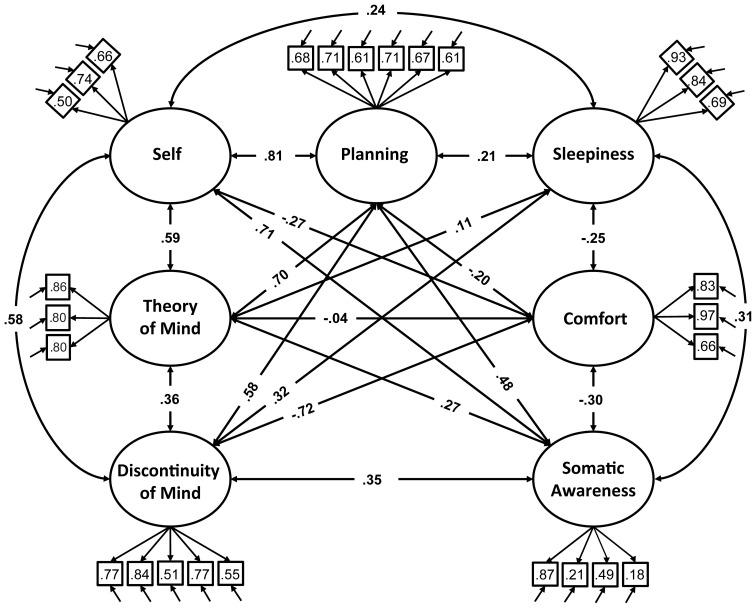
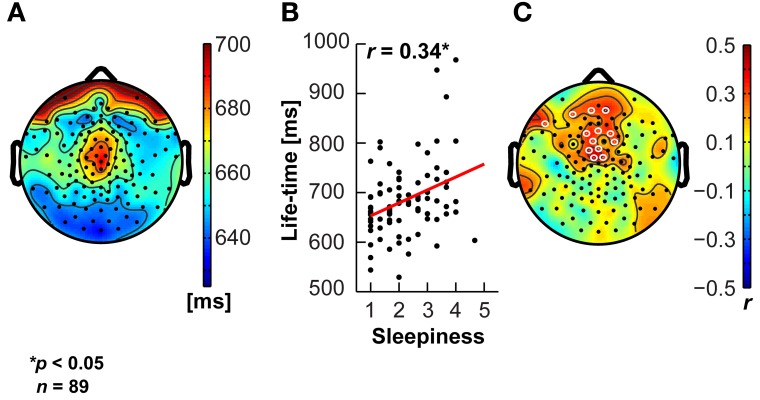
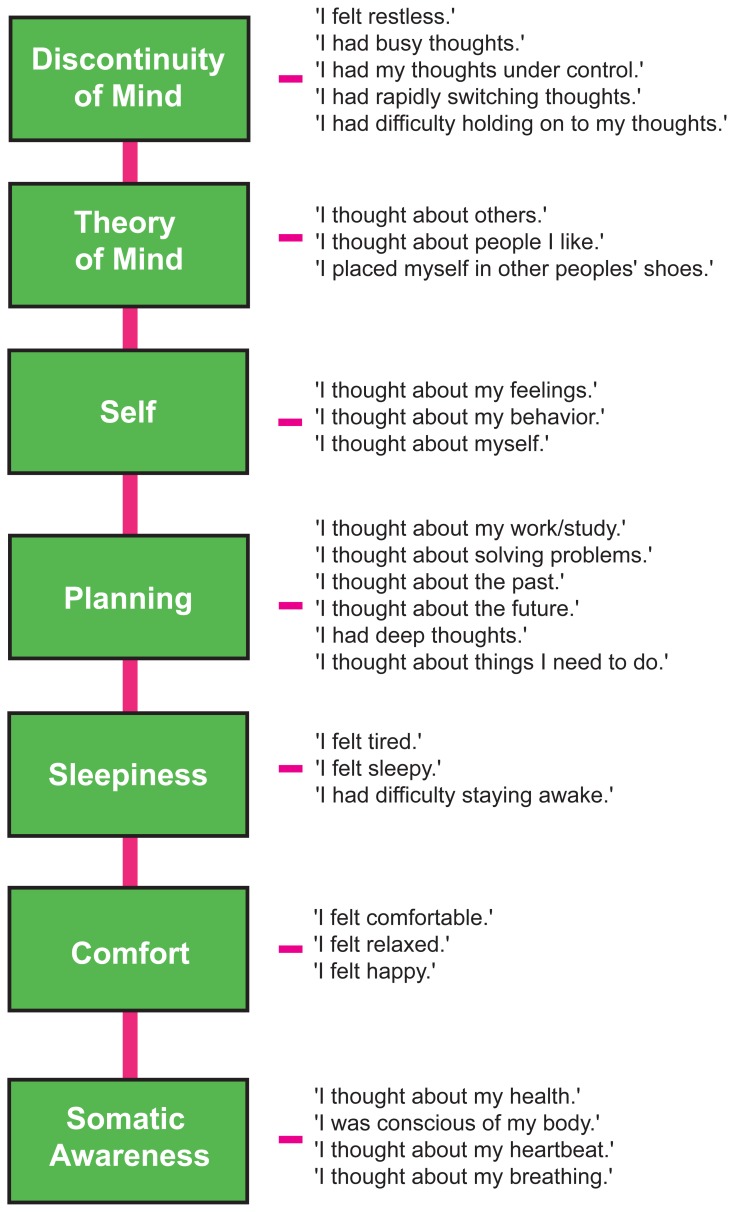
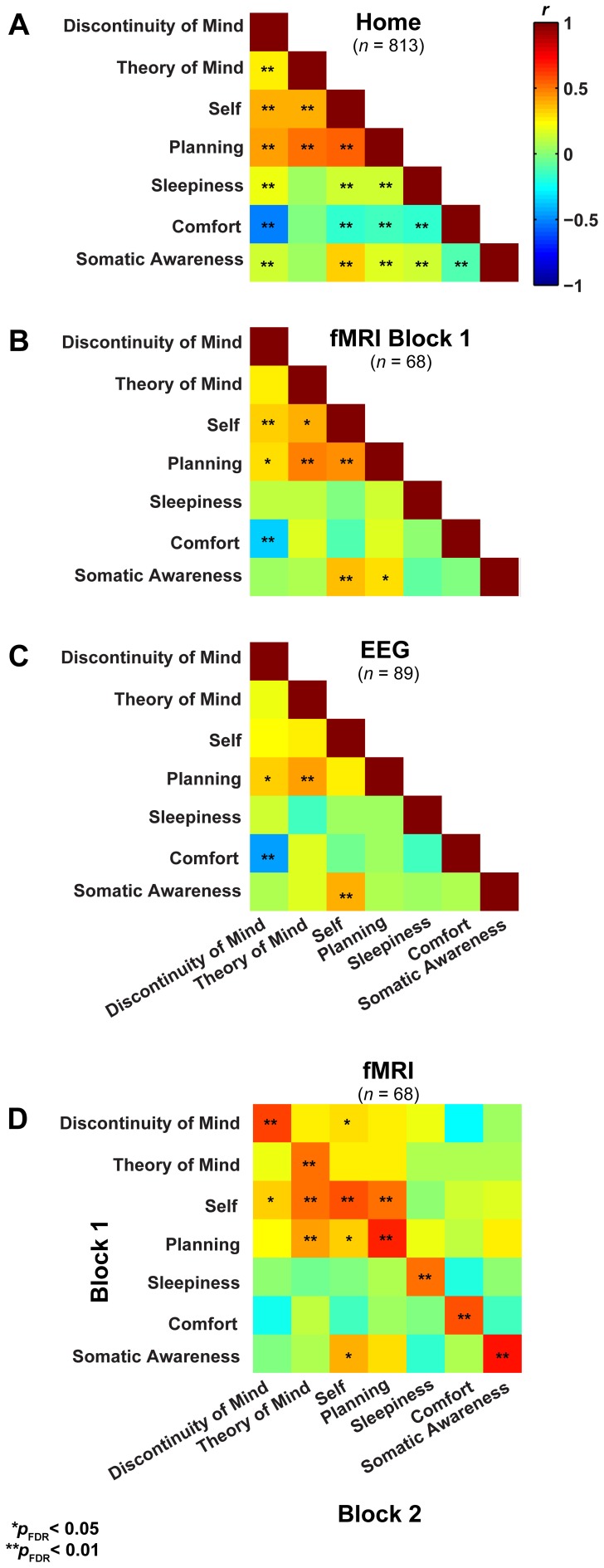
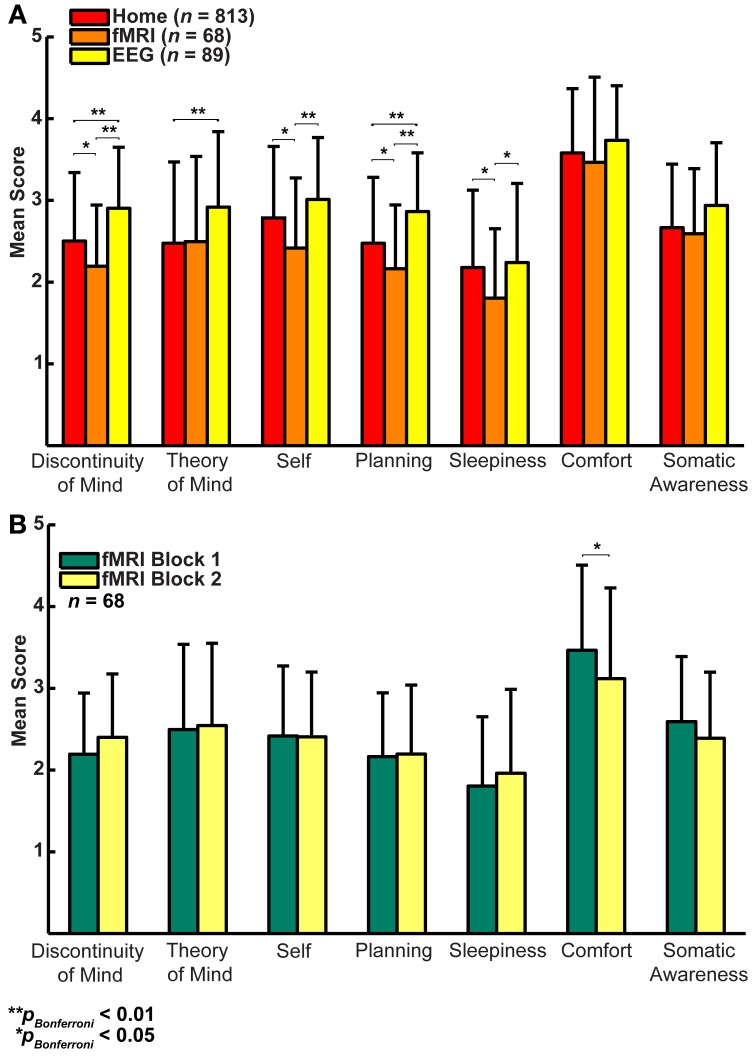
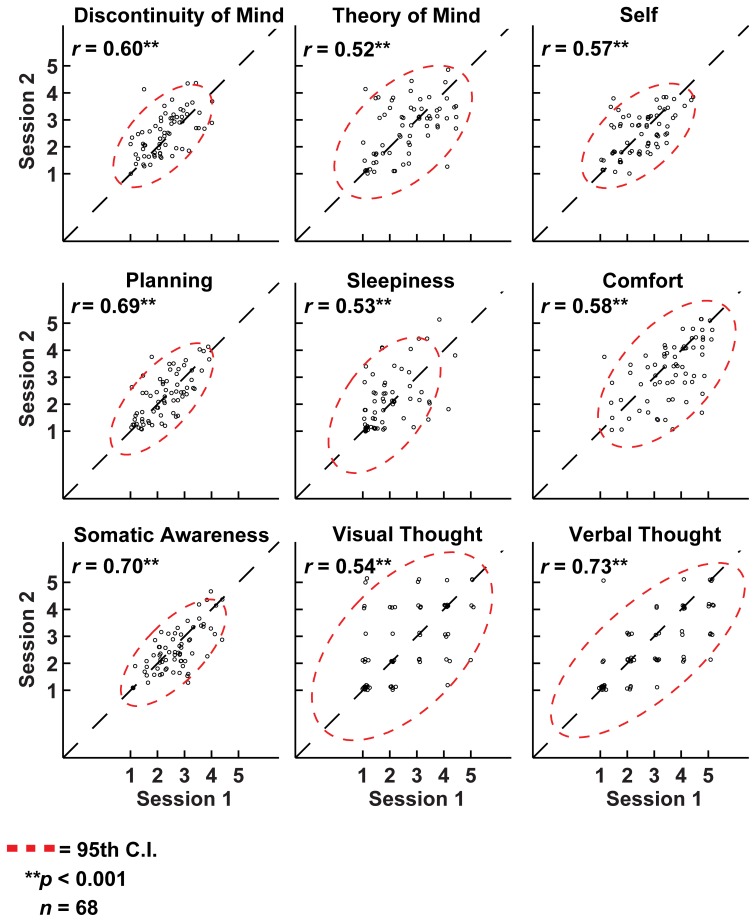
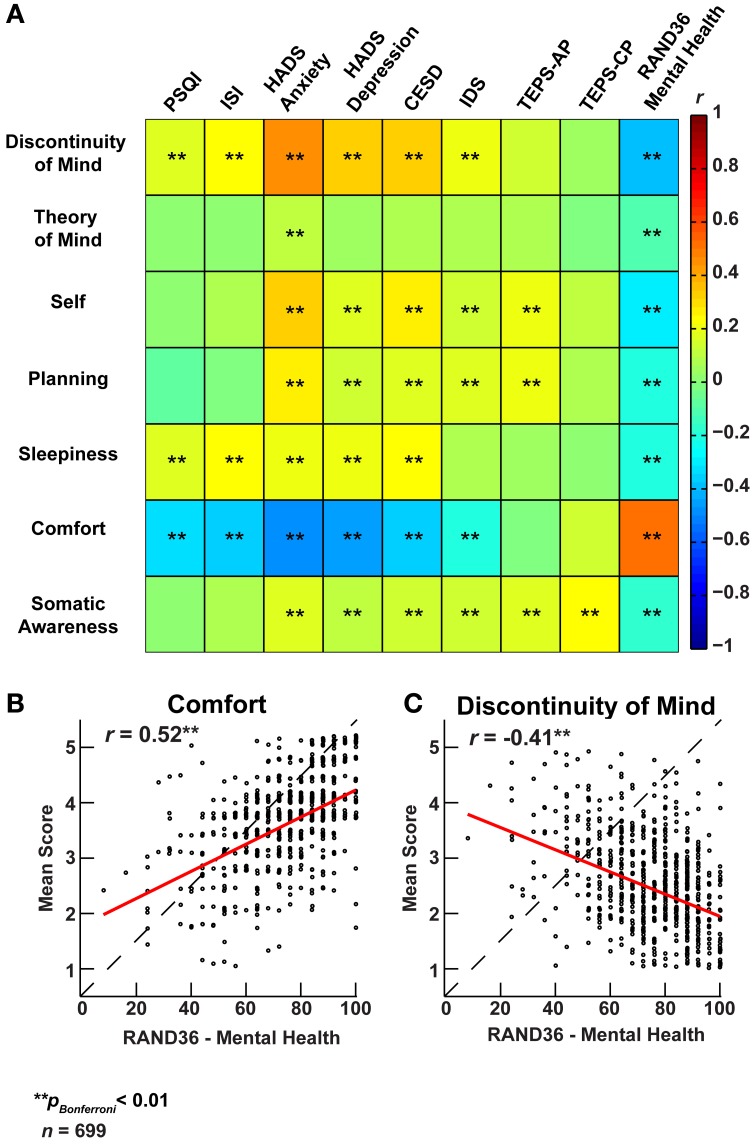
Resting-state neuroimaging is a dominant paradigm for studying brain function in health and disease. It is attractive for clinical research because of its simplicity for patients, straightforward standardization, and sensitivity to brain disorders. Importantly, non-sensory experiences like mind wandering may arise from ongoing brain activity. However, little is known about the link between ongoing brain activity and cognition, as phenotypes of resting-state cognition-and tools to quantify them-have been lacking. To facilitate rapid and structured measurements of resting-state cognition we developed a 50-item self-report survey, the Amsterdam Resting-State Questionnaire (ARSQ). Based on ARSQ data from 813 participants assessed after 5 min eyes-closed rest in their home, we identified seven dimensions of resting-state cognition using factor analysis: Discontinuity of Mind, Theory of Mind, Self, Planning, Sleepiness, Comfort, and Somatic Awareness. Further, we showed that the structure of cognition was similar during resting-state fMRI and EEG, and that the test-retest correlations were remarkably high for all dimensions. To explore whether inter-individual variation of resting-state cognition is related to health status, we correlated ARSQ-derived factor scores with psychometric scales measuring depression, anxiety, and sleep quality. Mental health correlated positively with Comfort and negatively with Discontinuity of Mind. Finally, we show that sleepiness may partially explain a resting-state EEG profile previously associated with Alzheimer's disease. These findings indicate that the ARSQ readily provides information about cognitive phenotypes and that it is a promising tool for research on the neural correlates of resting-state cognition in health and disease.
静息态神经影像学是研究健康和疾病中大脑功能的主要范式。它因其对患者简单、易于标准化且对大脑疾病敏感而受到临床研究的青睐。重要的是,像思维漫游这样的非感觉体验可能源自大脑的持续活动。然而,对于大脑活动与认知之间的联系,我们知之甚少,因为静息态认知的表型及其量化工具一直缺乏。为了促进静息态认知的快速和结构化测量,我们开发了一个包含 50 个项目的自我报告调查,即阿姆斯特丹静息态问卷 (ARSQ)。基于 813 名参与者在自家闭眼休息 5 分钟后的 ARSQ 数据,我们使用因子分析确定了静息态认知的七个维度:思维不连续、心理理论、自我、计划、困倦、舒适和躯体意识。此外,我们还表明,在静息态 fMRI 和 EEG 中,认知结构相似,所有维度的测试-重测相关性都非常高。为了探索静息态认知的个体间变异性是否与健康状况有关,我们将 ARSQ 衍生的因子得分与测量抑郁、焦虑和睡眠质量的心理计量学量表相关联。心理健康与舒适呈正相关,与思维不连续呈负相关。最后,我们表明困倦可能部分解释了先前与阿尔茨海默病相关的静息态 EEG 图谱。这些发现表明,ARSQ 可以方便地提供认知表型的信息,并且是研究健康和疾病中静息态认知的神经相关性的有前途的工具。