• 文献检索
  • 文档翻译
  • 深度研究
  • 学术资讯
  • Suppr Zotero 插件Zotero 插件
  • 邀请有礼
  • 套餐&价格
  • 历史记录
应用&插件
Suppr Zotero 插件Zotero 插件浏览器插件Mac 客户端Windows 客户端微信小程序
定价
高级版会员购买积分包购买API积分包
服务
文献检索文档翻译深度研究API 文档MCP 服务
关于我们
关于 Suppr公司介绍联系我们用户协议隐私条款
关注我们

Suppr 超能文献

核心技术专利:CN118964589B侵权必究
粤ICP备2023148730 号-1Suppr @ 2026

文献检索

告别复杂PubMed语法,用中文像聊天一样搜索,搜遍4000万医学文献。AI智能推荐,让科研检索更轻松。

立即免费搜索

文件翻译

保留排版,准确专业,支持PDF/Word/PPT等文件格式,支持 12+语言互译。

免费翻译文档

深度研究

AI帮你快速写综述,25分钟生成高质量综述,智能提取关键信息,辅助科研写作。

立即免费体验

音乐聆听的心理功能。

The psychological functions of music listening.

机构信息

Department of Psychology, Chemnitz University of Technology Chemnitz, Germany.

出版信息

Front Psychol. 2013 Aug 13;4:511. doi: 10.3389/fpsyg.2013.00511. eCollection 2013.

DOI:10.3389/fpsyg.2013.00511
PMID:23964257
原文链接:https://pmc.ncbi.nlm.nih.gov/articles/PMC3741536/
Abstract

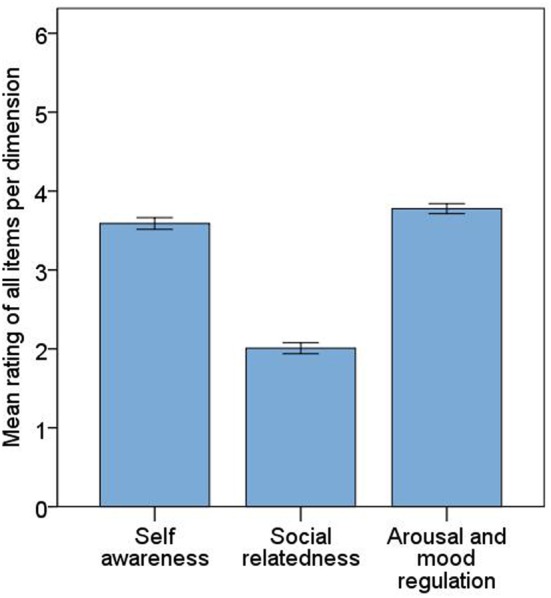
Why do people listen to music? Over the past several decades, scholars have proposed numerous functions that listening to music might fulfill. However, different theoretical approaches, different methods, and different samples have left a heterogeneous picture regarding the number and nature of musical functions. Moreover, there remains no agreement about the underlying dimensions of these functions. Part one of the paper reviews the research contributions that have explicitly referred to musical functions. It is concluded that a comprehensive investigation addressing the basic dimensions underlying the plethora of functions of music listening is warranted. Part two of the paper presents an empirical investigation of hundreds of functions that could be extracted from the reviewed contributions. These functions were distilled to 129 non-redundant functions that were then rated by 834 respondents. Principal component analysis suggested three distinct underlying dimensions: People listen to music to regulate arousal and mood, to achieve self-awareness, and as an expression of social relatedness. The first and second dimensions were judged to be much more important than the third-a result that contrasts with the idea that music has evolved primarily as a means for social cohesion and communication. The implications of these results are discussed in light of theories on the origin and the functionality of music listening and also for the application of musical stimuli in all areas of psychology and for research in music cognition.

摘要

人们为什么听音乐?在过去的几十年里,学者们提出了音乐可能具有的许多功能。然而,不同的理论方法、不同的方法和不同的样本,使得音乐功能的数量和性质呈现出异质化的图景。此外,对于这些功能的潜在维度还没有达成共识。本文第一部分回顾了明确提到音乐功能的研究贡献。结论是,有必要对音乐聆听的基本维度进行全面调查,以解决众多功能的问题。本文第二部分对从综述中提取的数百种功能进行了实证研究。这些功能被提炼成 129 种非冗余功能,然后由 834 名受访者进行评分。主成分分析表明存在三个不同的潜在维度:人们听音乐是为了调节兴奋和情绪,实现自我意识,以及表达社会关系。第一和第二维度被认为比第三维度重要得多——这一结果与音乐主要是作为社会凝聚力和沟通手段的观点形成对比。这些结果在音乐聆听的起源和功能理论以及音乐刺激在心理学各个领域的应用和音乐认知研究方面都具有重要意义。
https://cdn.ncbi.nlm.nih.gov/pmc/blobs/b3ee/3741536/338de2b9c740/fpsyg-04-00511-g0001.jpg

相似文献

1
The psychological functions of music listening.音乐聆听的心理功能。
Front Psychol. 2013 Aug 13;4:511. doi: 10.3389/fpsyg.2013.00511. eCollection 2013.
2
[Listening to music in old age : Investigation of utilization and psychosocial resources].[老年听音乐:利用情况及社会心理资源调查]
Z Gerontol Geriatr. 2018 Aug;51(6):682-690. doi: 10.1007/s00391-017-1229-z. Epub 2017 Apr 18.
3
Songs for the Ego: Theorizing Musical Self-Enhancement.自我之歌:音乐自我提升理论
Front Psychol. 2016 Jan 20;7:2. doi: 10.3389/fpsyg.2016.00002. eCollection 2016.
4
The Goals and Effects of Music Listening and Their Relationship to the Strength of Music Preference.聆听音乐的目标与效果及其与音乐偏好强度的关系。
PLoS One. 2016 Mar 17;11(3):e0151634. doi: 10.1371/journal.pone.0151634. eCollection 2016.
5
Music we move to: Spotify audio features and reasons for listening.我们随音乐起舞:Spotify 的音频功能和收听原因。
PLoS One. 2022 Sep 29;17(9):e0275228. doi: 10.1371/journal.pone.0275228. eCollection 2022.
6
Music listening in families and peer groups: benefits for young people's social cohesion and emotional well-being across four cultures.家庭和同龄群体中的音乐聆听:对四个文化群体中年轻人的社会凝聚力和情感福祉的益处。
Front Psychol. 2014 May 8;5:392. doi: 10.3389/fpsyg.2014.00392. eCollection 2014.
7
Benefits of listening to a recording of euphoric joint music making in polydrug abusers.多药滥用者聆听欣快性联合音乐创作录音的益处。
Front Hum Neurosci. 2015 Jun 11;9:300. doi: 10.3389/fnhum.2015.00300. eCollection 2015.
8
Music Use for Mood Regulation: Self-Awareness and Conscious Listening Choices in Young People With Tendencies to Depression.用于情绪调节的音乐:有抑郁倾向的年轻人的自我意识和有意识的聆听选择
Front Psychol. 2019 May 24;10:1199. doi: 10.3389/fpsyg.2019.01199. eCollection 2019.
9
Functions of music, focused on the context of music listening, and psychological well-being in late adolescence regarding gender differences.音乐的功能,聚焦于音乐聆听的背景,以及关于性别差异的青少年晚期的心理健康。
Front Psychol. 2023 Dec 21;14:1275818. doi: 10.3389/fpsyg.2023.1275818. eCollection 2023.
10
Why do we listen to music? A uses and gratifications analysis.我们为什么听音乐?一种使用与满足分析。
Br J Psychol. 2011 Feb;102(1):108-34. doi: 10.1348/000712610X506831.

引用本文的文献

1
The relative contributions of subjective and musical factors in music for sleep.音乐中主观因素和音乐因素对睡眠的相对贡献。
PLoS One. 2025 Aug 21;20(8):e0330268. doi: 10.1371/journal.pone.0330268. eCollection 2025.
2
Dimensions of music use motivations: Genetic and environmental underpinnings, and associations with Big Five and Empathy traits.音乐使用动机的维度:遗传和环境基础,以及与大五人格和共情特质的关联。
PLoS One. 2025 Aug 8;20(8):e0329808. doi: 10.1371/journal.pone.0329808. eCollection 2025.
3
Beyond school gates: the role of motivation in music learning on elementary school students' daily music listening behaviors.

本文引用的文献

1
Trends in media use.媒体使用趋势
Future Child. 2008 Spring;18(1):11-37. doi: 10.1353/foc.0.0000.
2
The structure of musical preferences: a five-factor model.音乐偏好的结构:五因素模型。
J Pers Soc Psychol. 2011 Jun;100(6):1139-57. doi: 10.1037/a0022406.
3
Why do we listen to music? A uses and gratifications analysis.我们为什么听音乐?一种使用与满足分析。
校门之外:动机对小学生日常音乐聆听行为中音乐学习的作用。
Front Psychol. 2025 Jul 16;16:1441572. doi: 10.3389/fpsyg.2025.1441572. eCollection 2025.
4
Implications for the Ergogenic Benefits of Self-Selected Music in Neurological Conditions: A Theoretical Review.自选音乐对神经系统疾病的促力效益:一项理论综述
Neurol Int. 2025 Jul 11;17(7):106. doi: 10.3390/neurolint17070106.
5
Connectedness: The Updated and Expanded Pillar of Lifestyle Psychiatry and Lifestyle Medicine.关联性:生活方式精神病学与生活方式医学的更新与扩展支柱
Am J Lifestyle Med. 2025 Jun 2:15598276251345455. doi: 10.1177/15598276251345455.
6
A Causal Model for Surveys of Exploratory Listening and Music Appreciation.探索性聆听与音乐欣赏调查的因果模型
Behav Sci (Basel). 2025 May 14;15(5):676. doi: 10.3390/bs15050676.
7
SpectroFusionNet a CNN approach utilizing spectrogram fusion for electric guitar play recognition.SpectroFusionNet:一种利用频谱图融合进行电吉他弹奏识别的卷积神经网络方法。
Sci Rep. 2025 May 15;15(1):16842. doi: 10.1038/s41598-025-00287-w.
8
Effect of music on preoperative anxiety and postoperative pain in patients undergoing gynecological surgery: A meta-analysis.音乐对妇科手术患者术前焦虑和术后疼痛的影响:一项荟萃分析。
PLoS One. 2025 Apr 29;20(4):e0319639. doi: 10.1371/journal.pone.0319639. eCollection 2025.
9
Method for Using Functional Near-Infrared Spectroscopy (fNIRS) to Explore Music-Induced Brain Activation in Orchestral Musicians in Concert.使用功能性近红外光谱技术(fNIRS)探索管弦乐演奏者在音乐会中音乐诱发大脑激活的方法。
Sensors (Basel). 2025 Mar 14;25(6):1807. doi: 10.3390/s25061807.
10
The cultural evolution of distortion in music (and other norms of mixed appeal).音乐中失真现象的文化演变(以及其他具有混合吸引力的规范)。
Philos Trans R Soc Lond B Biol Sci. 2025 Apr 3;380(1923):20240014. doi: 10.1098/rstb.2024.0014.
Br J Psychol. 2011 Feb;102(1):108-34. doi: 10.1348/000712610X506831.
4
An experience sampling study of emotional reactions to music: listener, music, and situation.一项关于对音乐情绪反应的经验抽样研究:听众、音乐与情境
Emotion. 2008 Oct;8(5):668-83. doi: 10.1037/a0013505.
5
Personality and music: can traits explain how people use music in everyday life?个性与音乐:特质能解释人们在日常生活中如何使用音乐吗?
Br J Psychol. 2007 May;98(Pt 2):175-85. doi: 10.1348/000712606X111177.
6
The nature of music from a biological perspective.从生物学角度看音乐的本质。
Cognition. 2006 May;100(1):1-32. doi: 10.1016/j.cognition.2005.11.004. Epub 2006 Feb 20.
7
The biology and evolution of music: a comparative perspective.音乐的生物学与进化:比较视角
Cognition. 2006 May;100(1):173-215. doi: 10.1016/j.cognition.2005.11.009. Epub 2006 Jan 17.
8
Prelinguistic evolution in early hominins: whence motherese?早期人类的前语言进化:母语式语言从何而来?
Behav Brain Sci. 2004 Aug;27(4):491-503; discussion 503-83. doi: 10.1017/s0140525x04000111.
9
Emotional sounds and the brain: the neuro-affective foundations of musical appreciation.情感声音与大脑:音乐欣赏的神经情感基础
Behav Processes. 2002 Nov;60(2):133-155. doi: 10.1016/s0376-6357(02)00080-3.
10
Intensely pleasurable responses to music correlate with activity in brain regions implicated in reward and emotion.对音乐产生的强烈愉悦反应与大脑中涉及奖励和情感的区域的活动相关。
Proc Natl Acad Sci U S A. 2001 Sep 25;98(20):11818-23. doi: 10.1073/pnas.191355898.