Division of Cardiology, Kaiser Permanente, Panorama City, CA, USA.
Korean Circ J. 2013 Jul;43(7):435-42. doi: 10.4070/kcj.2013.43.7.435.
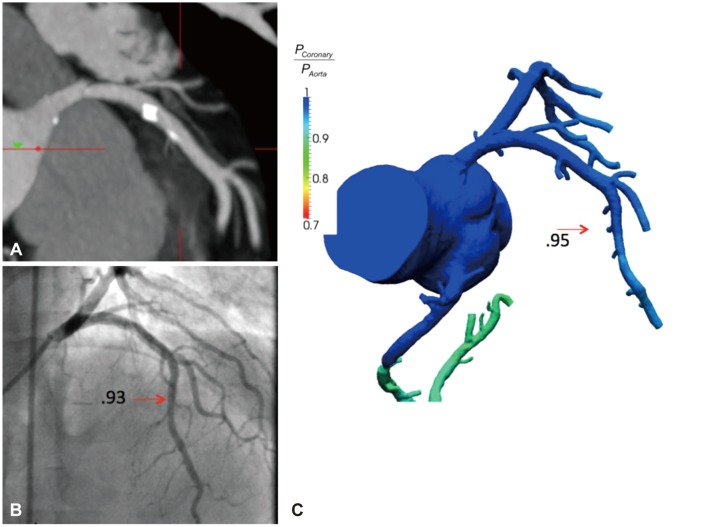
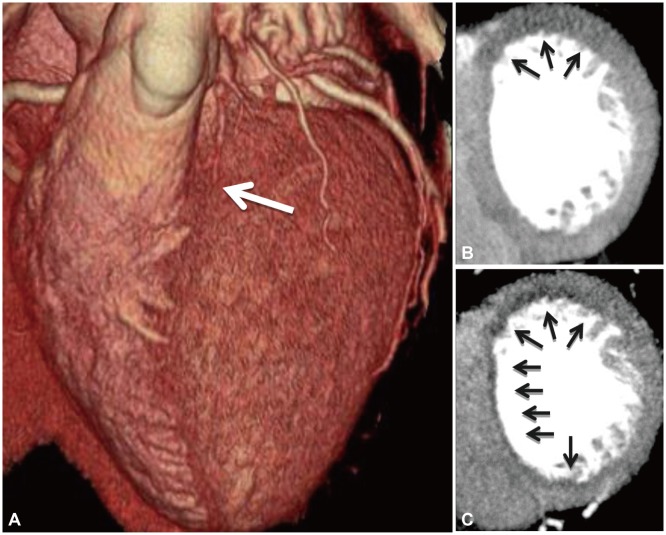
Coronary artery disease (CAD) remains the leading cause of death and morbidity worldwide. To date, diagnostic evaluation of patients with suspected CAD has relied upon the use of physiologic non-invasive testing by stress electrocardiography, echocardiography, myocardial perfusion imaging (MPI) and magnetic resonance imaging. Indeed, the importance of physiologic evaluation of CAD has been highlighted by large-scale randomized trials that demonstrate the propitious benefit of an integrated anatomic-physiologic evaluation method by performing lesion-specific ischemia assessment by fractional flow reserve (FFR)-widely considered the "gold" standard for ischemia assessment-at the time of invasive angiography. Coronary CT angiography (CCTA) has emerged as an attractive non-invasive test for anatomic illustration of the coronary arteries and atherosclerotic plaque. In a series of prospective multicenter trials, CCTA has been proven as having high diagnostic performance for stenosis detection as compared to invasive angiography. Nevertheless, CCTA evaluation of obstructive stenoses is prone to overestimation of severity and further, detection of stenoses by CCTA does not reliably determine the hemodynamic significance of the visualized lesions. Recently, a series of technological innovations have advanced the possibility of CCTA to enable physiologic evaluation of CAD, thereby creating the potential of this test to provide an integrated anatomic-physiologic assessment of CAD. These advances include rest-stress MPI by CCTA as well as the use of computational fluid dynamics to non-invasively calculate FFR from a typically acquired CCTA. The purpose of this review is to summarize the most recent data addressing these 2 physiologic methods of CAD evaluation by CCTA.
冠心病(CAD)仍然是全球范围内导致死亡和发病的主要原因。迄今为止,疑似 CAD 患者的诊断评估依赖于通过应激心电图、超声心动图、心肌灌注成像(MPI)和磁共振成像进行的生理非侵入性测试。实际上,大规模随机试验强调了生理评估 CAD 的重要性,这些试验表明通过在血管造影时进行特定病变的缺血评估(广泛认为是缺血评估的“金标准”)来进行病变特异性缺血评估的综合解剖生理评估方法具有有利的益处。冠状动脉 CT 血管造影(CCTA)已成为一种有吸引力的非侵入性测试,用于冠状动脉和动脉粥样硬化斑块的解剖描述。在一系列前瞻性多中心试验中,CCTA 已被证明在狭窄检测方面具有比血管造影更高的诊断性能。然而,CCTA 对阻塞性狭窄的评估容易高估狭窄程度,而且,CCTA 检测到的狭窄并不能可靠地确定可视化病变的血流动力学意义。最近,一系列技术创新提高了 CCTA 进行 CAD 生理评估的可能性,从而使该测试有可能提供 CAD 的综合解剖生理评估。这些进展包括 CCTA 进行静息-应激 MPI 以及使用计算流体动力学从典型获得的 CCTA 无创计算 FFR。本综述的目的是总结最新的数据,这些数据涉及 CCTA 评估 CAD 的这两种生理方法。