Department of Biological Sciences, Konkuk University, Seoul 143-701, Korea.
Int J Mol Sci. 2013 Aug 19;14(8):16970-85. doi: 10.3390/ijms140816970.
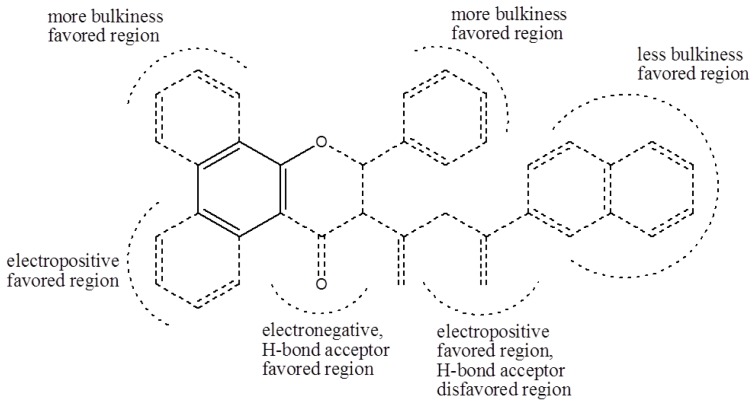
Plant-derived polyphenols are being tested as chemopreventive agents; some polyphenols arrest the cell cycle at G1 phase, whereas others inhibit cell cycle proliferation at G2/M phase. Therefore, polyphenols have been proposed to inhibit cell cycle progression at different phases via distinct mechanisms. Indeed, our previous studies showed that small structural differences in polyphenols cause large differences in their biological activities; however, the details of the structural properties causing G1 cell cycle arrest remain unknown. In this study, we prepared 27 polyphenols, including eight different scaffolds, to gain insight into the structural conditions that arrest the cell cycle at G1 phase in a quantitative structure-activity relationship study. We used cell cycle profiles to determine the biophores responsible for G1 cell cycle arrest and believe that the biophores identified in this study will help design polyphenols that cause G1 cell cycle arrest.
植物来源的多酚类化合物正被作为化学预防剂进行测试;一些多酚类化合物将细胞周期阻滞在 G1 期,而另一些则在 G2/M 期抑制细胞周期增殖。因此,多酚类化合物被认为可以通过不同的机制在不同的细胞周期阶段抑制细胞周期的进展。事实上,我们之前的研究表明,多酚类化合物的微小结构差异会导致其生物活性的巨大差异;然而,导致 G1 期细胞周期阻滞的结构特性的细节尚不清楚。在这项研究中,我们制备了 27 种多酚类化合物,包括 8 种不同的骨架,以深入了解在定量构效关系研究中在 G1 期阻滞细胞周期的结构条件。我们使用细胞周期图谱来确定负责 G1 期细胞周期阻滞的生物活性部位,并相信本研究中鉴定的生物活性部位将有助于设计引起 G1 期细胞周期阻滞的多酚类化合物。