Dipartimento di Scienze Mediche e Biologiche, Università di Udine, Udine, Italy.
PLoS One. 2013 Aug 15;8(8):e70909. doi: 10.1371/journal.pone.0070909. eCollection 2013.
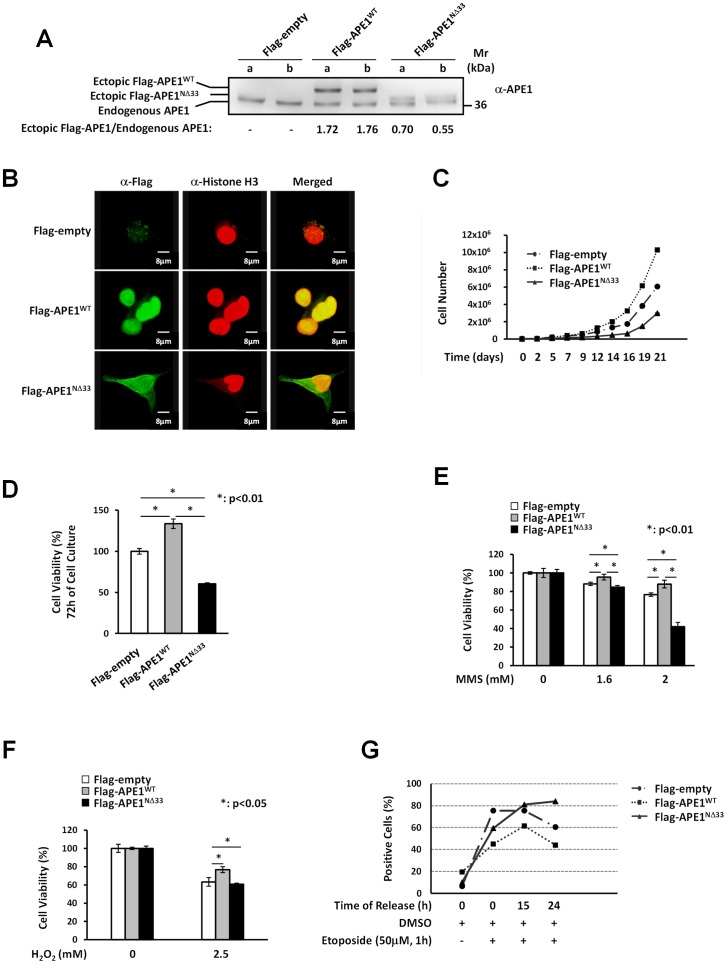
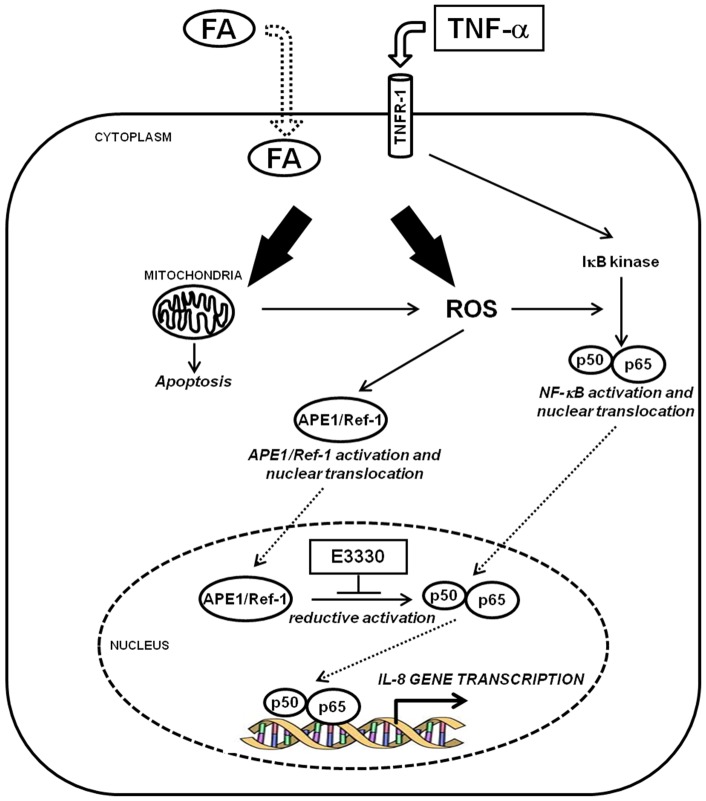
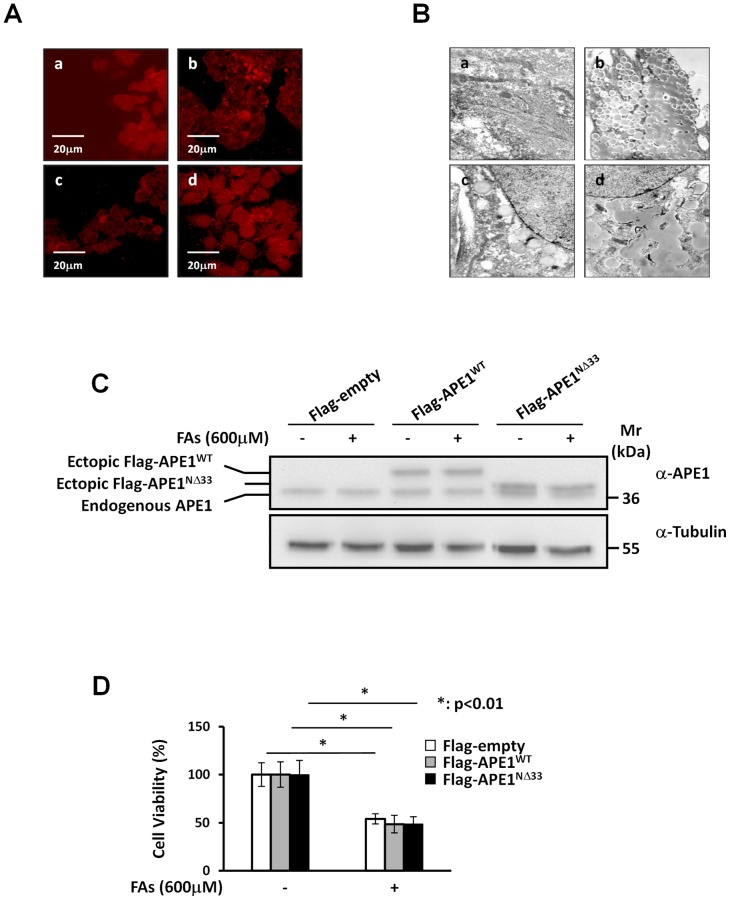
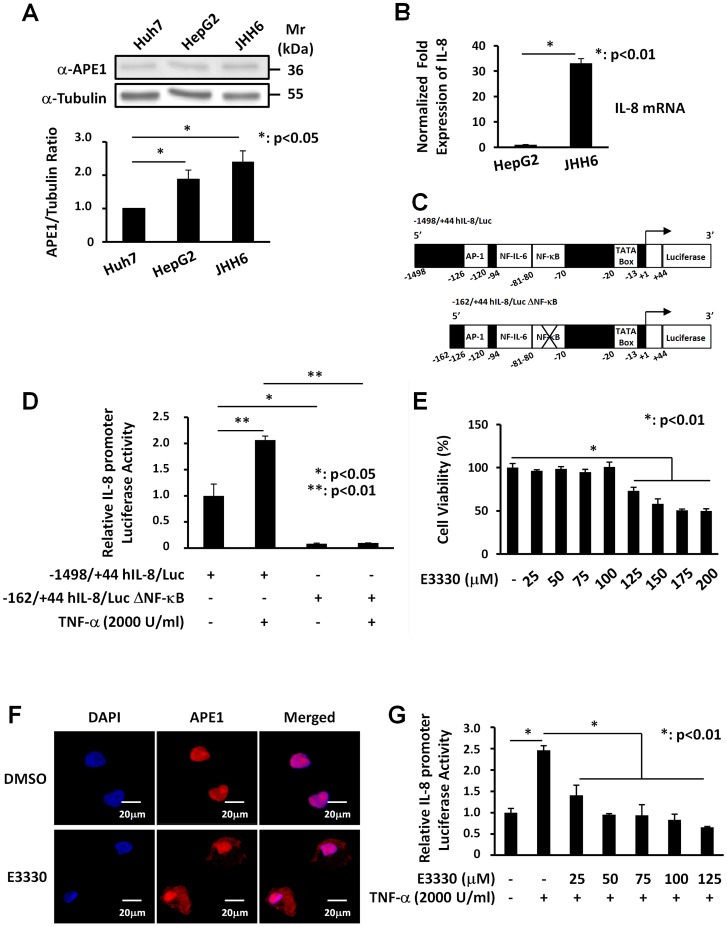
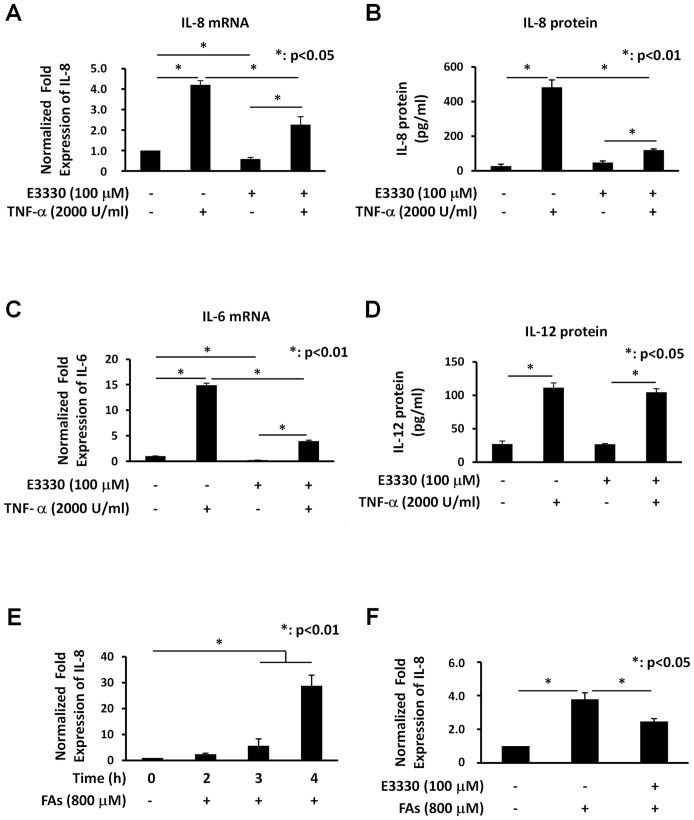
APE1/Ref-1 is a main regulator of cellular response to oxidative stress via DNA-repair function and co-activating activity on the NF-κB transcription factor. APE1 is central in controlling the oxidative stress-based inflammatory processes through modulation of cytokines expression and its overexpression is responsible for the onset of chemoresistance in different tumors including hepatic cancer. We examined the functional role of APE1 overexpression during hepatic cell damage related to fatty acid accumulation and the role of the redox function of APE1 in the inflammatory process. HepG2 cells were stably transfected with functional and non-functional APE1 encoding plasmids and the protective effect of APE1 overexpression toward genotoxic compounds or FAs accumulation, was tested. JHH6 cells were stimulated with TNF-α in the presence or absence of E3330, an APE1 redox inhibitor. IL-8 promoter activity was assessed by a luciferase reporter assay, gene expression by Real-Time PCR and cytokines (IL-6, IL-8, IL-12) levels measured by ELISA. APE1 over-expression did not prevent cytotoxicity induced by lipid accumulation. E3330 treatment prevented the functional activation of NF-κB via the alteration of APE1 subcellular trafficking and reduced IL-6 and IL-8 expression induced by TNF-α and FAs accumulation through blockage of the redox-mediated activation of NF-κB. APE1 overexpression observed in hepatic cancer cells may reflect an adaptive response to cell damage and may be responsible for further cell resistance to chemotherapy and for the onset of inflammatory response. The efficacy of the inhibition of APE1 redox activity in blocking TNF-α and FAs induced inflammatory response opens new perspectives for treatment of inflammatory-based liver diseases.
APE1/Ref-1 是通过 DNA 修复功能和对 NF-κB 转录因子的共激活活性来调节细胞对氧化应激反应的主要调节剂。APE1 是通过调节细胞因子表达来控制基于氧化应激的炎症过程的核心,其过表达是导致包括肝癌在内的不同肿瘤发生化疗耐药的原因。我们研究了 APE1 过表达在与脂肪酸积累相关的肝细胞损伤过程中的功能作用,以及 APE1 氧化还原功能在炎症过程中的作用。用功能性和非功能性 APE1 编码质粒稳定转染 HepG2 细胞,并测试 APE1 过表达对遗传毒性化合物或 FAs 积累的保护作用。用 TNF-α 刺激 JHH6 细胞,同时存在或不存在 APE1 氧化还原抑制剂 E3330。通过荧光素酶报告基因检测评估 IL-8 启动子活性,通过实时 PCR 评估基因表达,通过 ELISA 测量细胞因子(IL-6、IL-8、IL-12)水平。APE1 过表达不能预防脂质积累诱导的细胞毒性。E3330 处理通过改变 APE1 亚细胞运输来阻止 NF-κB 的功能激活,并通过阻断 NF-κB 的氧化还原激活来减少 TNF-α 和 FAs 积累诱导的 IL-6 和 IL-8 表达。肝癌细胞中观察到的 APE1 过表达可能反映了细胞损伤的适应性反应,并且可能是导致细胞对化疗进一步耐药和炎症反应发生的原因。APE1 氧化还原活性抑制阻断 TNF-α 和 FAs 诱导的炎症反应的疗效为治疗基于炎症的肝病开辟了新的前景。