Fraunhofer Institute for Toxicology and Experimental Medicine, Hannover, Germany.
PLoS One. 2013 Aug 13;8(8):e71728. doi: 10.1371/journal.pone.0071728. eCollection 2013.
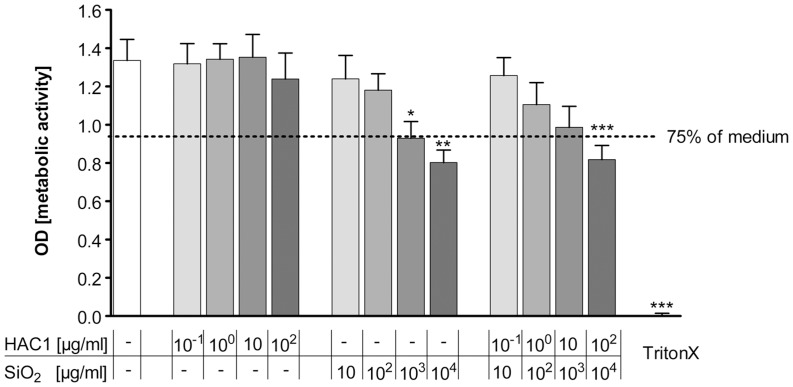
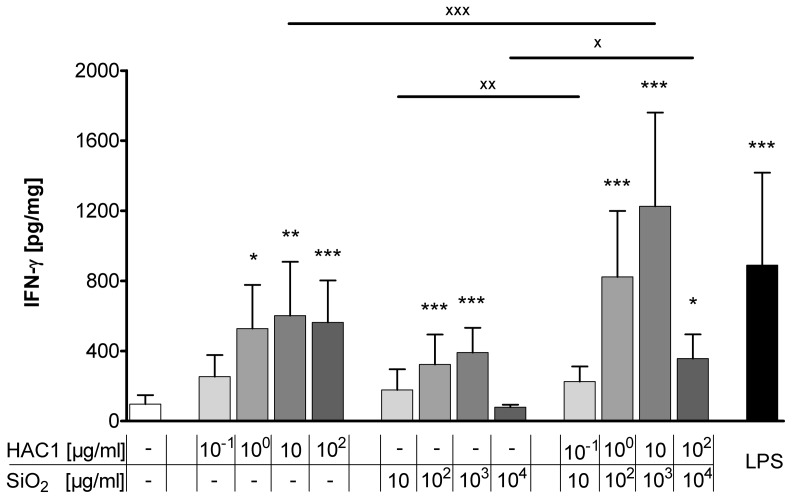
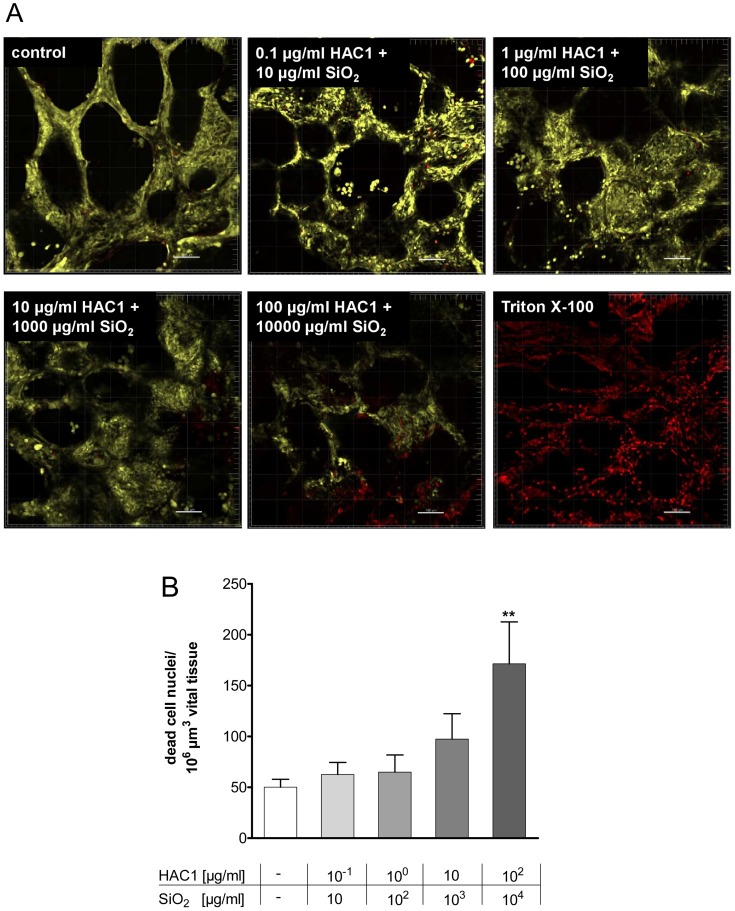
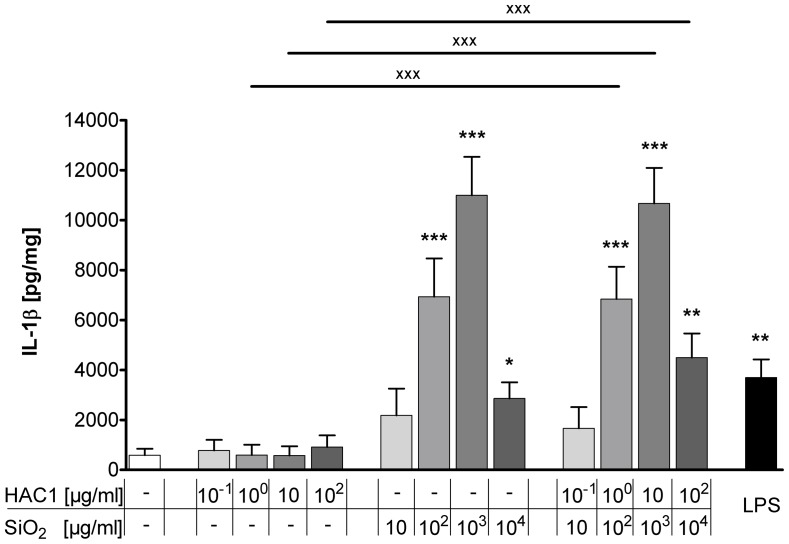
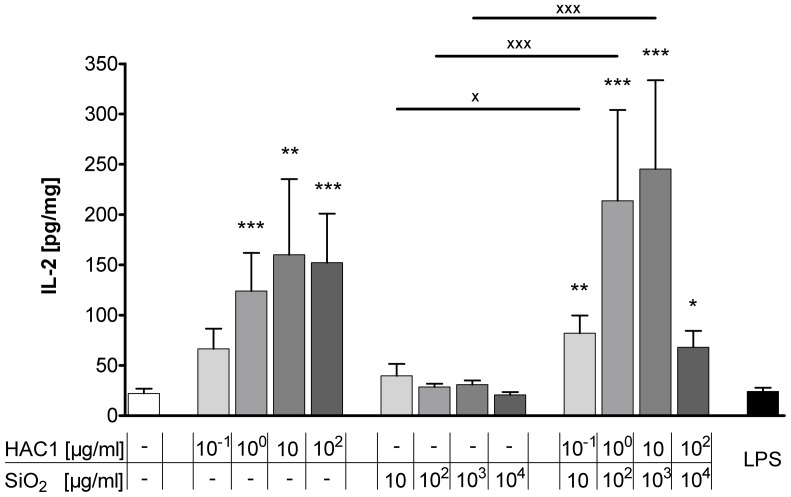
Annual outbreaks of influenza infections, caused by new influenza virus subtypes and high incidences of zoonosis, make seasonal influenza one of the most unpredictable and serious health threats worldwide. Currently available vaccines, though the main prevention strategy, can neither efficiently be adapted to new circulating virus subtypes nor provide high amounts to meet the global demand fast enough. New influenza vaccines quickly adapted to current virus strains are needed. In the present study we investigated the local toxicity and capacity of a new inhalable influenza vaccine to induce an antigen-specific recall response at the site of virus entry in human precision-cut lung slices (PCLS). This new vaccine combines recombinant H1N1 influenza hemagglutinin (HAC1), produced in tobacco plants, and a silica nanoparticle (NP)-based drug delivery system. We found no local cellular toxicity of the vaccine within applicable concentrations. However higher concentrations of NP (≥10(3) µg/ml) dose-dependently decreased viability of human PCLS. Furthermore NP, not the protein, provoked a dose-dependent induction of TNF-α and IL-1β, indicating adjuvant properties of silica. In contrast, we found an antigen-specific induction of the T cell proliferation and differentiation cytokine, IL-2, compared to baseline level (152±49 pg/mg vs. 22±5 pg/mg), which could not be seen for the NP alone. Additionally, treatment with 10 µg/ml HAC1 caused a 6-times higher secretion of IFN-γ compared to baseline (602±307 pg/mg vs. 97±51 pg/mg). This antigen-induced IFN-γ secretion was further boosted by the adjuvant effect of silica NP for the formulated vaccine to a 12-fold increase (97±51 pg/mg vs. 1226±535 pg/mg). Thus we were able to show that the plant-produced vaccine induced an adequate innate immune response and re-activated an established antigen-specific T cell response within a non-toxic range in human PCLS at the site of virus entry.
每年都会爆发流感感染,这是由新的流感病毒亚型引起的,而且人畜共患病的发病率也很高,这使得季节性流感成为全球最不可预测和最严重的健康威胁之一。目前可用的疫苗虽然是主要的预防策略,但既不能有效地适应新的循环病毒亚型,也不能提供足够高的数量来快速满足全球需求。需要快速开发出能适应当前病毒株的新型流感疫苗。在本研究中,我们研究了一种新的可吸入流感疫苗在人肺切片(PCLS)病毒进入部位诱导抗原特异性回忆反应的局部毒性和能力。这种新疫苗结合了在烟草植物中生产的重组 H1N1 流感血凝素(HAC1)和基于纳米硅(NP)的药物传递系统。我们发现疫苗在适用浓度范围内没有引起局部细胞毒性。然而,更高浓度的 NP(≥10³μg/ml)呈浓度依赖性地降低了人 PCLS 的活力。此外,NP 而不是蛋白,引起了 TNF-α和 IL-1β的剂量依赖性诱导,表明硅纳米颗粒具有佐剂特性。相比之下,与基线水平(152±49 pg/mg 比 22±5 pg/mg)相比,我们发现了一种针对 T 细胞增殖和分化细胞因子 IL-2 的抗原特异性诱导,这是 NP 单独治疗所不能观察到的。此外,与基线水平(602±307 pg/mg 比 97±51 pg/mg)相比,用 10μg/ml HAC1 处理引起 IFN-γ的分泌增加了 6 倍。对于配方疫苗,NP 的佐剂作用进一步增强了这种抗原诱导的 IFN-γ分泌,使其增加了 12 倍(97±51 pg/mg 比 1226±535 pg/mg)。因此,我们能够证明植物生产的疫苗在人 PCLS 病毒进入部位的非毒性范围内诱导了适当的先天免疫反应,并重新激活了已建立的抗原特异性 T 细胞反应。