Influenza Centre, The Gade Institute, University of Bergen, Bergen, Norway.
Hum Vaccin Immunother. 2012 May;8(5):653-61. doi: 10.4161/hv.19503. Epub 2012 May 1.
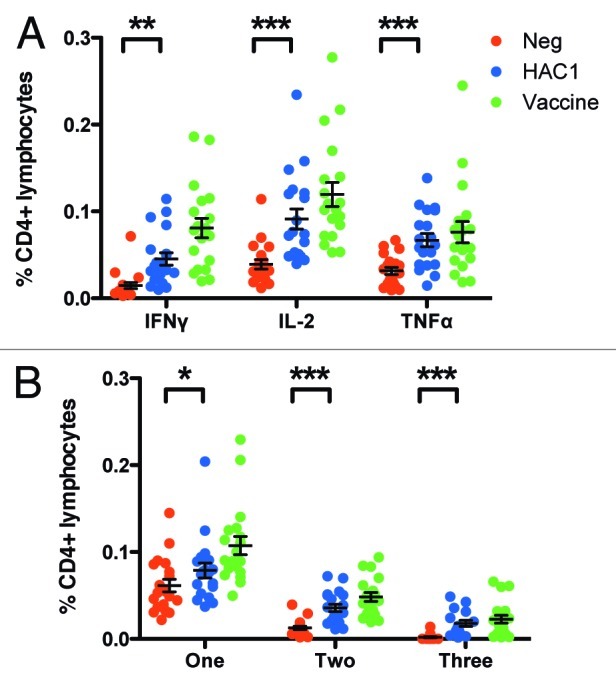
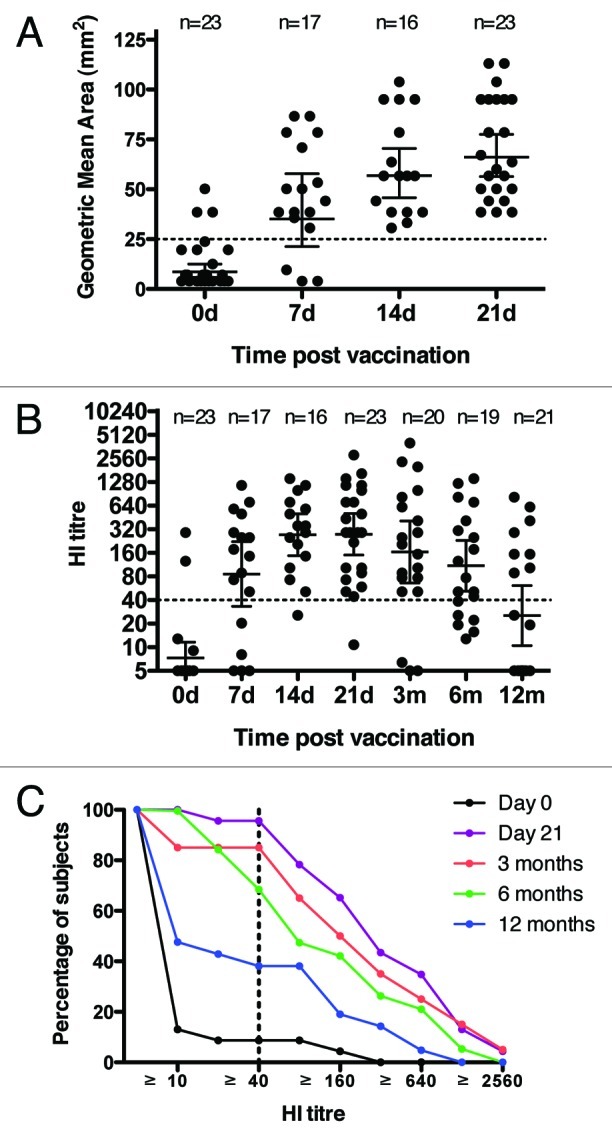
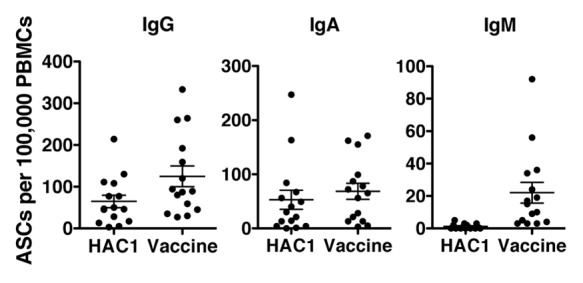
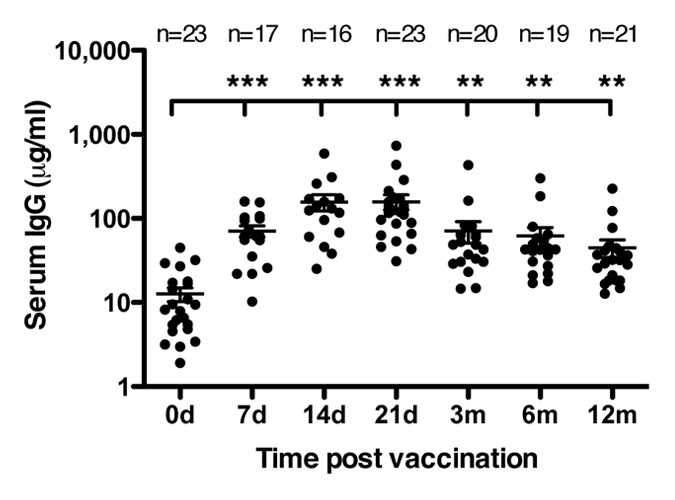
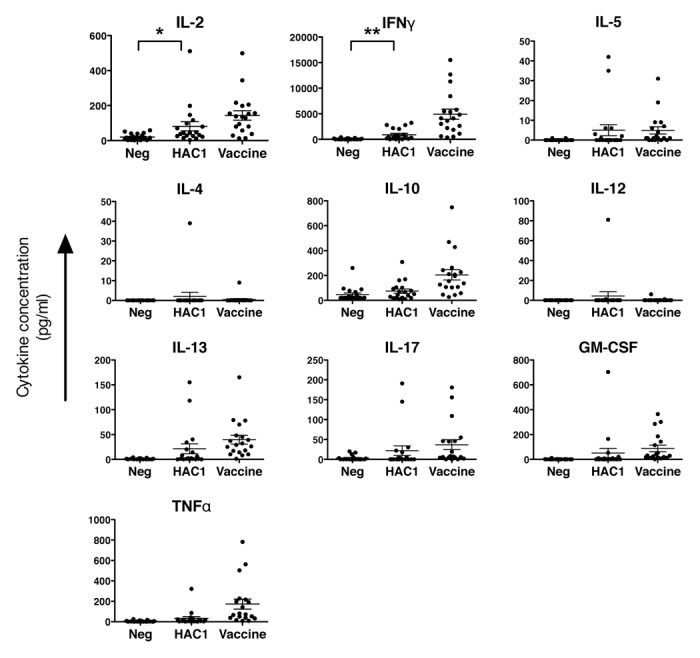
Rapid production of influenza vaccine antigen is an important challenge when a new pandemic occurs. Production of recombinant antigens in plants is a quick, cost effective and up scalable new strategy for influenza vaccine production. In this study, we have characterized a recombinant influenza haemagglutinin antigen (HAC1) that was derived from the 2009 pandemic H1N1 (pdmH1N1) virus and expressed in tobacco plants. Volunteers vaccinated with the 2009 pdmH1N1 oil-in-water adjuvanted vaccine provided serum and lymphocyte samples that were used to study the immunogenic properties of the HAC1 antigen in vitro. By 7 d post vaccination, the vaccine fulfilled the licensing criteria for antibody responses to the HA detected by haemagglutination inhibition and single radial hemolysis. By ELISA and ELISPOT analysis we showed that HAC1 was recognized by specific serum antibodies and antibody secreting cells, respectively. We conducted a kinetic analysis and found a peak of serum HAC1 specific antibody response between day 14 and 21 post vaccination by ELISA. We also detected elevated production of IL-2 and IFNγ and low frequencies of CD4(+) T cells producing single or multiple Th1 cytokines after stimulating PBMCs (peripheral blood mononuclear cells) with the HAC1 antigen in vitro. This indicates that the antigen can interact with T cells, although confirming an effective adjuvant would be required to improve the T-cell stimulation of plant based vaccines. We conclude that the tobacco derived recombinant HAC1 antigen is a promising vaccine candidate recognized by both B- and T cells.
当新的大流行疫情发生时,快速生产流感疫苗抗原是一个重要的挑战。在植物中生产重组抗原是一种快速、具有成本效益且可扩展的流感疫苗生产新策略。在这项研究中,我们对源自 2009 年大流行 H1N1(pdmH1N1)病毒的重组流感血凝素抗原(HAC1)进行了表征,并在烟草植物中进行了表达。接种了 2009 年 pdmH1N1 油包水佐剂疫苗的志愿者提供了血清和淋巴细胞样本,用于研究 HAC1 抗原在体外的免疫原性。接种后 7 天,疫苗满足了通过血凝抑制和单放射溶血检测到 HA 的抗体反应的许可标准。通过 ELISA 和 ELISPOT 分析,我们表明 HAC1 分别被特异性血清抗体和抗体分泌细胞识别。我们进行了动力学分析,发现通过 ELISA 在接种后第 14 天至第 21 天之间达到了血清 HAC1 特异性抗体反应的峰值。我们还发现,在用 HAC1 抗原体外刺激 PBMC(外周血单核细胞)后,IL-2 和 IFNγ 的产生增加,而产生单一或多种 Th1 细胞因子的 CD4(+) T 细胞的频率较低。这表明该抗原可以与 T 细胞相互作用,尽管需要确认有效的佐剂来提高植物疫苗的 T 细胞刺激作用。我们得出结论,烟草衍生的重组 HAC1 抗原是一种有前途的疫苗候选物,可被 B 细胞和 T 细胞识别。