Fraunhofer USA Center for Molecular Biotechnology, Newark, DE 19711, USA.
Influenza Other Respir Viruses. 2012 May;6(3):204-10. doi: 10.1111/j.1750-2659.2011.00295.x. Epub 2011 Oct 4.
Influenza virus is a globally important respiratory pathogen that causes a high degree of annual morbidity and mortality. Significant antigenic drift results in emergence of new, potentially pandemic, virus variants. The best prophylactic option for controlling emerging virus strains is to manufacture and administer pandemic vaccines in sufficient quantities and to do so in a timely manner without impacting the regular seasonal influenza vaccine capacity. Current, egg-based, influenza vaccine production is well established and provides an effective product, but has limited capacity and speed.
To satisfy the additional global demand for emerging influenza vaccines, high-performance cost-effective technologies need to be developed. Plants have a potential as an economic and efficient large-scale production platform for vaccine antigens.
In this study, a plant virus-based transient expression system was used to produce hemagglutinin (HA) proteins from the three vaccine strains used during the 2008-2009 influenza season, A/Brisbane/59/07 (H1N1), A/Brisbane/10/07 (H3N2), and B/Florida/4/06, as well as from the recently emerged novel H1N1 influenza A virus, A/California/04/09.
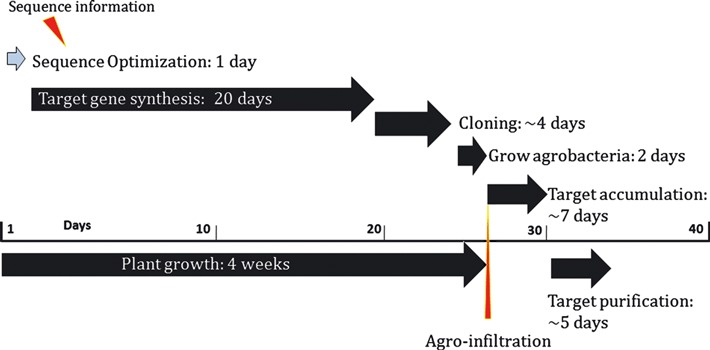
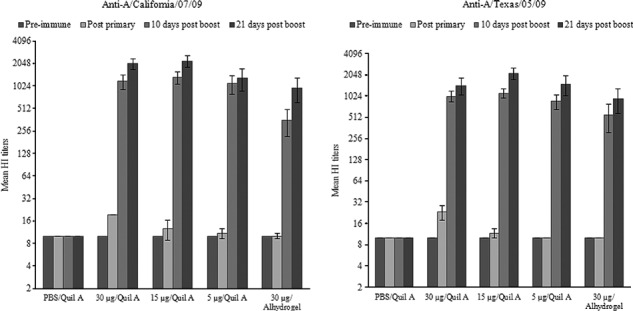
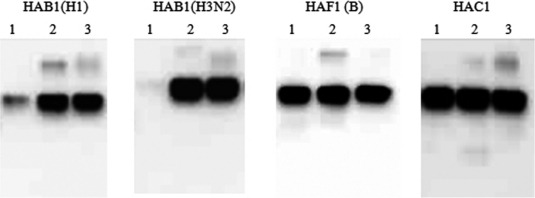
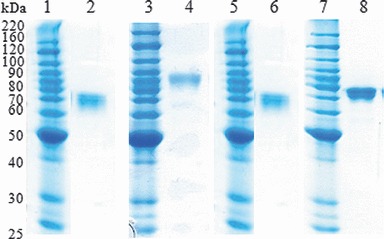
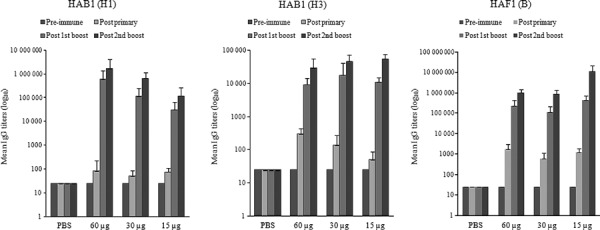
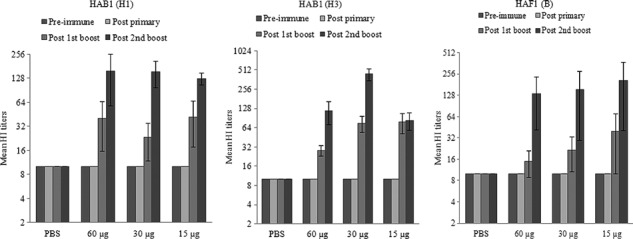
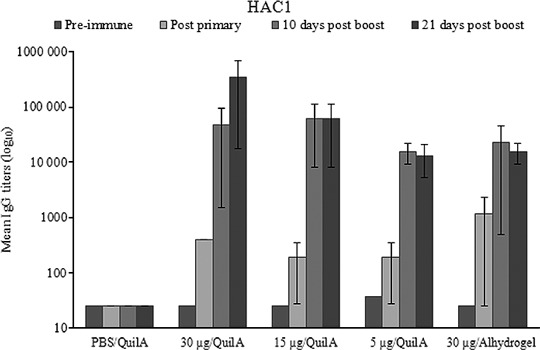
The recombinant plant-based HA proteins were engineered and produced in Nicotiana benthamiana plants within 2 months of obtaining the genetic sequences specific to each virus strain. These antigens expressed at the rate of 400-1300 mg/kg of fresh leaf tissue, with >70% solubility. Immunization of mice with these HA antigens induced serum anti-HA IgG and hemagglutination inhibition antibody responses at the levels considered protective against these virus infections.
These results demonstrate the feasibility of our transient plant expression system for the rapid production of influenza vaccine antigens.
流感病毒是一种具有重要全球意义的呼吸道病原体,会导致高发病率和死亡率。显著的抗原漂移导致新的、潜在大流行的病毒变体出现。控制新出现的病毒株的最佳预防选择是制造和大量使用大流行疫苗,并及时进行,而不影响常规季节性流感疫苗的产能。目前,基于鸡蛋的流感疫苗生产已经成熟,并提供了有效的产品,但产能和速度有限。
为满足新兴流感疫苗的额外全球需求,需要开发高性能、具有成本效益的技术。植物具有作为疫苗抗原经济高效的大规模生产平台的潜力。
在这项研究中,使用植物病毒的瞬时表达系统,从 2008-2009 流感季节使用的三种疫苗株中生产血凝素 (HA) 蛋白,即 A/Brisbane/59/07 (H1N1)、A/Brisbane/10/07 (H3N2) 和 B/Florida/4/06,以及最近出现的新型 H1N1 流感病毒 A/California/04/09。
在获得每种病毒株特有的遗传序列后的 2 个月内,重组植物来源的 HA 蛋白在 Nicotiana benthamiana 植物中被设计和生产。这些抗原在新鲜叶片组织中的表达量为 400-1300mg/kg,可溶性超过 70%。用这些 HA 抗原免疫小鼠,可诱导血清抗-HA IgG 和血凝抑制抗体反应,达到针对这些病毒感染的保护水平。
这些结果表明,我们的瞬时植物表达系统可用于快速生产流感疫苗抗原。