1] Neuroregeneration and Stem Cell Programs, Institute for Cell Engineering, Johns Hopkins University School of Medicine, Baltimore, Maryland, USA. [2] Department of Physiology, Johns Hopkins University School of Medicine, Baltimore, Maryland, USA. [3] Department of Neurology, Johns Hopkins University School of Medicine, Baltimore, Maryland, USA. [4] Adrienne Helis Malvin Medical Research Foundation, New Orleans, Louisiana, USA.
Nat Neurosci. 2013 Oct;16(10):1392-400. doi: 10.1038/nn.3500. Epub 2013 Aug 25.
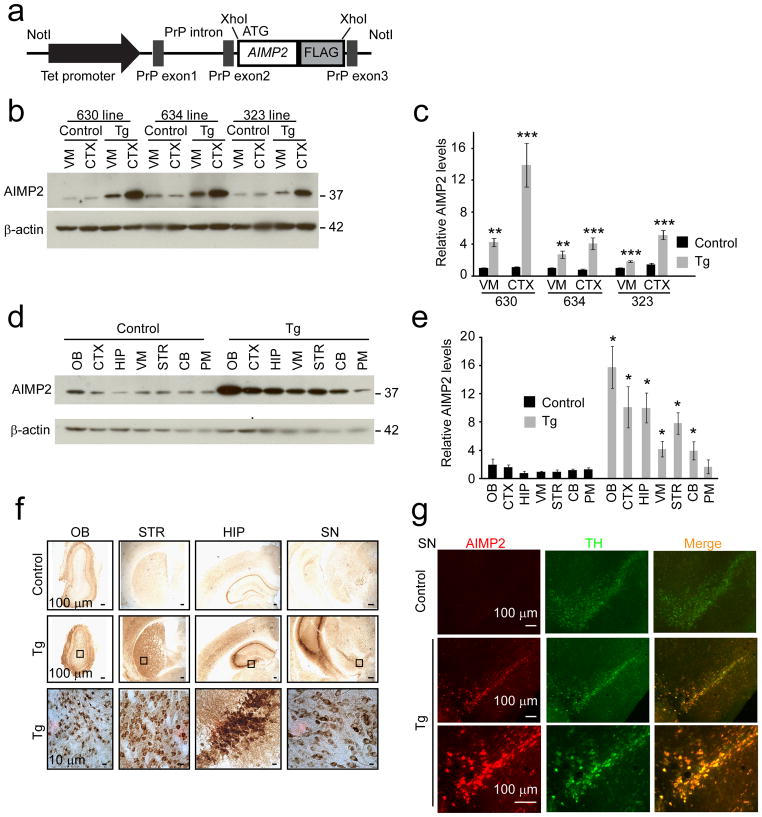
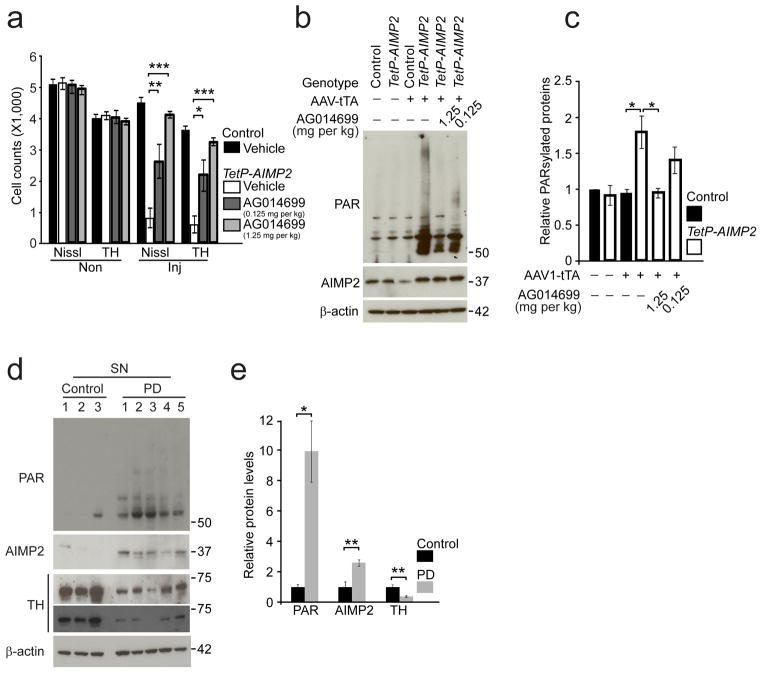
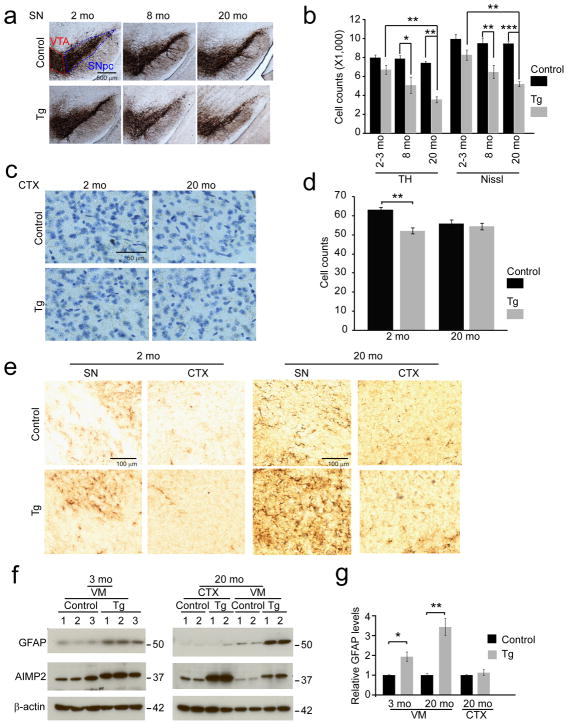
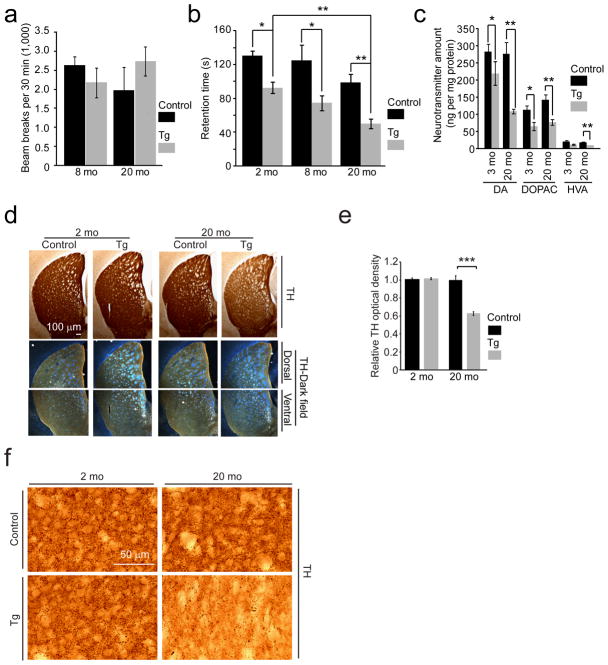
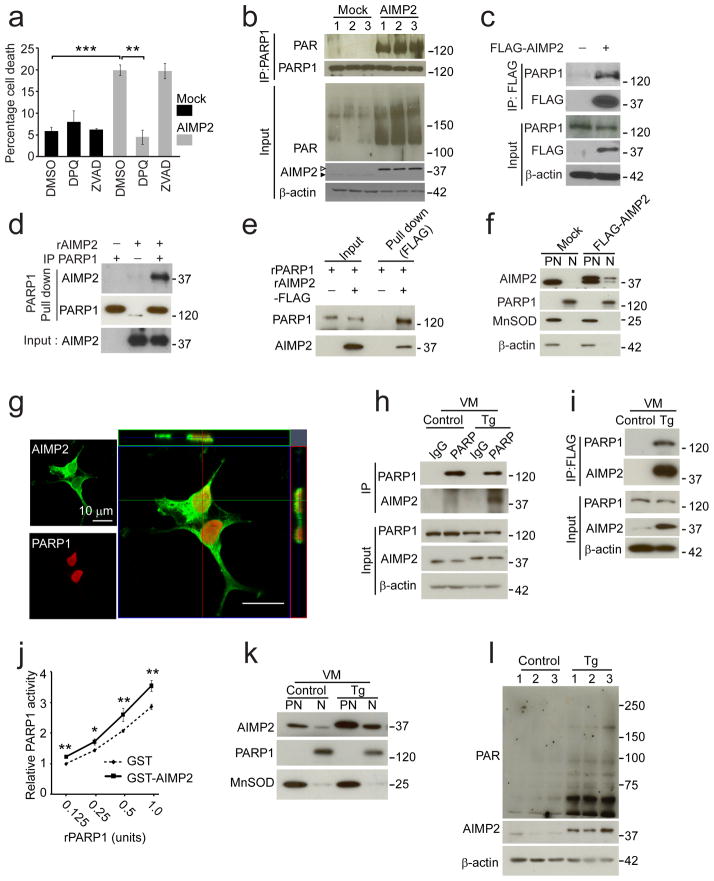
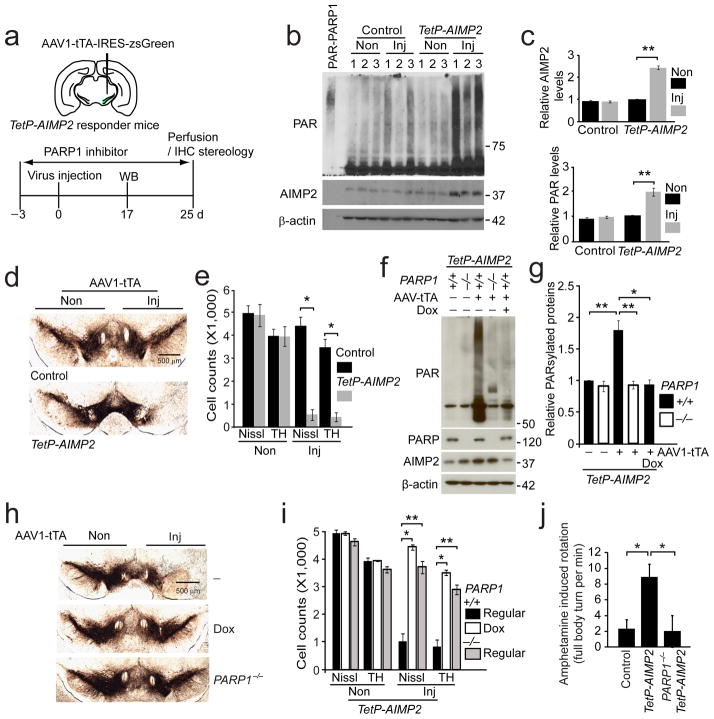
The defining pathogenic feature of Parkinson's disease is the age-dependent loss of dopaminergic neurons. Mutations and inactivation of parkin, an ubiquitin E3 ligase, induce Parkinson's disease through accumulation of pathogenic substrates. We found that transgenic overexpression of a parkin substrate, aminoacyl-tRNA synthetase complex interacting multifunctional protein-2 (AIMP2), led to a selective, age-dependent, progressive loss of dopaminergic neurons via activation of poly(ADP-ribose) polymerase-1 (PARP1). AIMP2 accumulation in vitro and in vivo resulted in PARP1 overactivation and dopaminergic cell toxicity via direct association of these proteins in the nucleus, providing a path to PARP1 activation other than DNA damage. Inhibition of PARP1 through gene deletion or drug inhibition reversed behavioral deficits and protected against dopamine neuron death in AIMP2 transgenic mice. These data indicate that brain-permeable PARP inhibitors could effectively delay or prevent disease progression in Parkinson's disease.
帕金森病的明确致病特征是多巴胺能神经元随年龄增长而丧失。泛素 E3 连接酶 parkin 的突变和失活通过积累致病底物引发帕金森病。我们发现,parkin 底物氨基酰-tRNA 合成酶复合物相互作用多功能蛋白-2(AIMP2)的转基因过表达导致多巴胺能神经元的选择性、年龄依赖性、进行性丧失,其机制是通过聚(ADP-核糖)聚合酶-1(PARP1)的激活。AIMP2 在体外和体内的积累导致 PARP1 的过度激活和多巴胺能细胞毒性,这是通过这些蛋白在核内的直接结合实现的,为 PARP1 的激活提供了除 DNA 损伤以外的途径。通过基因缺失或药物抑制 PARP1 可逆转 AIMP2 转基因小鼠的行为缺陷并防止多巴胺神经元死亡。这些数据表明,脑穿透性 PARP 抑制剂可有效延缓或预防帕金森病的疾病进展。