Moon In Seok, Kim Bo Gyung, Kim Jinna, Lee Jong Dae, Lee Won-Sang
Department of Otorhinolaryngology, Yonsei University College of Medicine, 134 Sinchon-dong, Seodaemun-gu, Seoul, 120-752, South Korea.
Tumour Biol. 2014 Jan;35(1):581-7. doi: 10.1007/s13277-013-1081-8. Epub 2013 Aug 27.
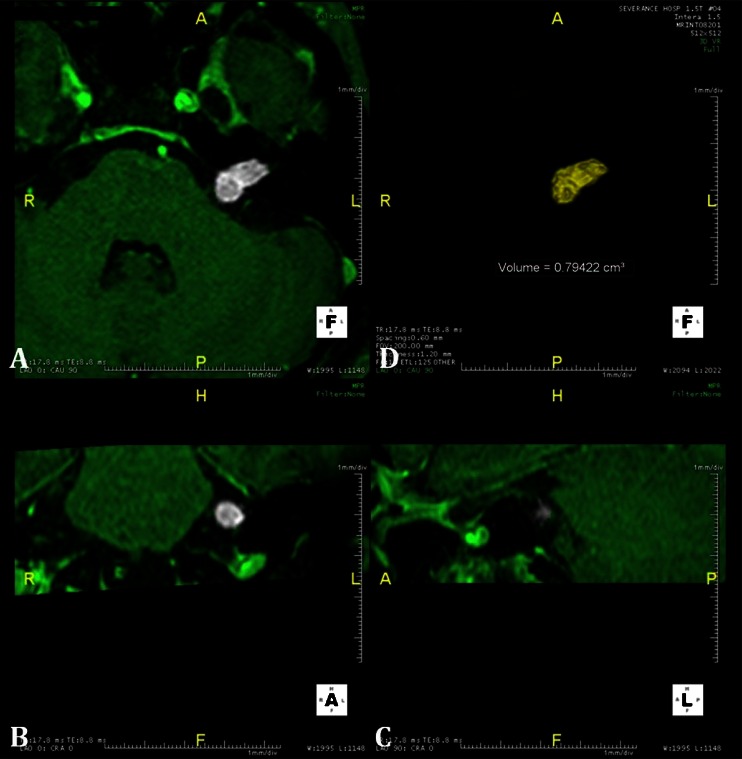
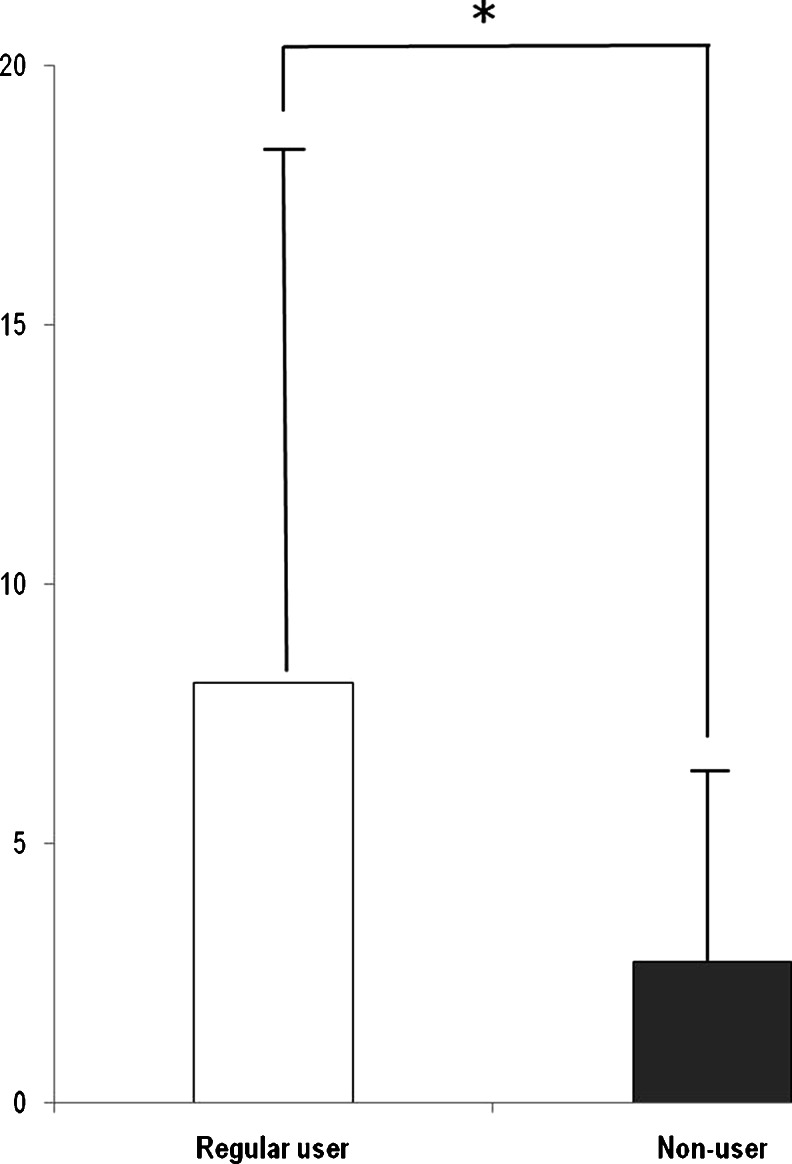
Vestibular schwannomas (VSs) grow in the region where the energy from mobile phone use is absorbed. We examined the associations of VSs with mobile phone use. This study included 119 patients who had undergone surgical tumor removal. We used two approaches in this investigation. First, a case-control study for the association of mobile phone use and incidence of VSs was conducted. Both cases and controls were investigated with questions based on INTERPHONE guidelines. Amount of mobile phone use according to duration, daily amount, and cumulative hours were compared between two groups. We also conducted a case-case study. The location and volume of the tumors were investigated by MRI. Associations between the estimated amount of mobile phone use and tumor volume and between the laterality of phone use and tumor location were analyzed. In a case-control study, the odds ratio (OR) of tumor incidence according to mobile phone use was 0.956. In the case-case study, tumor volume and estimated cumulative hours showed a strong correlation (r(2) = 0.144, p = 0.002), and regular mobile phone users showed tumors of a markedly larger volume than those of non-regular users (p < 0.001). When the analysis was limited to regular users who had serviceable hearing, laterality showed a strong correlation with tumor side (OR = 4.5). We found that tumors may coincide with the more frequently used ear of mobile phones and tumor volume that showed strong correlation with amount of mobile phone use, thus there is a possibility that mobile phone use may affect tumor growth.
前庭神经鞘瘤(VSs)生长于手机使用能量被吸收的区域。我们研究了VSs与手机使用之间的关联。本研究纳入了119例接受肿瘤切除手术的患者。我们在本次调查中采用了两种方法。首先,进行了一项关于手机使用与VSs发病率关联的病例对照研究。病例组和对照组均依据国际癌症研究机构(IARC)INTERPHONE指南进行问卷调查。比较了两组之间根据使用时长、每日使用量和累计时长计算的手机使用量。我们还进行了病例-病例研究。通过磁共振成像(MRI)研究肿瘤的位置和体积。分析了估计的手机使用量与肿瘤体积之间以及手机使用的偏向性与肿瘤位置之间的关联。在病例对照研究中,根据手机使用情况得出的肿瘤发病率比值比(OR)为0.956。在病例-病例研究中,肿瘤体积与估计的累计时长显示出强相关性(r² = 0.144,p = 0.002),并且经常使用手机的用户所患肿瘤的体积明显大于不经常使用手机的用户(p < 0.001)。当分析仅限于听力正常的经常使用手机的用户时,使用偏向性与肿瘤所在侧显示出强相关性(OR = 4.5)。我们发现肿瘤可能与手机使用更频繁的耳朵相对应,并且肿瘤体积与手机使用量显示出强相关性,因此手机使用有可能影响肿瘤生长。