Byrum Stephanie D, Larson Signe K, Avaritt Nathan L, Moreland Linley E, Mackintosh Samuel G, Cheung Wang L, Tackett Alan J
University of Arkansas for Medical Sciences, 4301 West Markham Street, Little Rock, Arkansas 72205, USA.
J Proteomics Bioinform. 2013 Mar 1;6(3):43-50. doi: 10.4172/jpb.1000260.
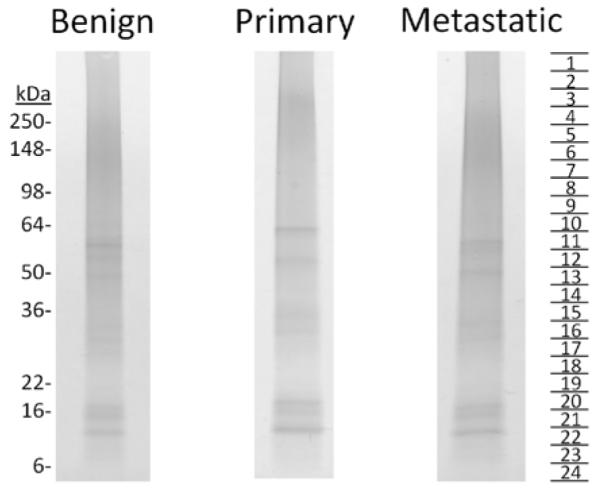
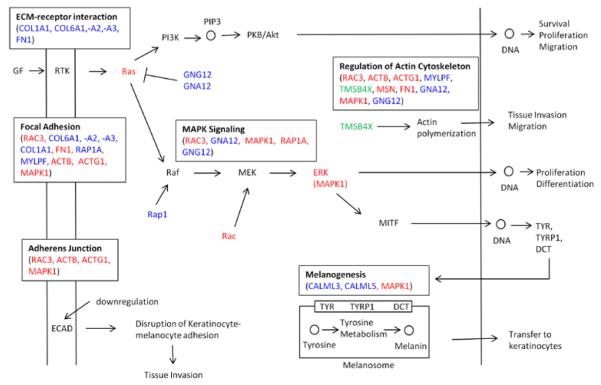
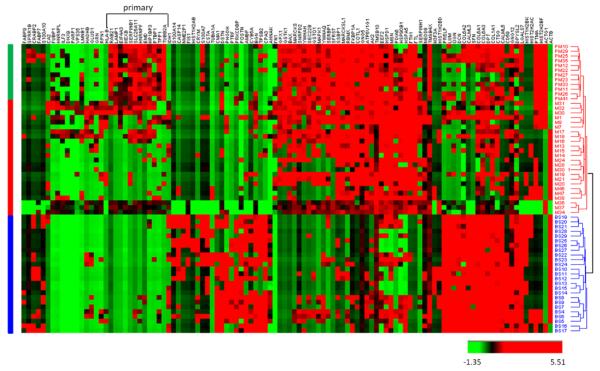
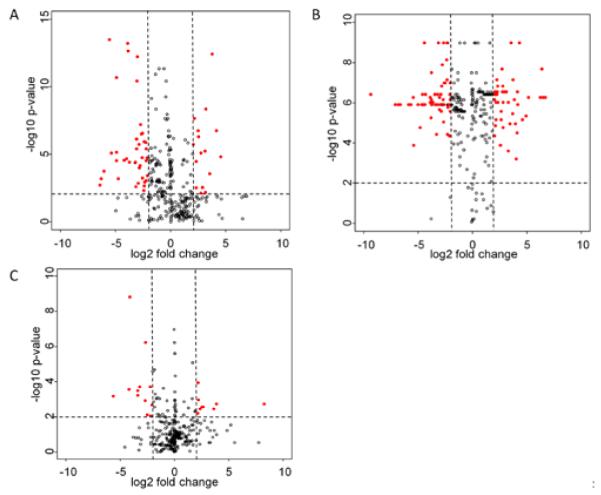
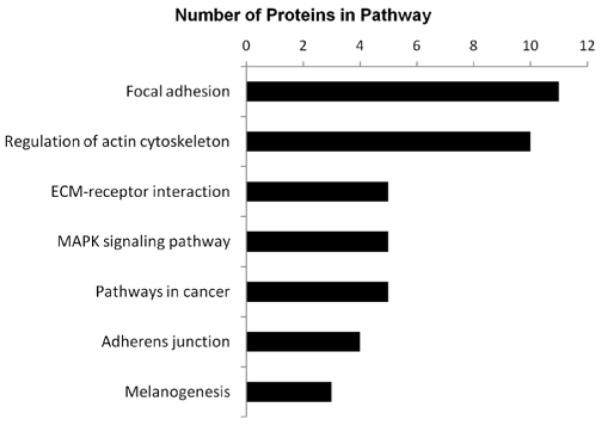
Molecular pathways regulating melanoma initiation and progression are potential targets of therapeutic development for this aggressive cancer. Identification and molecular analysis of these pathways in patients has been primarily restricted to targeted studies on individual proteins. Here, we report the most comprehensive analysis of formalin-fixed paraffin-embedded human melanoma tissues using quantitative proteomics. From 61 patient samples, we identified 171 proteins varying in abundance among benign nevi, primary melanoma, and metastatic melanoma. Seventy-three percent of these proteins were validated by immunohistochemistry staining of malignant melanoma tissues from the Human Protein Atlas database. Our results reveal that molecular pathways involved with tumor cell proliferation, motility, and apoptosis are mis-regulated in melanoma. These data provide the most comprehensive proteome resource on patient melanoma and reveal insight into the molecular mechanisms driving melanoma progression.
调控黑色素瘤起始和进展的分子途径是这种侵袭性癌症治疗开发的潜在靶点。在患者中对这些途径进行鉴定和分子分析主要局限于对单个蛋白质的靶向研究。在此,我们报告了使用定量蛋白质组学对福尔马林固定石蜡包埋的人类黑色素瘤组织进行的最全面分析。从61例患者样本中,我们鉴定出171种在良性痣、原发性黑色素瘤和转移性黑色素瘤中丰度不同的蛋白质。其中73%的蛋白质通过人类蛋白质图谱数据库中恶性黑色素瘤组织的免疫组织化学染色得到验证。我们的结果表明,与肿瘤细胞增殖、运动和凋亡相关的分子途径在黑色素瘤中存在失调。这些数据提供了关于患者黑色素瘤最全面的蛋白质组资源,并揭示了驱动黑色素瘤进展的分子机制。