Faculty of Health Sciences, University of Buea, Buea, South-West Region, Cameroon.
PLoS One. 2013 Aug 16;8(8):e71086. doi: 10.1371/journal.pone.0071086. eCollection 2013.
Bacteriuria is associated with significant maternal and foetal risks. However, its prevalence is not known in our community.
This study was carried out to determine the prevalence and predictors of bacteriuria in pregnant women of the Buea Health District (BHD) as well as the antibiotic sensitivity patterns of bacterial isolates. It also sought to determine the diagnostic performance of the nitrite and leucocyte esterase tests in detecting bacteriuria in these women.
An observational analytic cross-sectional study was carried out amongst pregnant women attending selected antenatal care centres in Buea. We recruited 102 consenting pregnant women for the study. Demographic and clinical data were collected using structured questionnaires. Clean catch midstream urine was collected from each participant in sterile leak proof containers. Samples were examined biochemically, microscopically and by culture. Significant bacteriuria was defined as the presence of ≥10⁸ bacteria/L of cultured urine. Identification and susceptibility of isolates was performed using API 20E and ATB UR EU (08) (BioMerieux, Marcy l'Etoile, France).
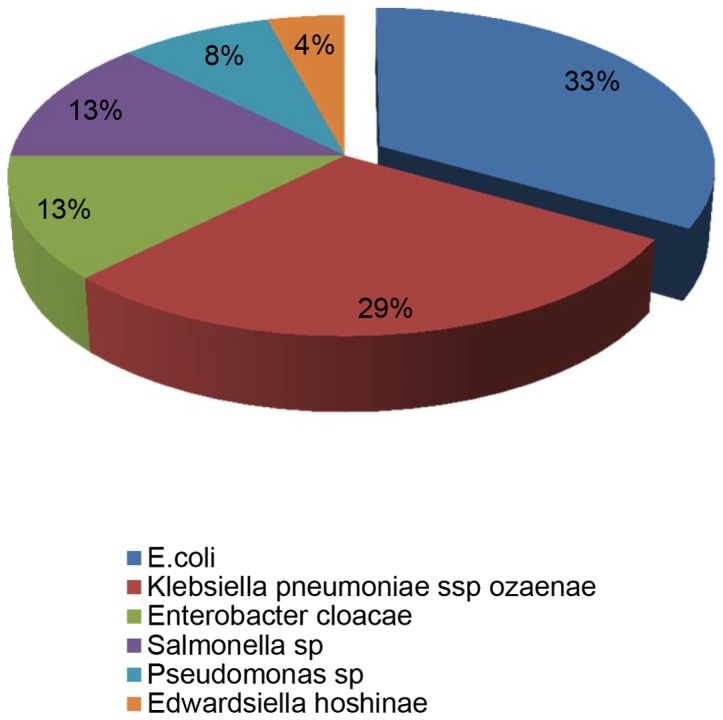
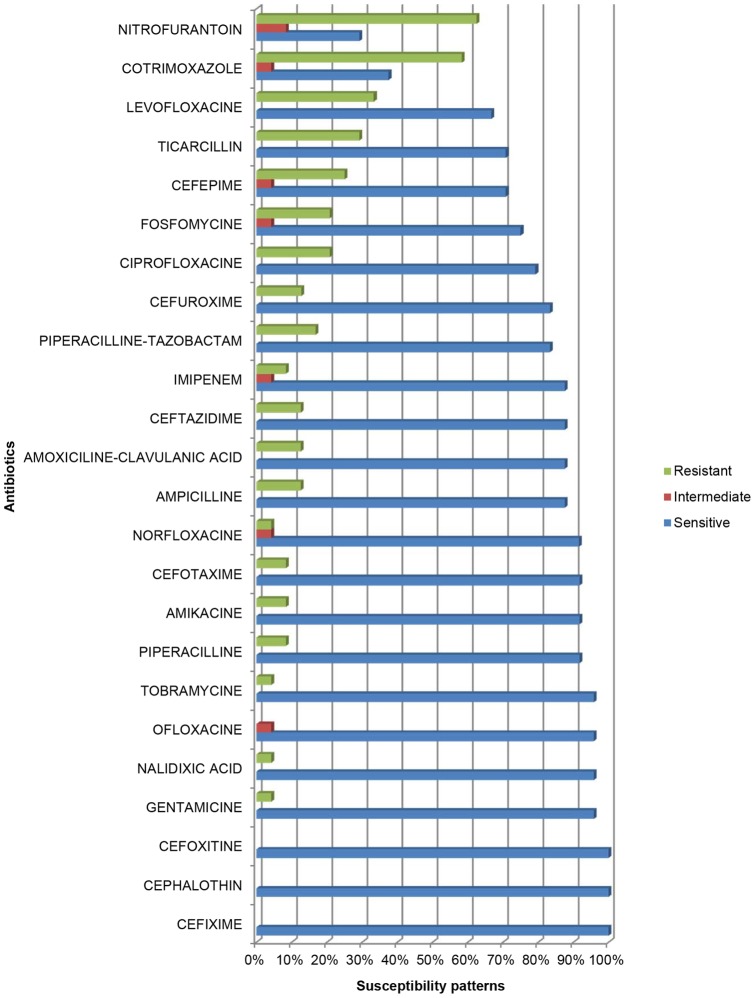
Significant bacteriuria was found in the urine of 24 of the 102 women tested giving a bacteriuria prevalence of 23.5% in pregnant women of the BHD. Asymptomatic bacteriuria was detected in 8(7.8%) of the women. There was no statistically significant predictor of bacteriuria. Escherichia coli were the most isolated (33%) uropathogens and were 100% sensitive to cefixime, cefoxitin and cephalothin. The nitrite and leucocyte esterase tests for determining bacteriuria had sensitivities of 8%, 20.8% and specificities of 98.7% and 80.8% respectively.
Bacteriuria is frequent in pregnant women in the BHD suggesting the need for routine screening by urine culture. Empiric treatment with cefixime should be instituted until results of urine culture and sensitivity are available. Nitrite and leucocyte esterase tests were not sensitive enough to replace urine culture as screening tests.
菌尿与母婴的重大风险相关。然而,我们社区的菌尿流行率尚不清楚。
本研究旨在确定布埃亚卫生区(BHD)孕妇的菌尿患病率及其预测因素,以及细菌分离株的抗生素敏感性模式。它还试图确定亚硝酸盐和白细胞酯酶试验在检测这些女性菌尿中的诊断性能。
在布埃亚的选定产前护理中心,我们进行了一项观察性分析性横断面研究。我们招募了 102 名同意参加研究的孕妇。使用结构化问卷收集人口统计学和临床数据。每位参与者均在无菌防漏容器中采集清洁中段尿液。使用生化、显微镜和培养法检查样本。定义为培养尿液中存在≥10⁸细菌/L 的有意义菌尿。使用 API 20E 和 ATB UR EU(08)(法国马西勒埃托勒的生物梅里埃)进行分离物的鉴定和药敏性。
在 102 名接受测试的女性中,有 24 名尿液中存在有意义菌尿,BHD 孕妇的菌尿患病率为 23.5%。在 8(7.8%)名女性中检测到无症状菌尿。没有统计学上有意义的菌尿预测因素。大肠埃希菌是最常见的(33%)尿路病原体,对头孢克肟、头孢西丁和头孢噻吩 100%敏感。用于确定菌尿的亚硝酸盐和白细胞酯酶试验的敏感性分别为 8%、20.8%,特异性分别为 98.7%和 80.8%。
BHD 孕妇中菌尿很常见,这表明需要通过尿液培养进行常规筛查。在获得尿液培养和药敏结果之前,应使用头孢克肟进行经验性治疗。亚硝酸盐和白细胞酯酶试验不够敏感,不能替代尿液培养作为筛查试验。