Institute of Neuroscience and Physiology, Department of Pharmacology, The Sahlgrenska Academy at the University of Gothenburg, Gothenburg, Sweden.
PLoS One. 2013 Aug 20;8(8):e71284. doi: 10.1371/journal.pone.0071284. eCollection 2013.
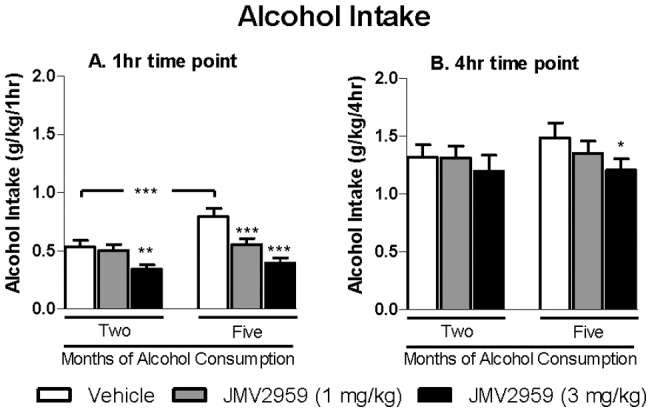
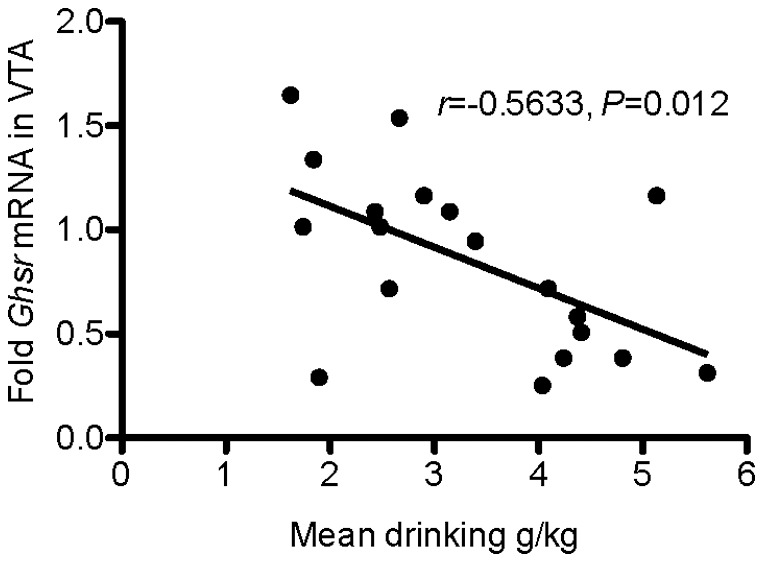
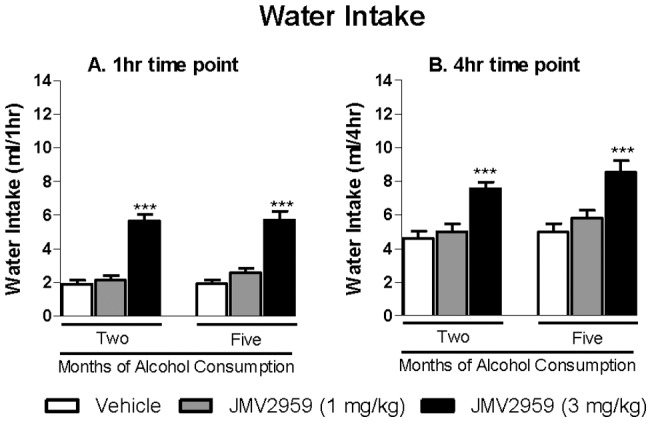
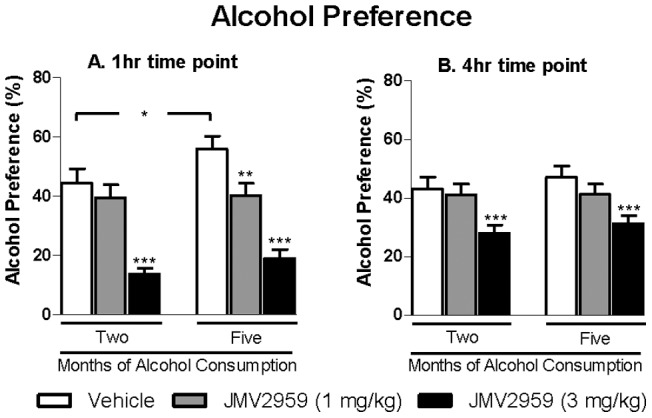
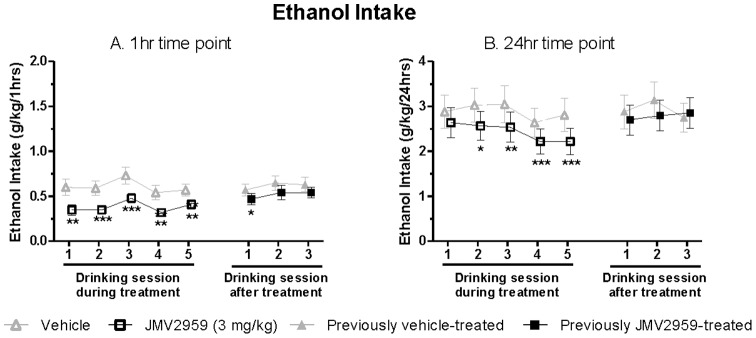
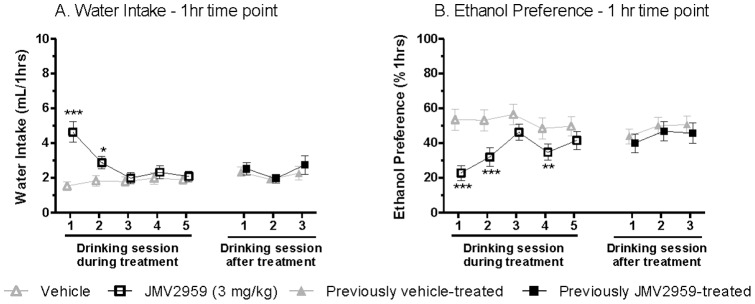
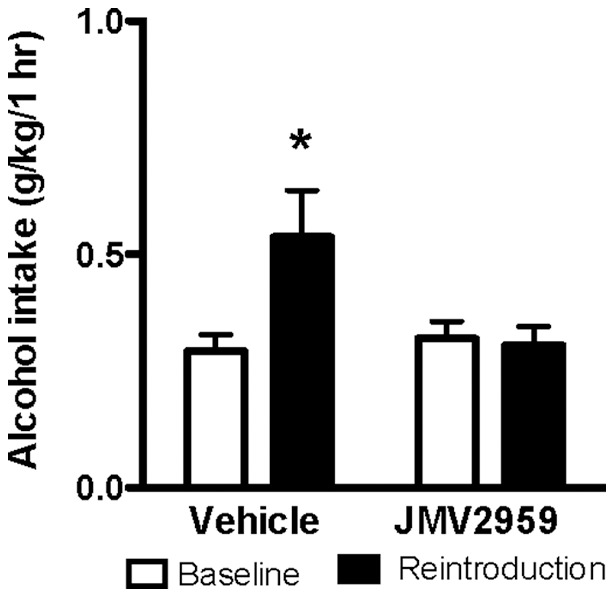
Alcohol dependence is a heterogeneous disorder where several signalling systems play important roles. Recent studies implicate that the gut-brain hormone ghrelin, an orexigenic peptide, is a potential mediator of alcohol related behaviours. Ghrelin increases whereas a ghrelin receptor (GHS-R1A) antagonist decreases alcohol consumption as well as operant self-administration of alcohol in rodents that have consumed alcohol for twelve weeks. In the present study we aimed at investigating the effect of acute and repeated treatment with the GHS-R1A antagonist JMV2959 on alcohol intake in a group of rats following voluntarily alcohol consumption for two, five and eight months. After approximately ten months of voluntary alcohol consumption the expression of the GHS-R1A gene (Ghsr) as well as the degree of methylation of a CpG island found in Ghsr was examined in reward related brain areas. In a separate group of rats, we examined the effect of the JMV2959 on alcohol relapse using the alcohol deprivation paradigm. Acute JMV2959 treatment was found to decrease alcohol intake and the effect was more pronounced after five, compared to two months of alcohol exposure. In addition, repeated JMV2959 treatment decreased alcohol intake without inducing tolerance or rebound increase in alcohol intake after the treatment. The GHS-R1A antagonist prevented the alcohol deprivation effect in rats. There was a significant down-regulation of the Ghsr expression in the ventral tegmental area (VTA) in high- compared to low-alcohol consuming rats after approximately ten months of voluntary alcohol consumption. Further analysis revealed a negative correlation between Ghsr expression in the VTA and alcohol intake. No differences in methylation degree were found between high- compared to low-alcohol consuming rats. These findings support previous studies showing that the ghrelin signalling system may constitute a potential target for development of novel treatment strategies for alcohol dependence.
酒精依赖是一种异质障碍,其中几个信号系统起着重要作用。最近的研究表明,肠道-大脑激素 ghrelin(一种食欲肽)是与酒精相关行为的潜在介质。ghrelin 增加,而 ghrelin 受体(GHS-R1A)拮抗剂减少了在已经饮酒 12 周的啮齿动物中的酒精消耗和操作性自我给药。在本研究中,我们旨在研究急性和重复给予 GHS-R1A 拮抗剂 JMV2959 对一组自愿饮酒 2、5 和 8 个月的大鼠的酒精摄入量的影响。在自愿饮酒约 10 个月后,检查了与奖励相关的大脑区域中 GHS-R1A 基因(Ghsr)的表达以及在 Ghsr 中发现的 CpG 岛的甲基化程度。在另一组大鼠中,我们研究了 JMV2959 对酒精复发的影响使用酒精剥夺范式。发现急性 JMV2959 处理可减少酒精摄入量,并且在 5 个月,与 2 个月的酒精暴露相比,效果更为明显。此外,重复 JMV2959 处理减少了酒精摄入量,而在治疗后没有诱导耐受性或酒精摄入量的反弹增加。GHS-R1A 拮抗剂可预防大鼠的酒精剥夺效应。在大约 10 个月的自愿饮酒后,高饮酒量与低饮酒量相比,腹侧被盖区(VTA)中的 Ghsr 表达明显下调。进一步分析显示 VTA 中的 Ghsr 表达与酒精摄入量呈负相关。在高饮酒量与低饮酒量相比,没有发现甲基化程度的差异。这些发现支持了先前的研究,表明 ghrelin 信号系统可能成为开发酒精依赖新治疗策略的潜在靶点。