Department of Neuroscience, Wexner Medical Center, The Ohio State University, Columbus, Ohio, United States of America ; Biomedical Sciences Graduate Program, The Ohio State University, Columbus, Ohio, United States of America.
PLoS One. 2013 Aug 14;8(8):e71733. doi: 10.1371/journal.pone.0071733. eCollection 2013.
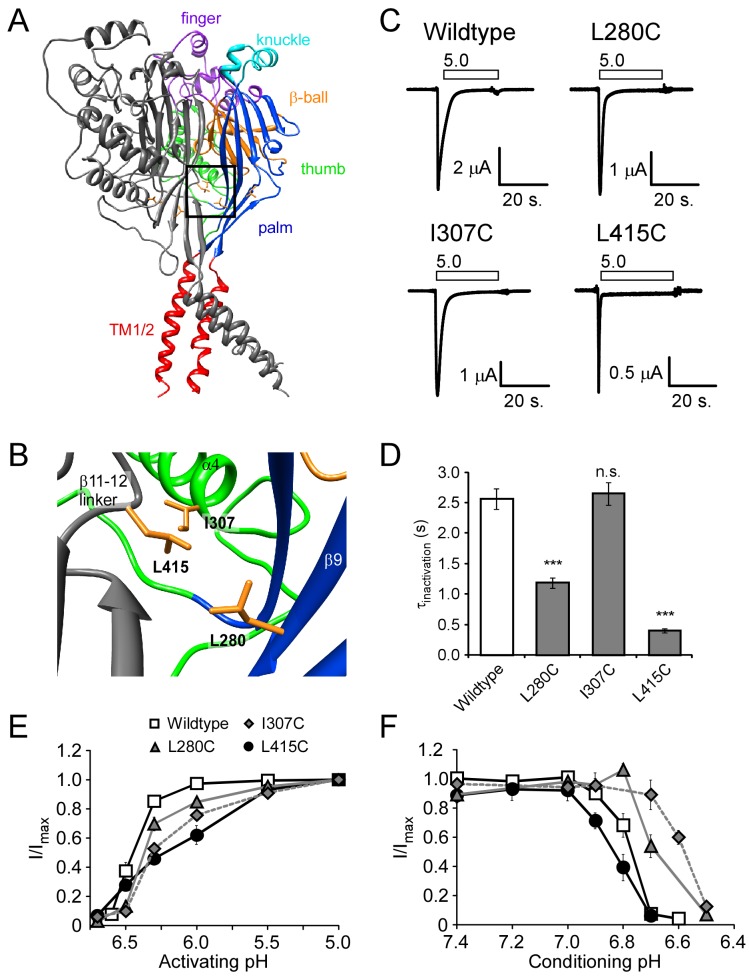
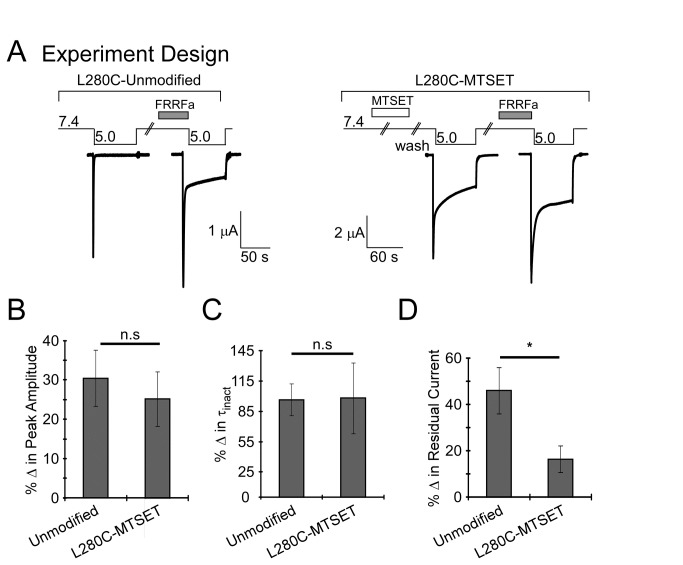
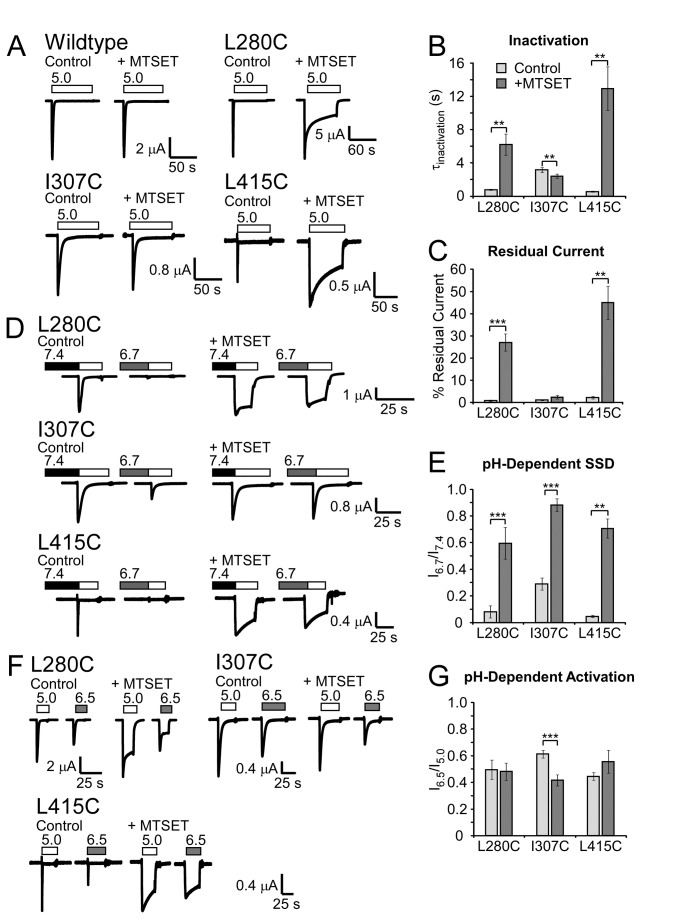
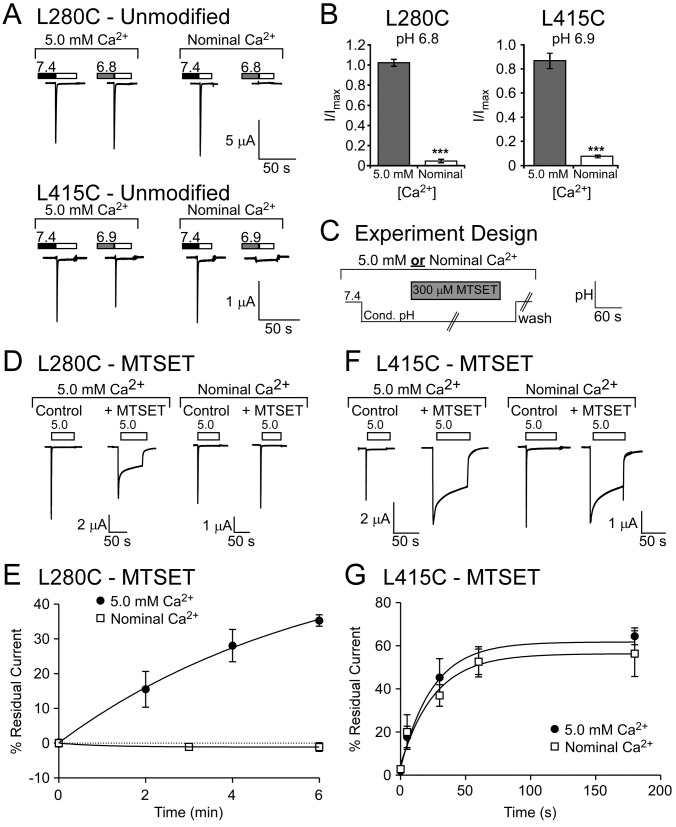
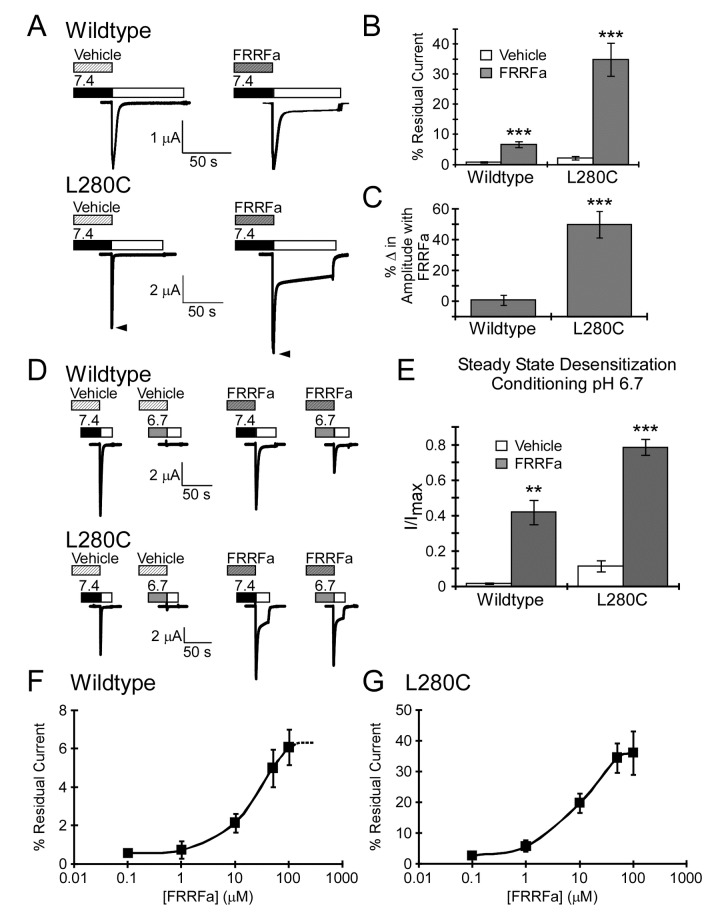
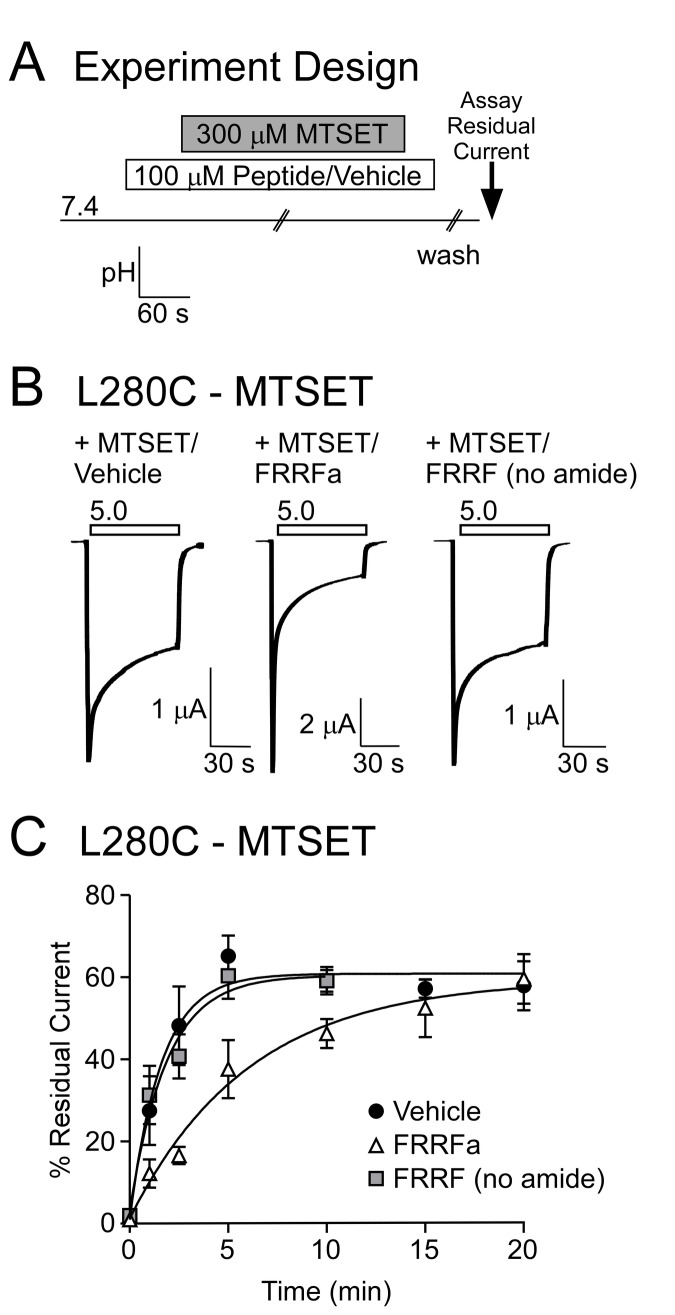
Acid-sensing ion channel 1a (ASIC1a) is a proton-gated cation channel that contributes to fear and pain as well as neuronal damage following persistent cerebral acidosis. Neuropeptides can affect acid-induced neuronal injury by altering ASIC1a inactivation and/or steady-state desensitization. Yet, exactly how ASIC1a inactivation and desensitization occur or are modulated by peptides is not completely understood. We found that regions of the extracellular palm domain and the β(11-12) linker are important for inactivation and steady-state desensitization of ASIC1a. The single amino acid substitutions L280C and L415C dramatically enhanced the rate of inactivation and altered the pH-dependence of steady-state desensitization. Further, the use of methanethiosulfonate (MTS) reagents suggests that the lower palm region (L280C) undergoes a conformational change when ASIC1a transitions from closed to desensitized. We determined that L280C also displays an altered response to the RFamide peptide, FRRFamide. Further, the presence of FRRFamide limited MTS modification of L280C. Together, these results indicate a potential role of the lower palm domain in peptide modulation and suggest RFamide-related peptides promote conformational changes within this region. These data provide empirical support for the idea that L280, and likely this region of the central vestibule, is intimately involved in channel inactivation and desensitization.
酸敏离子通道 1a(ASIC1a)是一种质子门控阳离子通道,它参与恐惧和疼痛以及持续的脑酸中毒后的神经元损伤。神经肽可以通过改变 ASIC1a 的失活和/或稳态脱敏来影响酸诱导的神经元损伤。然而,肽如何影响 ASIC1a 的失活和脱敏,以及如何调节失活和脱敏,还不完全清楚。我们发现细胞外手掌域和β(11-12)连接子的区域对于 ASIC1a 的失活和稳态脱敏是重要的。单个氨基酸取代 L280C 和 L415C 极大地增强了失活的速率并改变了稳态脱敏的 pH 依赖性。此外,使用甲硫磺酸酯(MTS)试剂表明,当 ASIC1a 从关闭状态转变为脱敏状态时,较低的手掌区域(L280C)发生构象变化。我们确定 L280C 对 RFamide 肽 FRRFamide 也表现出改变的反应。此外,FRRFamide 的存在限制了 L280C 的 MTS 修饰。总之,这些结果表明较低的手掌域在肽调节中可能起作用,并表明 RFamide 相关肽促进该区域内的构象变化。这些数据为这样的观点提供了经验支持,即 L280,很可能是中央前庭的这个区域,与通道失活和脱敏密切相关。