École Polytechnique Fédérale de Lausanne, Lausanne, Switzerland.
PLoS One. 2013 Aug 20;8(8):e72018. doi: 10.1371/journal.pone.0072018. eCollection 2013.
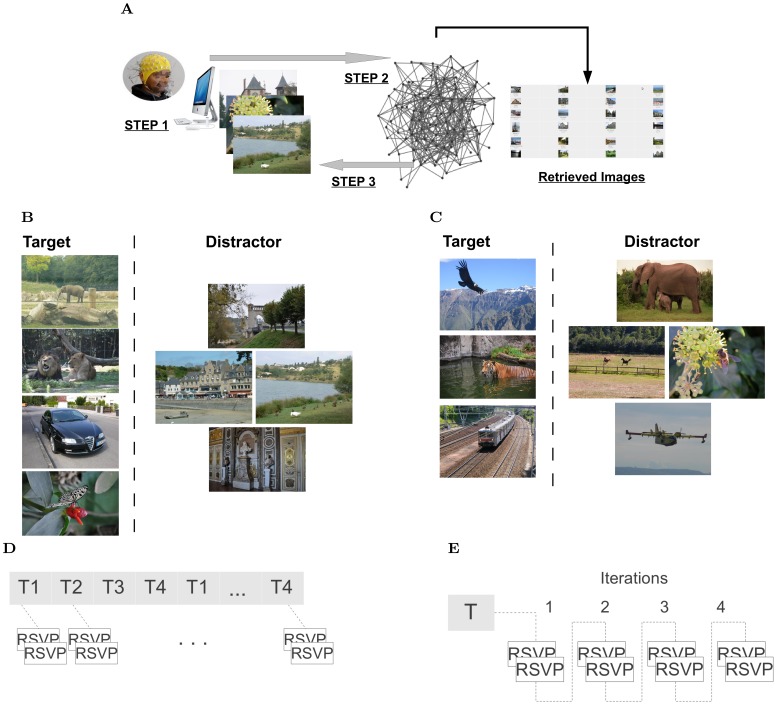
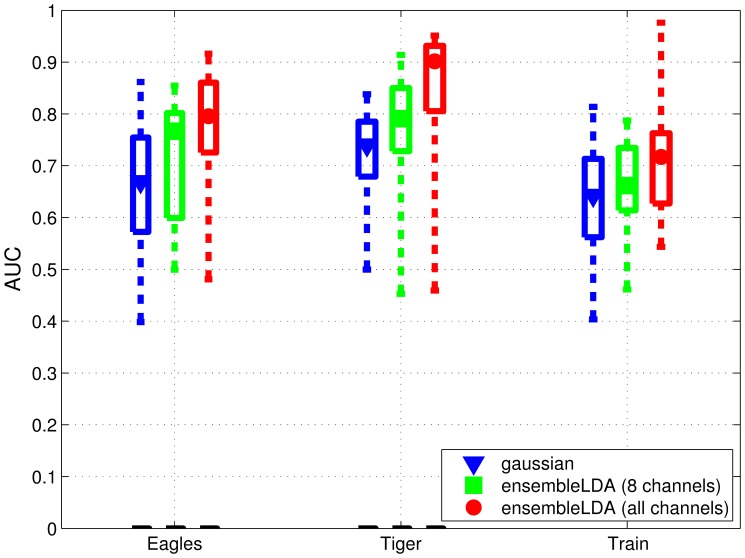
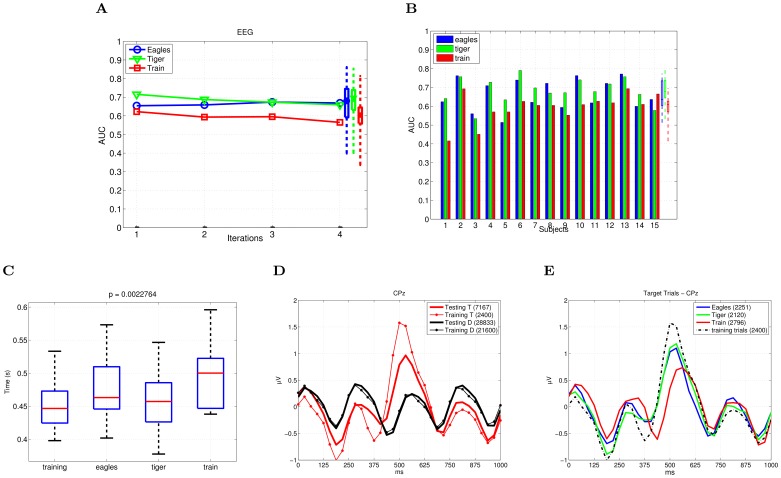
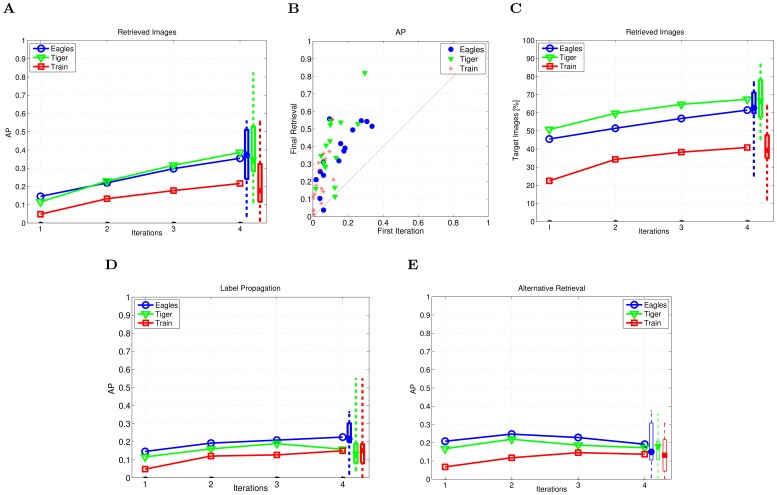
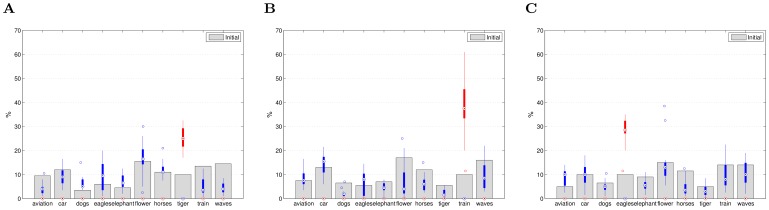
We revisit the framework for brain-coupled image search, where the Electroencephalography (EEG) channel under rapid serial visual presentation protocol is used to detect user preferences. Extending previous works on the synergy between content-based image labeling and EEG-based brain-computer interface (BCI), we propose a different perspective on iterative coupling. Previously, the iterations were used to improve the set of EEG-based image labels before propagating them to the unseen images for the final retrieval. In our approach we accumulate the evidence of the true labels for each image in the database through iterations. This is done by propagating the EEG-based labels of the presented images at each iteration to the rest of images in the database. Our results demonstrate a continuous improvement of the labeling performance across iterations despite the moderate EEG-based labeling (AUC <75%). The overall analysis is done in terms of the single-trial EEG decoding performance and the image database reorganization quality. Furthermore, we discuss the EEG-based labeling performance with respect to a search task given the same image database.
我们重新审视了基于脑电的图像搜索框架,该框架使用快速序列视觉呈现协议下的脑电图 (EEG) 通道来检测用户偏好。在基于内容的图像标注和基于脑电图的脑机接口 (BCI) 之间的协同作用的基础上,我们提出了迭代耦合的不同视角。之前,迭代用于改进基于 EEG 的图像标签集,然后将其传播到看不见的图像以进行最终检索。在我们的方法中,我们通过迭代来积累数据库中每个图像的真实标签的证据。这是通过在每次迭代时将呈现的图像的基于 EEG 的标签传播到数据库中的其余图像来完成的。尽管基于 EEG 的标签(AUC<75%)适中,但我们的结果证明了标签性能在迭代过程中不断提高。整体分析是根据单次试验 EEG 解码性能和图像数据库组织质量进行的。此外,我们还讨论了基于 EEG 的标签性能与给定相同图像数据库的搜索任务有关。