Maidenbaum Shachar, Levy-Tzedek Shelly, Chebat Daniel-Robert, Amedi Amir
Department of Medical Neurobiology, Institute for Medical Research Israel-Canada, Faculty of Medicine, Hebrew University of Jerusalem, Hadassah Ein-Kerem, Jerusalem, Israel.
PLoS One. 2013 Aug 19;8(8):e72555. doi: 10.1371/journal.pone.0072555. eCollection 2013.
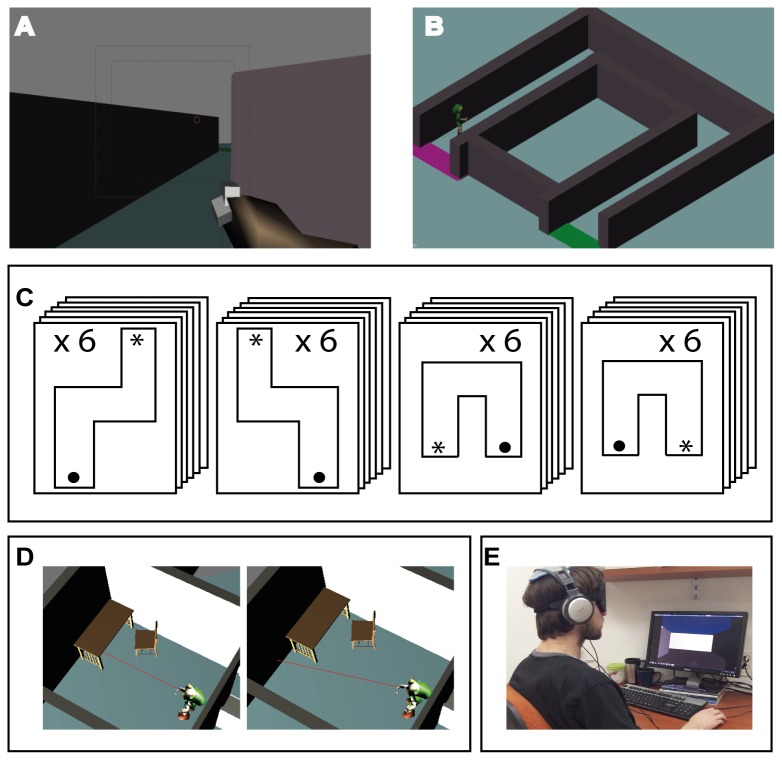
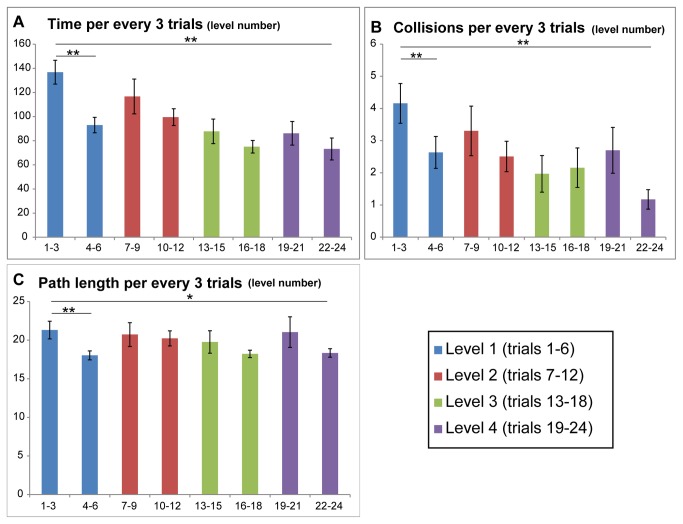
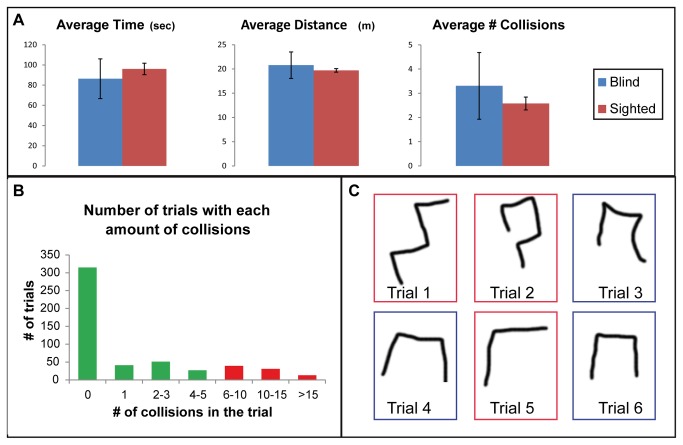
Virtual worlds and environments are becoming an increasingly central part of our lives, yet they are still far from accessible to the blind. This is especially unfortunate as such environments hold great potential for them for uses such as social interaction, online education and especially for use with familiarizing the visually impaired user with a real environment virtually from the comfort and safety of his own home before visiting it in the real world. We have implemented a simple algorithm to improve this situation using single-point depth information, enabling the blind to use a virtual cane, modeled on the "EyeCane" electronic travel aid, within any virtual environment with minimal pre-processing. Use of the Virtual-EyeCane, enables this experience to potentially be later used in real world environments with identical stimuli to those from the virtual environment. We show the fast-learned practical use of this algorithm for navigation in simple environments.
虚拟世界和环境正日益成为我们生活中核心的一部分,但盲人仍然很难进入这些环境。这尤其令人遗憾,因为这样的环境对他们具有巨大潜力,可用于社交互动、在线教育,特别是能让视障用户在实际访问真实环境之前,在自己舒适安全的家中通过虚拟方式熟悉该环境。我们已经实现了一种简单算法,利用单点深度信息来改善这种情况,使盲人能够在任何虚拟环境中,以“EyeCane”电子出行辅助设备为蓝本,使用虚拟拐杖,且只需最少的预处理。使用虚拟眼杖,有可能使这种体验随后能应用于与虚拟环境具有相同刺激的真实世界环境中。我们展示了该算法在简单环境中用于导航的快速习得的实际应用。