Qi Yiping, Li Xiaohong, Zhang Yong, Starker Colby G, Baltes Nicholas J, Zhang Feng, Sander Jeffry D, Reyon Deepak, Joung J Keith, Voytas Daniel F
Department of Genetics, Cell Biology & Development and Center for Genome Engineering, University of Minnesota, Minneapolis, Minnesota 55455.
G3 (Bethesda). 2013 Oct 3;3(10):1707-15. doi: 10.1534/g3.113.006270.
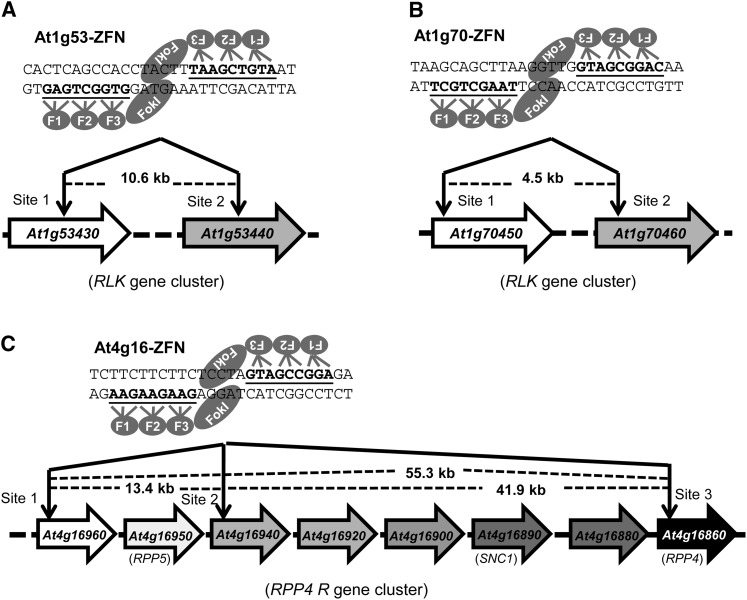
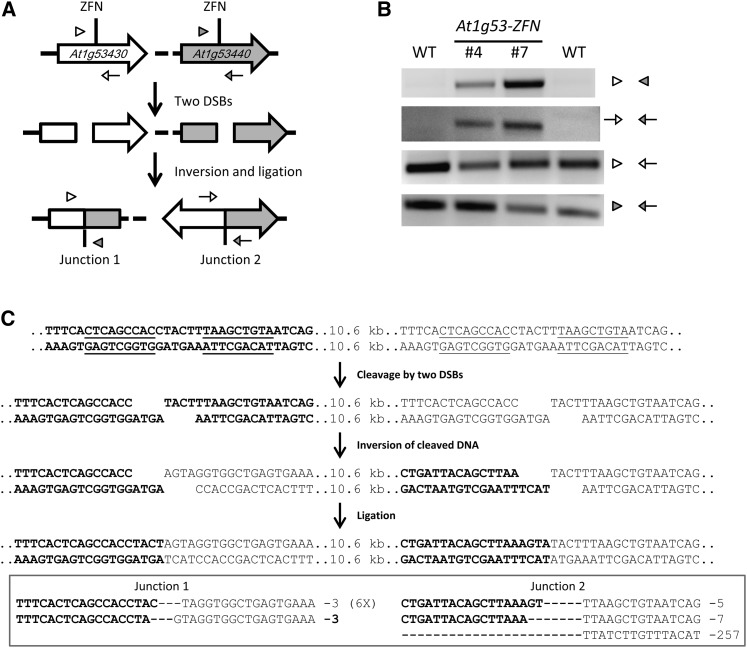
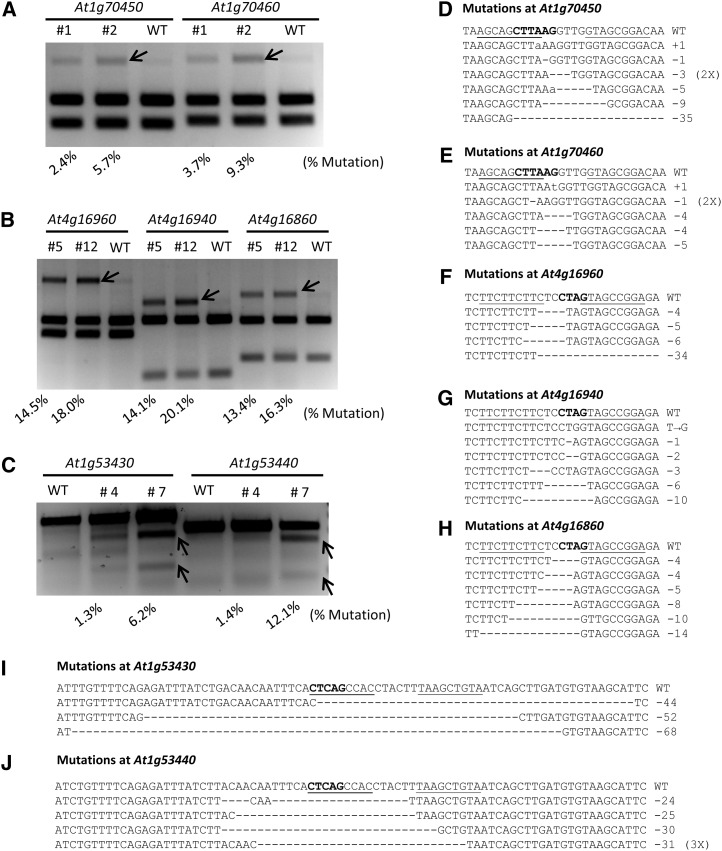
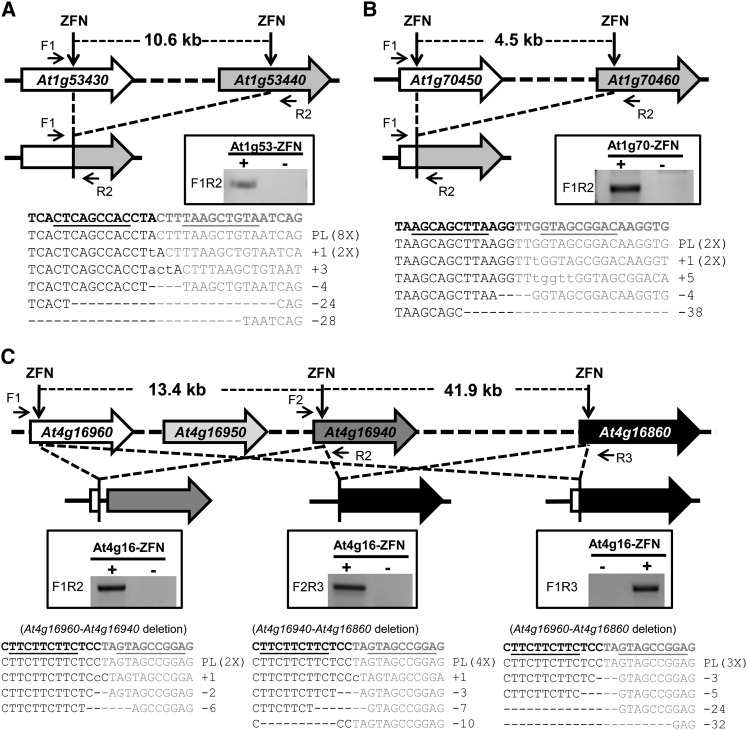
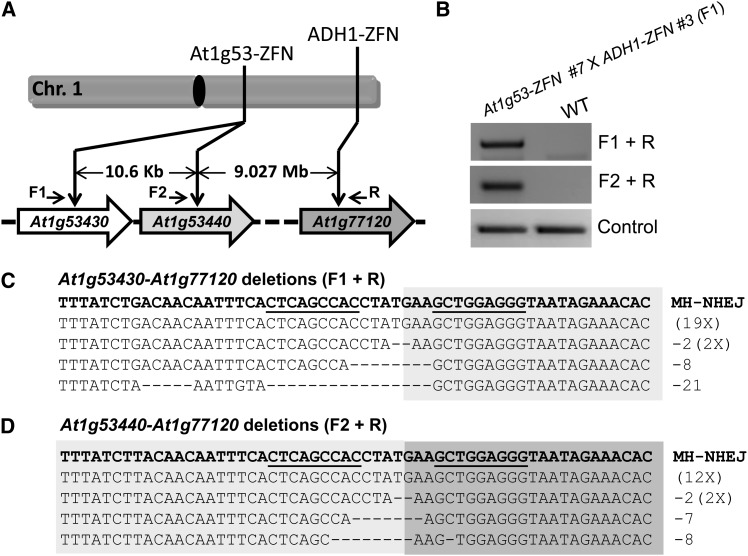
Tandemly arrayed genes (TAGs) or gene clusters are prevalent in higher eukaryotic genomes. For example, approximately 17% of genes are organized in tandem in the model plant Arabidopsis thaliana. The genetic redundancy created by TAGs presents a challenge for reverse genetics. As molecular scissors, engineered zinc finger nucleases (ZFNs) make DNA double-strand breaks in a sequence-specific manner. ZFNs thus provide a means to delete TAGs by creating two double-strand breaks in the gene cluster. Using engineered ZFNs, we successfully targeted seven genes from three TAGs on two Arabidopsis chromosomes, including the well-known RPP4 gene cluster, which contains eight resistance (R) genes. The resulting gene cluster deletions ranged from a few kb to 55 kb with frequencies approximating 1% in somatic cells. We also obtained large chromosomal deletions of ~9 Mb at approximately one tenth the frequency, and gene cluster inversions and duplications also were achieved. This study demonstrates the ability to use sequence-specific nucleases in plants to make targeted chromosome rearrangements and create novel chimeric genes for reverse genetics and biotechnology.
串联排列的基因(TAGs)或基因簇在高等真核生物基因组中普遍存在。例如,在模式植物拟南芥中,约17%的基因以串联方式排列。TAGs产生的遗传冗余给反向遗传学带来了挑战。作为分子剪刀,工程化锌指核酸酶(ZFNs)以序列特异性方式产生DNA双链断裂。因此,ZFNs提供了一种通过在基因簇中产生两个双链断裂来删除TAGs的方法。利用工程化ZFNs,我们成功地靶向了拟南芥两条染色体上三个TAGs中的七个基因,包括著名的RPP4基因簇,该基因簇包含八个抗性(R)基因。在体细胞中,产生的基因簇缺失范围从几kb到55kb,频率约为1%。我们还以大约十分之一的频率获得了约9Mb的大染色体缺失,并且也实现了基因簇的倒位和重复。这项研究证明了在植物中使用序列特异性核酸酶进行靶向染色体重排以及为反向遗传学和生物技术创造新型嵌合基因的能力。