Targeted & Biological Therapies Group, Leeds Institute of Molecular Medicine, University of Leeds, United Kingdom.
Int J Cancer. 2014 Mar 1;134(5):1091-101. doi: 10.1002/ijc.28450. Epub 2013 Sep 18.
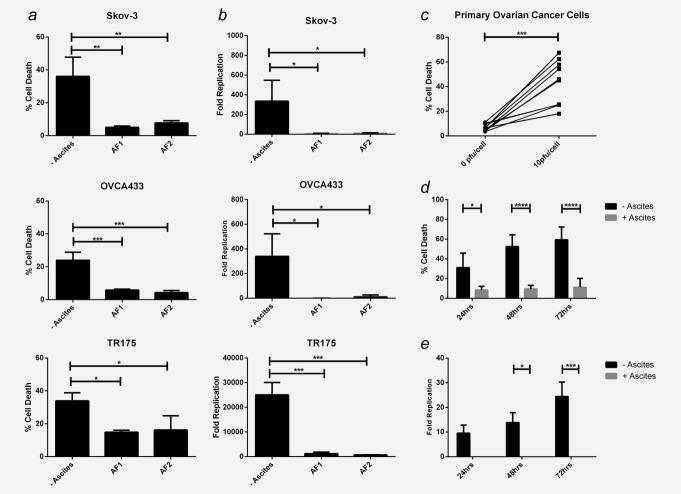
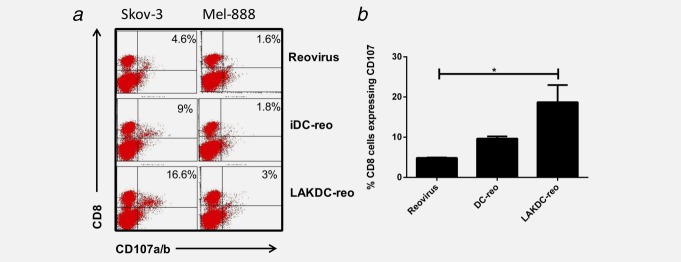
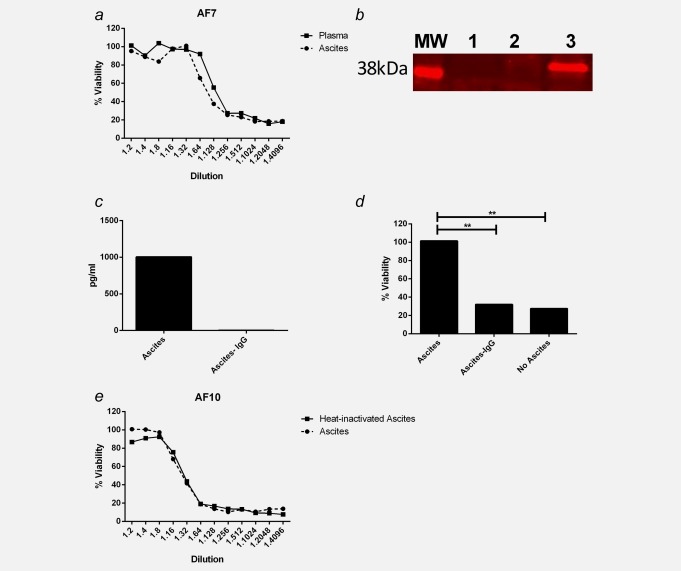
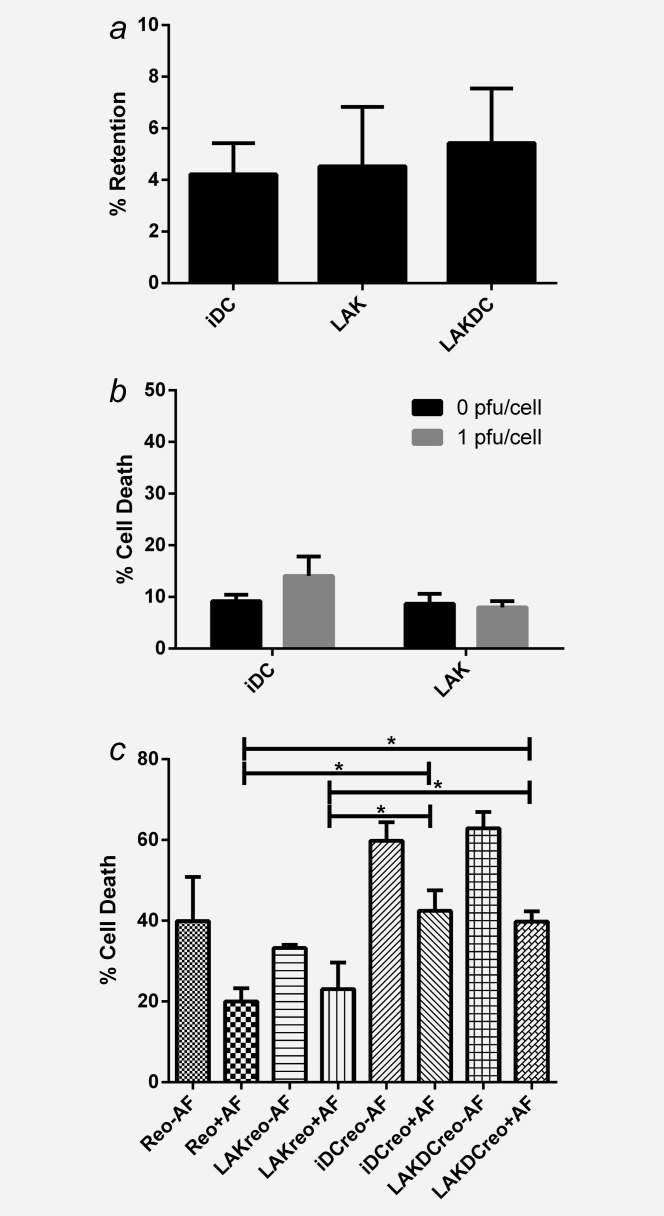
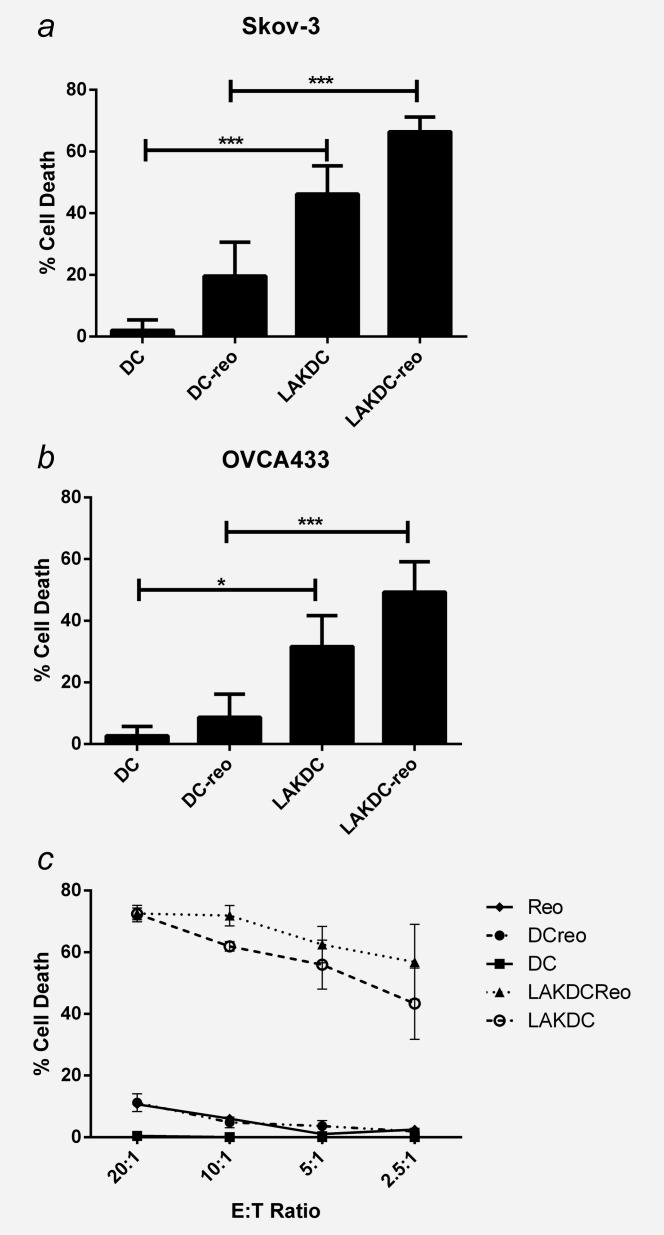
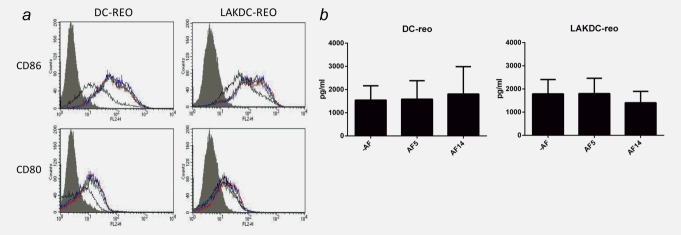
Reovirus is an oncolytic virus (OV), which acts by both direct tumor cell killing and priming of antitumor immunity. A major obstacle for effective oncolytic virotherapy is effective delivery of OV to tumor cells. Ovarian cancer is often confined to the peritoneal cavity and therefore i.p. delivery of reovirus may provide the ideal locoregional delivery, avoiding systemic dissemination. However, ovarian cancer is associated with an accumulation of ascitic fluid, which may interfere with oncolytic viral therapy. Here, we investigated the effect of ascites on reovirus-induced oncolysis against primary ovarian cancer cells and ovarian cancer cell lines. In the absence of ascites, reovirus was cytotoxic against ovarian cancer cells; however, cytotoxicity was abrogated in the presence of ascitic fluid. Neutralizing antibodies (NAb) were identified as the cause of this inhibition. Loading OV onto cell carriers may facilitate virus delivery in the presence of NAb and immune cells which have their own antitumor effector activity are particularly appealing. Immature dendritic cells (iDC), Lymphokine-activated killer (LAK) cells and LAKDC cocultures were tested as potential carriers for reovirus for tumor cell killing and immune cell priming. Reovirus-loaded LAKDC, and to a lesser degree iDC, were able to: (i) protect from NAb and hand-off reovirus for tumor cell killing; (ii) induce a proinflammatory cytokine milieu (IFNɣ, IL-12, IFNα and TNFα) and (iii) generate an innate and specific antitumor adaptive immune response. Hence, LAKDC pulsed with reovirus represent a novel, clinically practical treatment for ovarian cancer to maximise both direct and innate/adaptive immune-mediated tumor cell killing.
呼肠孤病毒是一种溶瘤病毒 (OV),通过直接杀伤肿瘤细胞和激活抗肿瘤免疫来发挥作用。有效溶瘤病毒治疗的主要障碍是将 OV 有效递送到肿瘤细胞。卵巢癌通常局限于腹腔,因此腹腔内递送呼肠孤病毒可能提供理想的局部区域递送,避免全身扩散。然而,卵巢癌与腹水的积累有关,这可能会干扰溶瘤病毒治疗。在这里,我们研究了腹水对原发性卵巢癌细胞和卵巢癌细胞系中呼肠孤病毒诱导的溶瘤作用的影响。在没有腹水的情况下,呼肠孤病毒对卵巢癌细胞具有细胞毒性;然而,在腹水存在的情况下,细胞毒性被阻断。中和抗体 (NAb) 被确定为这种抑制的原因。将 OV 加载到细胞载体上可能有助于在存在 NAb 和具有自身抗肿瘤效应功能的免疫细胞的情况下进行病毒传递,而具有这种功能的细胞特别有吸引力。未成熟树突状细胞 (iDC)、淋巴因子激活的杀伤 (LAK) 细胞和 LAKDC 共培养物被测试为用于肿瘤细胞杀伤和免疫细胞致敏的呼肠孤病毒的潜在载体。负载呼肠孤病毒的 LAKDC(程度较小)能够:(i) 抵抗 NAb 并传递呼肠孤病毒以杀伤肿瘤细胞;(ii) 诱导促炎细胞因子环境(IFNγ、IL-12、IFNα 和 TNFα);和 (iii) 产生先天和特异性抗肿瘤适应性免疫反应。因此,用呼肠孤病毒脉冲处理的 LAKDC 代表了一种新的、临床实用的卵巢癌治疗方法,可最大限度地提高直接和先天/适应性免疫介导的肿瘤细胞杀伤作用。