Bhatt Darshak K, Chammas Roger, Daemen Toos
University Medical Center Groningen, Department of Medical Microbiology and Infection Prevention, University of Groningen, 9713 AV Groningen, The Netherlands.
Center for Translational Research in Oncology, Instituto do Câncer do Hospital das Clínicas, Faculdade de Medicina, Universidade de São Paulo, São Paulo 01246-000, Brazil.
Vaccines (Basel). 2021 Oct 12;9(10):1166. doi: 10.3390/vaccines9101166.
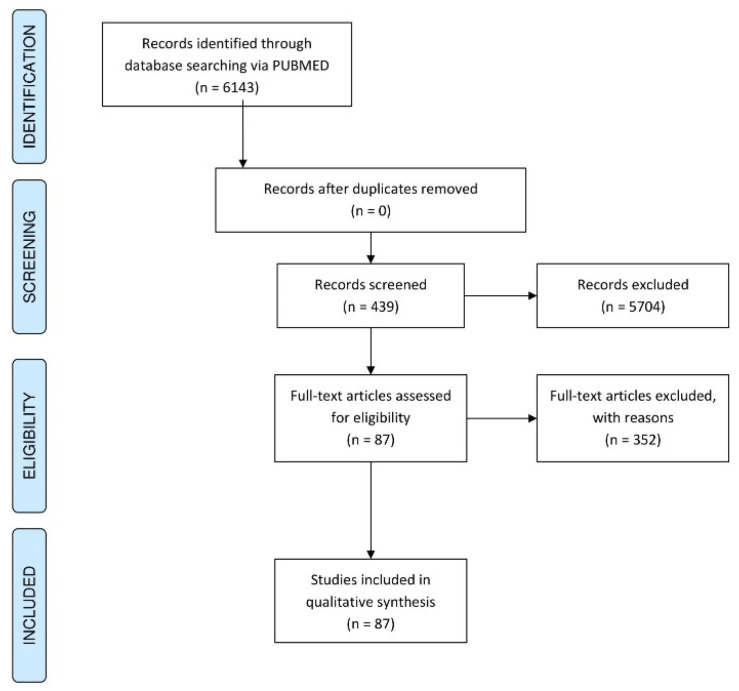
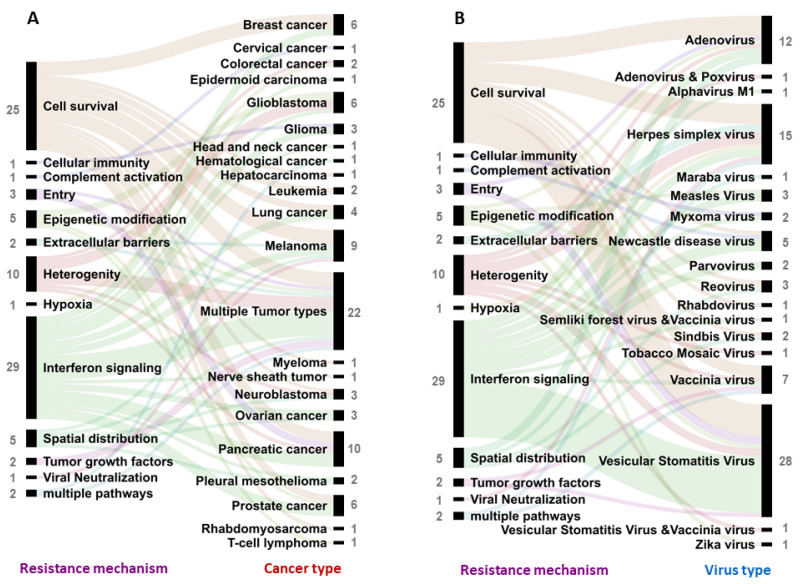
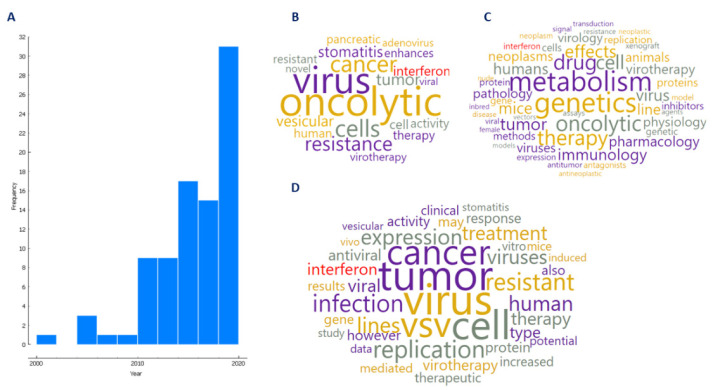
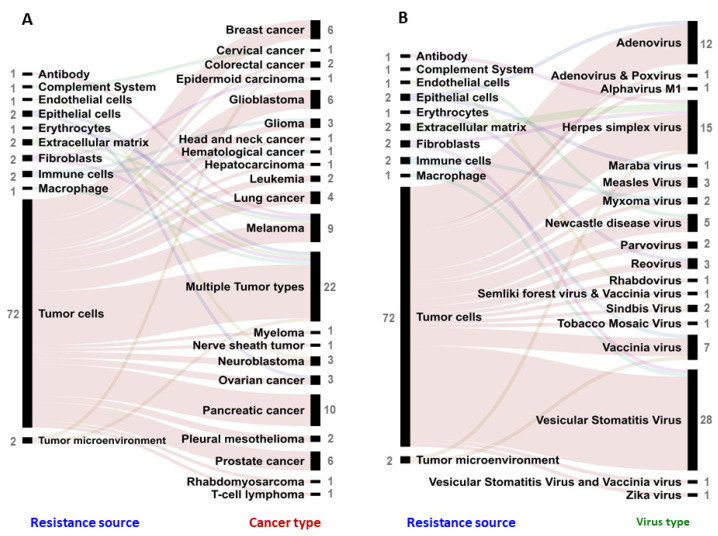
Resistance to therapy is a frequently observed phenomenon in the treatment of cancer, and as with other cancer therapeutics, therapies based on oncolytic viruses also face the challenges of resistance, such as humoral and cellular antiviral responses, and tumor-associated interferon-mediated resistance. In order to identify additional mechanisms of resistance that may contribute to therapeutic failure, we developed a systematic search strategy for studies published in PubMed. We analyzed 6143 articles on oncolytic virotherapy and found that approximately 8% of these articles use resistance terms in the abstract and/or title. Of these 439 articles, 87 were original research. Most of the findings reported pertain to resistance mediated by tumor-cell-dependent interferon signaling. Yet, mechanisms such as epigenetic modifications, hypoxia-mediated inhibition, APOBEC-mediated resistance, virus entry barriers, and spatiotemporal restriction to viral spread, although not frequently assessed, were demonstrated to play a major role in resistance. Similarly, our results suggest that the stromal compartment consisting of, but not limited to, myeloid cells, fibroblasts, and epithelial cells requires more study in relation to therapy resistance using oncolytic viruses. Thus, our findings emphasize the need to assess the stromal compartment and to identify novel mechanisms that play an important role in conferring resistance to oncolytic virotherapy.
在癌症治疗中,治疗耐药是一种常见现象,与其他癌症治疗方法一样,基于溶瘤病毒的疗法也面临耐药挑战,如体液和细胞抗病毒反应以及肿瘤相关的干扰素介导的耐药。为了确定可能导致治疗失败的其他耐药机制,我们制定了一种系统的检索策略,用于检索发表在PubMed上的研究。我们分析了6143篇关于溶瘤病毒疗法的文章,发现其中约8%的文章在摘要和/或标题中使用了耐药相关术语。在这439篇文章中,87篇为原创研究。报道的大多数研究结果都与肿瘤细胞依赖性干扰素信号介导的耐药有关。然而,诸如表观遗传修饰、缺氧介导的抑制、载脂蛋白B编辑酶催化多肽样蛋白介导的耐药、病毒进入障碍以及病毒传播的时空限制等机制,虽然评估较少,但已被证明在耐药中起主要作用。同样,我们的结果表明,由但不限于髓样细胞、成纤维细胞和上皮细胞组成的基质部分,在溶瘤病毒治疗耐药方面需要更多研究。因此,我们的研究结果强调了评估基质部分以及确定在赋予溶瘤病毒疗法耐药性方面起重要作用的新机制的必要性。