Abbas Wasim, Herbein Georges
Department of Virology, Pathogens & Inflammation Laboratory, UPRES EA4266, SFR FED 4234, University of Franche-Comte, CHRU Besançon, F-25030 Besançon, France.
Open Virol J. 2013 Jul 26;7:57-71. doi: 10.2174/1874357920130621001. eCollection 2013.
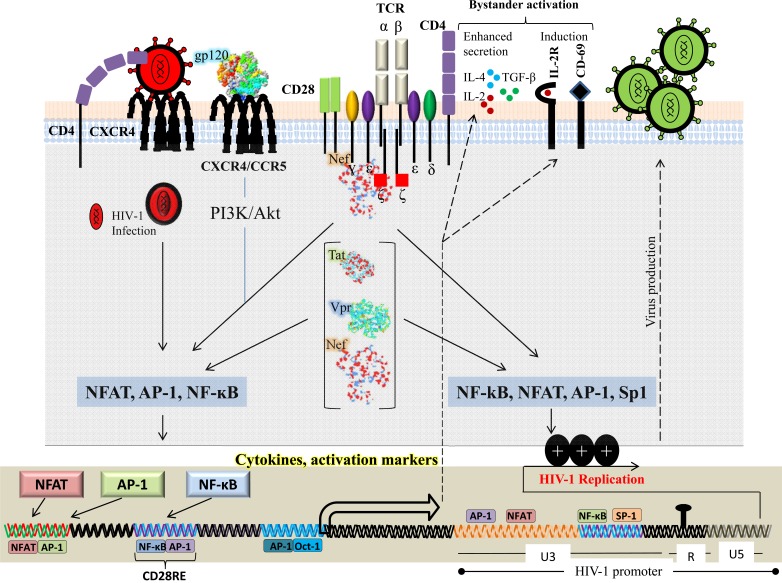
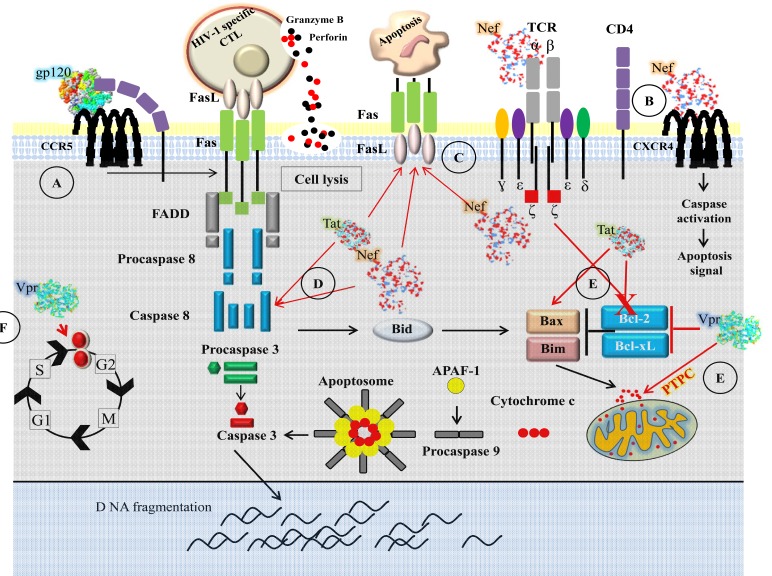
HIV exploits the T-cell signaling network to gain access to downstream cellular components, which serves as effective tools to break the cellular barriers. Multiple host factors and their interaction with viral proteins contribute to the complexity of HIV-1 pathogenesis and disease progression. HIV-1 proteins gp120, Nef, Tat and Vpr alter the T-cell signaling pathways by activating multiple transcription factors including NF-ĸB, Sp1 and AP-1. HIV-1 evades the immune system by developing a multi-pronged strategy. Additionally, HIV-1 encoded proteins influence the apoptosis in the host cell favoring or blocking T-cell apoptosis. Thus, T-cell signaling hijacked by viral proteins accounts for both viral persistence and immune suppression during HIV-1 infection. Here, we summarize past and present studies on HIV-1 T-cell signaling with special focus on the possible role of T cells in facilitating viral infection and pathogenesis.
人类免疫缺陷病毒(HIV)利用T细胞信号网络来接触下游细胞成分,这些成分是突破细胞屏障的有效工具。多种宿主因子及其与病毒蛋白的相互作用导致了HIV-1发病机制和疾病进展的复杂性。HIV-1蛋白gp120、Nef、Tat和Vpr通过激活包括NF-κB、Sp1和AP-1在内的多种转录因子来改变T细胞信号通路。HIV-1通过制定多管齐下的策略来逃避免疫系统。此外,HIV-1编码的蛋白影响宿主细胞中的细胞凋亡,促进或阻止T细胞凋亡。因此,病毒蛋白劫持的T细胞信号解释了HIV-1感染期间的病毒持续存在和免疫抑制。在此,我们总结了过去和现在关于HIV-1 T细胞信号的研究,特别关注T细胞在促进病毒感染和发病机制中的可能作用。