Department of Medicine, Stanford University, Stanford, CA 94305, United States.
Exp Gerontol. 2013 Nov;48(11):1266-73. doi: 10.1016/j.exger.2013.08.005. Epub 2013 Aug 27.
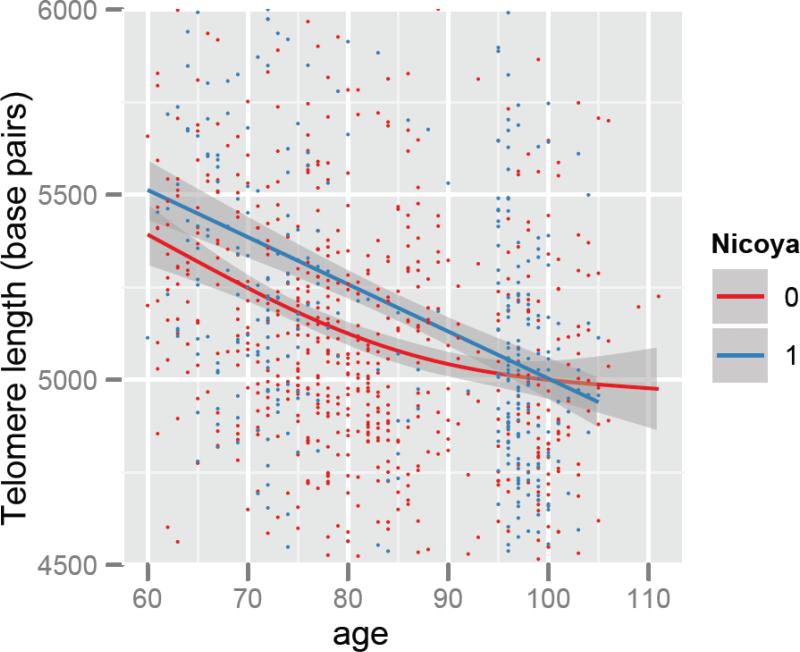
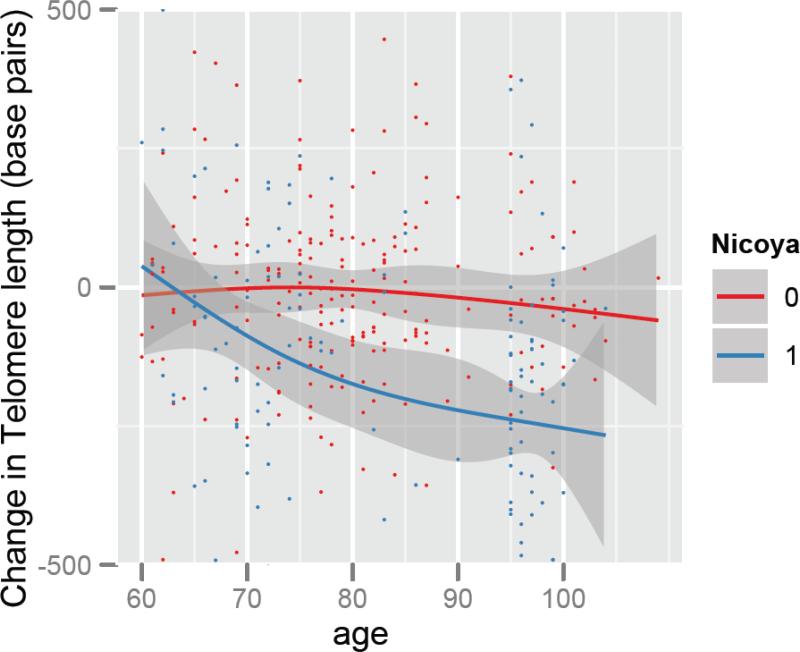
Studies in humans suggest that leukocyte telomere length may act as a marker of biological aging. We investigated whether individuals in the Nicoya region of Costa Rica, known for exceptional longevity, had longer telomere length than those in other parts of the country. After controlling for age, age squared, rurality, rainy season and gender, the mean leukocyte telomere length in Nicoya was substantially longer (81 base pairs, p<0.05) than in other areas of Costa Rica, providing evidence of a biological pathway to which this notable longevity may be related. This relationship remains unchanged (79 base pairs, p<0.05) after statistically controlling for nineteen potential biological, dietary and social and demographic mediators. Thus the difference in the mean leukocyte telomere length that characterizes this unique region does not appear to be explainable by traditional behavioral and biological risk factors. More detailed examination of mean leukocyte telomere length by age shows that the regional telomere length difference declines at older ages.
研究表明,白细胞端粒长度可能是生物衰老的一个标志。我们调查了哥斯达黎加尼科亚地区的人是否比该国其他地区的人具有更长的端粒长度。在控制年龄、年龄平方、农村性、雨季和性别后,尼科亚的白细胞端粒长度明显更长(81 个碱基对,p<0.05),这为这种显著的长寿可能与之相关的生物学途径提供了证据。在对 19 个潜在的生物学、饮食和社会人口统计学中介因素进行统计控制后,这种关系仍然不变(79 个碱基对,p<0.05)。因此,这个独特地区的白细胞端粒长度平均值的差异似乎不能用传统的行为和生物学风险因素来解释。通过年龄更详细地检查白细胞端粒长度平均值,可以发现区域端粒长度差异在年龄较大时会下降。