Department of Pathology, Uniformed Services University of the Health Sciences, Bethesda, MD 20814, USA; Department of Biological Sciences, Birla Institute of Technology and Science, Pilani, Rajasthan 333031, India.
Antiviral Res. 2013 Nov;100(2):429-34. doi: 10.1016/j.antiviral.2013.08.010. Epub 2013 Aug 27.
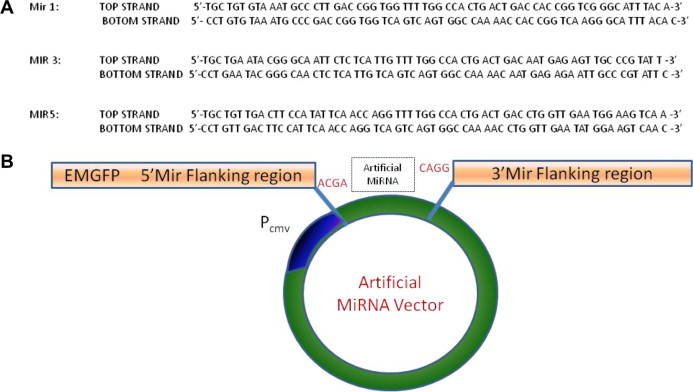
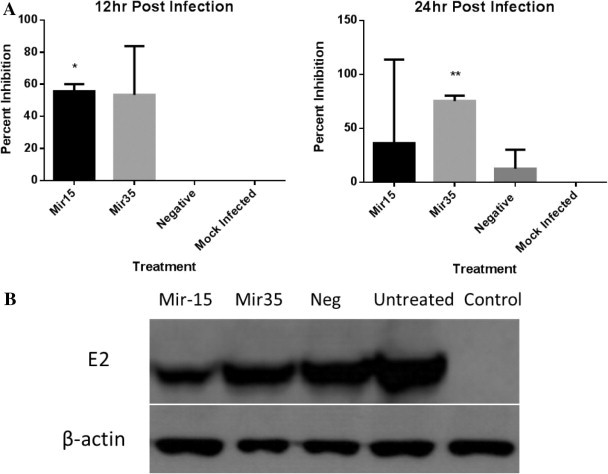
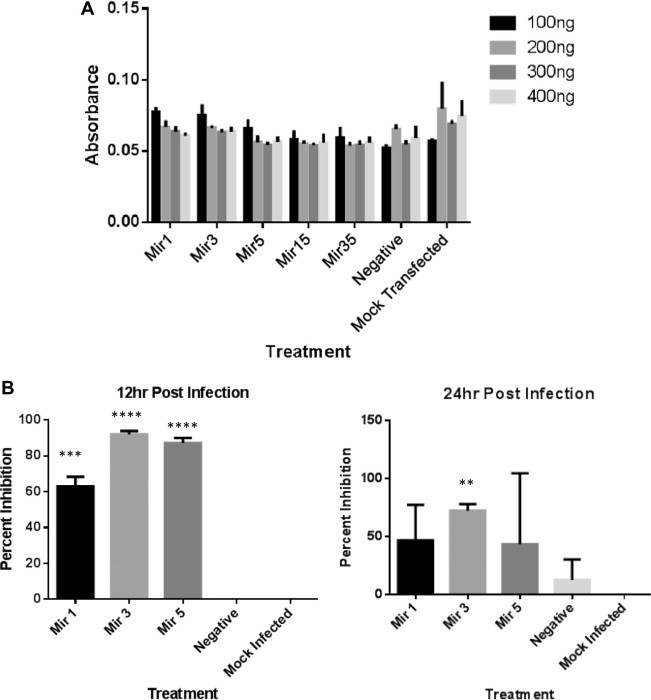
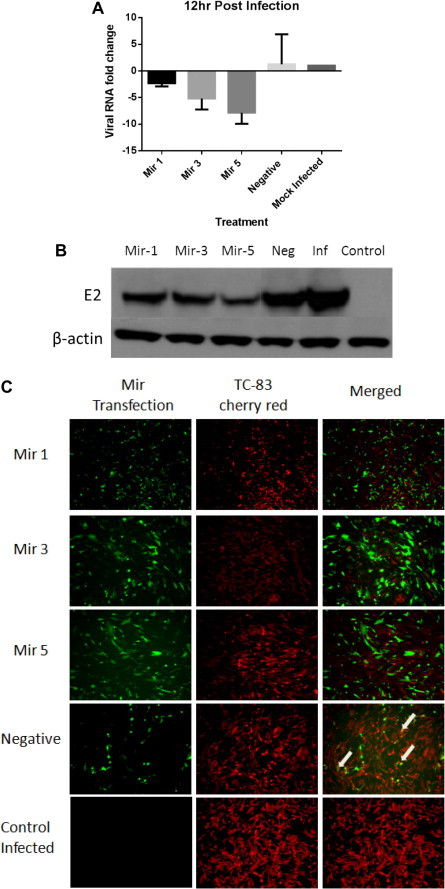
Venezuelan equine encephalitis virus is a member of the alphavirus family and genus togaviridae. VEEV is highly infectious in aerosol form and has been weaponized in the past making it a potential biothreat agent. At present, there are no FDA approved antiviral treatments or vaccines for VEEV. Artificial microRNAs are small molecules which are expressed through endogenous microRNA machinery by RNA polymerase II. These artificial microRNAs effectively inhibit gene expression and are non-toxic to the host cell. VEEV RNA dependent RNA polymerase (RdRp) is central to VEEV replication. Therefore, we hypothesize that targeted inhibition of VEEV RdRp using artificial microRNAs may efficiently inhibit VEEV replication. Five artificial microRNAs were tested in vitro in BHK cells. Three of these artificial miRNAs showed significant inhibition of VEEV replication. Further, these microRNAs were cloned into the expression vector in combination to see the synergistic effect on VEEV replication. Combination of more than one miRNA did not result in significant inhibition of virus replication. In conclusion, we have shown that RNAi through artificial microRNAs effectively inhibits VEEV replication and is significantly less toxic in comparison to siRNAs.
委内瑞拉马脑炎病毒是黄病毒科和披膜病毒属的一员。VEEV 在气溶胶形式中具有高度传染性,并且过去曾被武器化,因此它是一种潜在的生物威胁剂。目前,还没有 FDA 批准的用于治疗 VEEV 的抗病毒药物或疫苗。人工 microRNAs 是通过 RNA 聚合酶 II 通过内源性 microRNA 机制表达的小分子。这些人工 microRNAs 可有效抑制基因表达,并且对宿主细胞无毒。VEEV RNA 依赖性 RNA 聚合酶(RdRp)是 VEEV 复制的核心。因此,我们假设使用人工 microRNAs 靶向抑制 VEEV RdRp 可能会有效地抑制 VEEV 复制。在 BHK 细胞中体外测试了 5 种人工 microRNAs。其中 3 种人工 microRNAs 显示出对 VEEV 复制的显著抑制作用。此外,将这些 microRNAs 克隆到表达载体中,以观察它们对 VEEV 复制的协同作用。组合使用多种 microRNAs 并没有导致病毒复制的显著抑制。总之,我们已经表明,通过人工 microRNAs 的 RNAi 可有效抑制 VEEV 复制,并且与 siRNAs 相比毒性显著降低。