1 Vaccine and Infectious Disease Research Center (VIDRC), Translational Health Science and Technology Institute (THSTI), Faridabad, India.
2 Regional Center for Biotechnology, NCR Biotech Science Cluster, Faridabad, India.
Nucleic Acid Ther. 2018 Dec;28(6):357-365. doi: 10.1089/nat.2018.0743. Epub 2018 Nov 20.
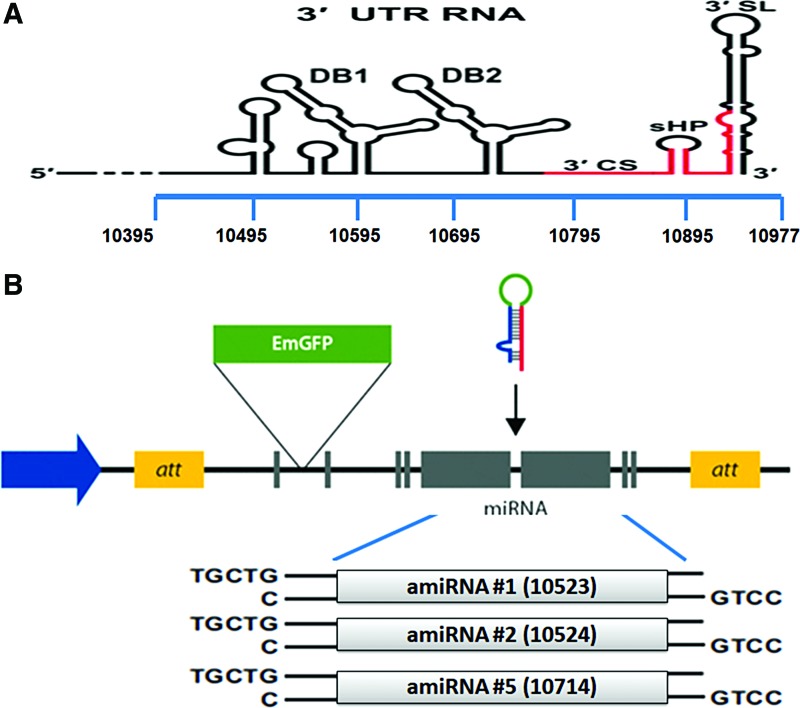
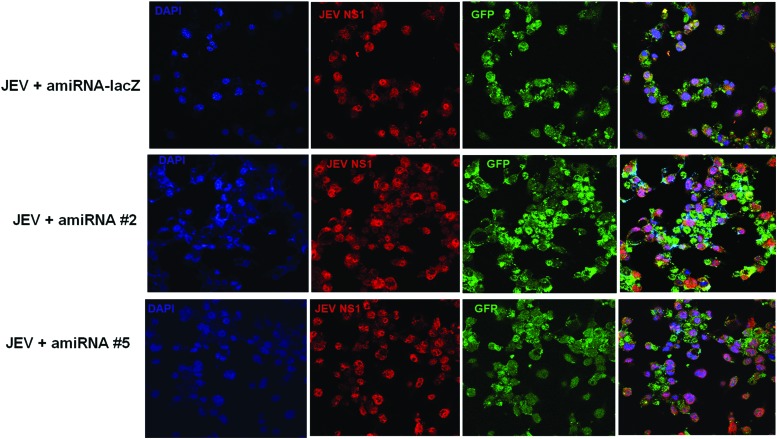
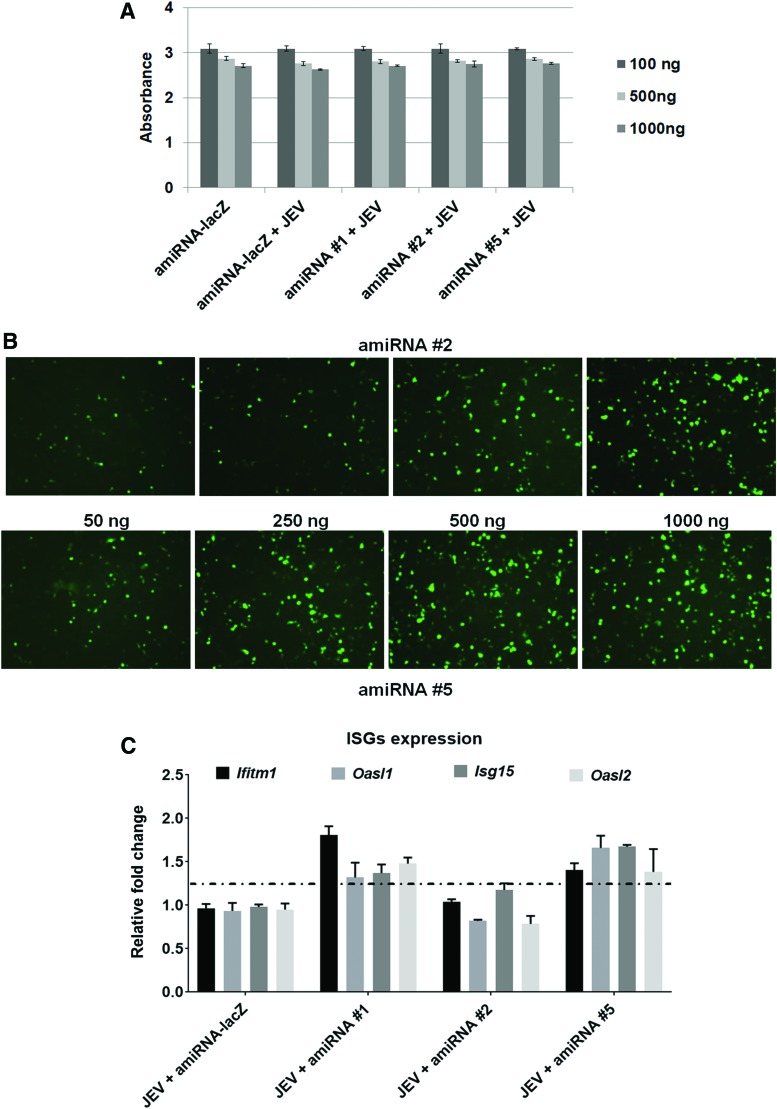
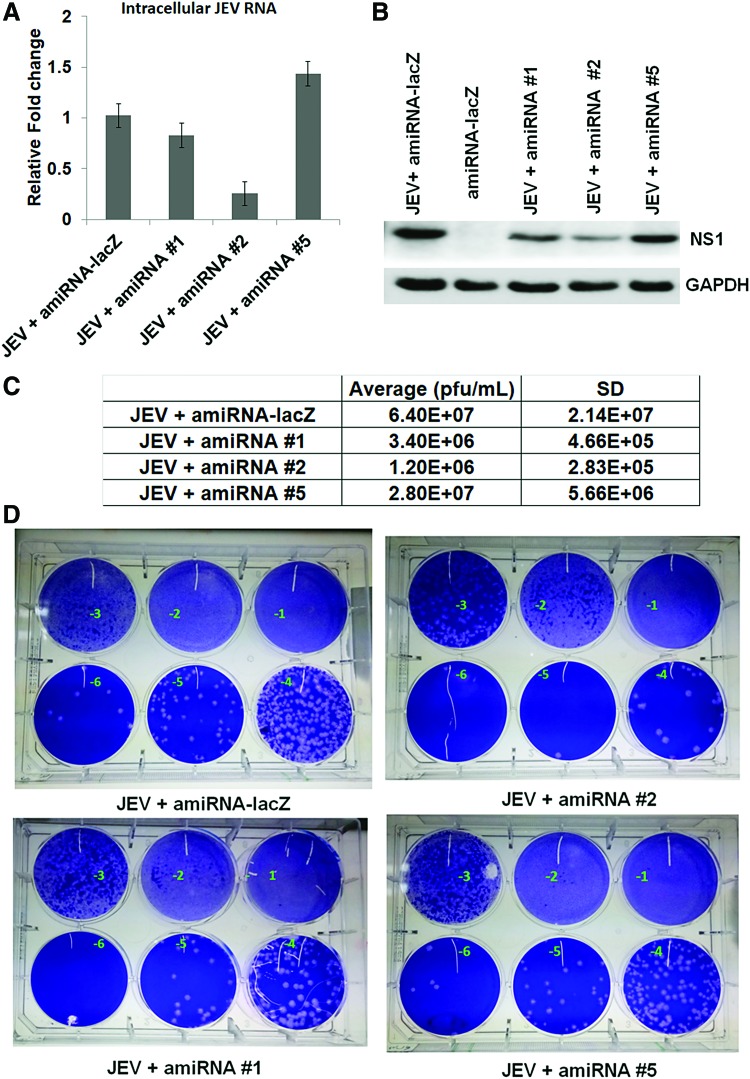
Artificial microRNA (amiRNA)-mediated inhibition of viral replication has recently gained importance as a strategy for antiviral therapy. In this study, we evaluated the benefit of using the amiRNA vector against Japanese encephalitis virus (JEV). We designed three single amiRNA sequences against the consensus sequence of 3' untranslated region (3'UTR) of JEV and tested their efficacy against cell culture-grown JEV Vellore strain (P20778) in neuronal cells. The binding ability of three amiRNAs on 3'UTR region was tested in vitro in HEK293T cells using a JEV 3'UTR tagged with luciferase reporter vector. Transient transfection of amiRNAs was nontoxic to cells as evident from the MTT assay and caused minimal induction in interferon-stimulated gene expression. Furthermore, our result suggested that transient expression of two amiRNAs (amiRNA #1 and amiRNA #2) significantly reduced intracellular viral RNA and nonstructural 1 (NS1) protein, as well as diminished infectious viral particle release up to 95% in the culture supernatant as evident from viral plaque reduction assay. Overall, our results indicated that RNA interference based on amiRNAs targeting viral conserved regions at 3'UTR was a useful approach for improvements of nucleic acid inhibitors against JEV.
人工 microRNA(amiRNA)介导的病毒复制抑制最近作为抗病毒治疗策略受到重视。在这项研究中,我们评估了使用 amiRNA 载体对抗日本脑炎病毒(JEV)的益处。我们设计了三个针对 JEV 3'非翻译区(3'UTR)共有序列的单 amiRNA 序列,并在神经元细胞中测试了它们对细胞培养生长的 JEV Vellore 株(P20778)的功效。在体外使用萤火虫荧光素酶报告载体标记 JEV 3'UTR,在 HEK293T 细胞中测试了三种 amiRNA 在 3'UTR 区域的结合能力。MTT 测定表明 amiRNA 的瞬时转染对细胞无毒,并且干扰素刺激基因表达的诱导最小。此外,我们的结果表明,两种 amiRNA(amiRNA #1 和 amiRNA #2)的瞬时表达可显著降低细胞内病毒 RNA 和非结构蛋白 1(NS1)蛋白的水平,并且在病毒空斑减少测定中,培养上清液中传染性病毒颗粒的释放减少了 95%。总的来说,我们的结果表明,基于针对 3'UTR 病毒保守区的 amiRNA 的 RNA 干扰是提高针对 JEV 的核酸抑制剂的有效方法。