Department of Biochemistry, University of Cambridge, Cambridge, United Kingdom.
PLoS Pathog. 2013;9(8):e1003566. doi: 10.1371/journal.ppat.1003566. Epub 2013 Aug 22.
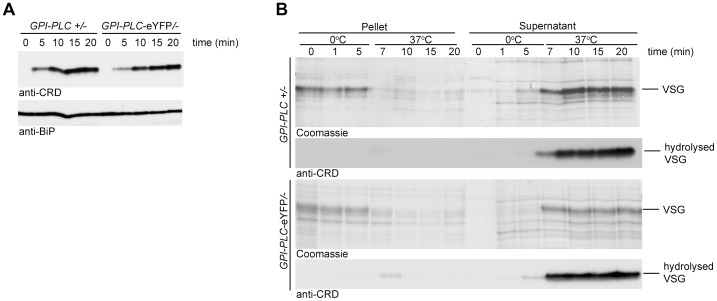
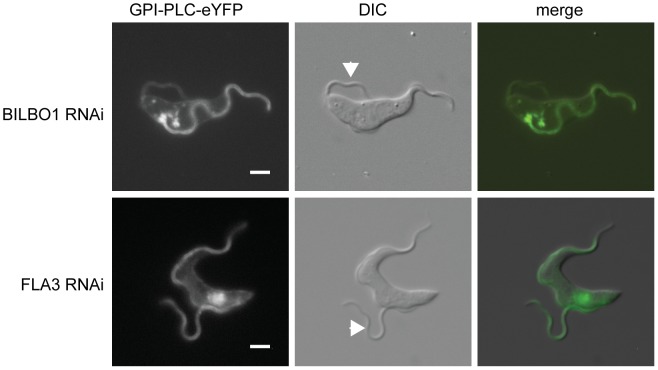
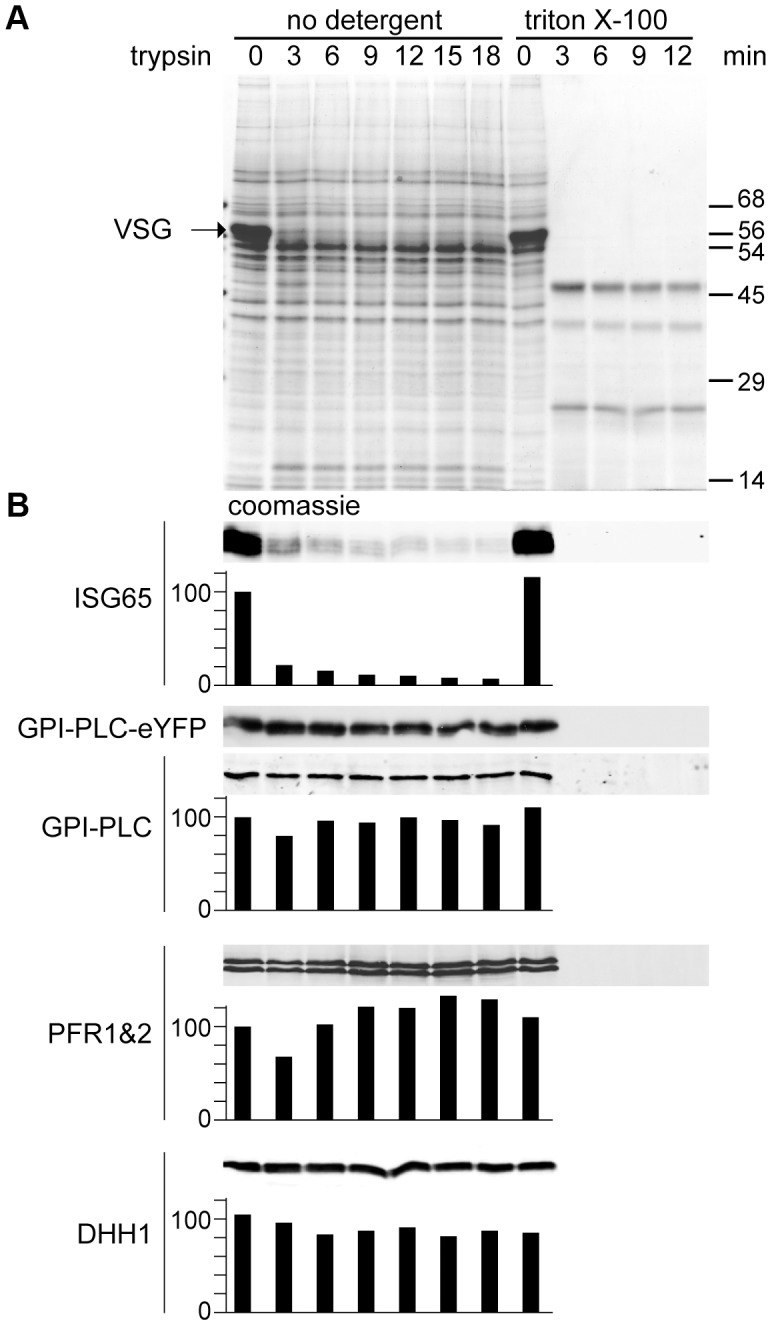
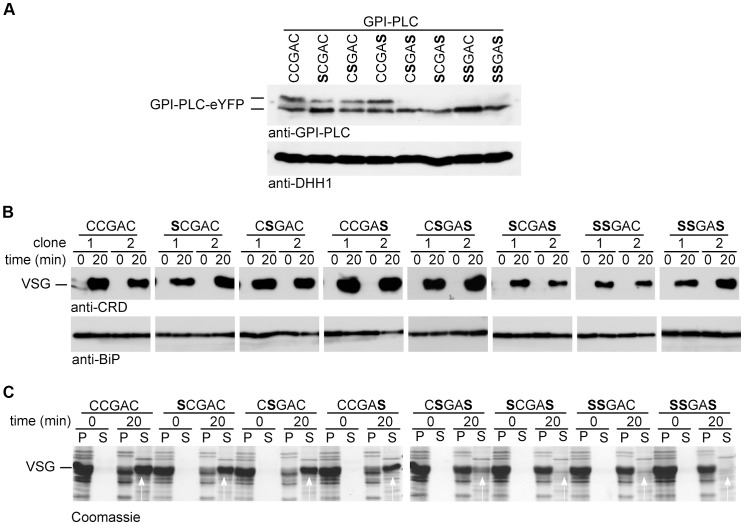
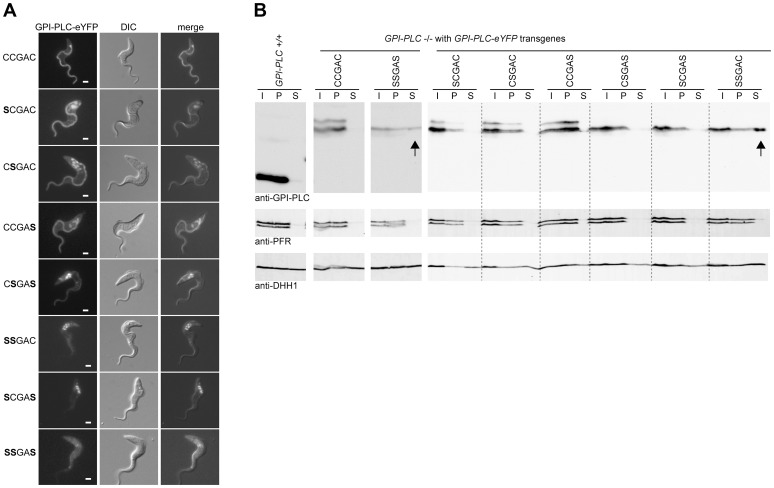
In Trypanosoma brucei, glycosylphosphatidylinositol phospholipase C (GPI-PLC) is a virulence factor that releases variant surface glycoprotein (VSG) from dying cells. In live cells, GPI-PLC is localised to the plasma membrane where it is concentrated on the flagellar membrane, so activity or access must be tightly regulated as very little VSG is shed. Little is known about regulation except that acylation within a short internal motif containing three cysteines is necessary for GPI-PLC to access VSG in dying cells. Here, GPI-PLC mutants have been analysed both for subcellular localisation and for the ability to release VSG from dying cells. Two sequence determinants necessary for concentration on the flagellar membrane were identified. First, all three cysteines are required for full concentration on the flagellar membrane. Mutants with two cysteines localise predominantly to the plasma membrane but lose some of their flagellar concentration, while mutants with one cysteine are mainly localised to membranes between the nucleus and flagellar pocket. Second, a proline residue close to the C-terminus, and distant from the acylated cysteines, is necessary for concentration on the flagellar membrane. The localisation of GPI-PLC to the plasma but not flagellar membrane is necessary for access to the VSG in dying cells. Cellular structures necessary for concentration on the flagellar membrane were identified by depletion of components. Disruption of the flagellar pocket collar caused loss of concentration whereas detachment of the flagellum from the cell body after disruption of the flagellar attachment zone did not. Thus, targeting to the flagellar membrane requires: a titratable level of acylation, a motif including a proline, and a functional flagellar pocket. These results provide an insight into how the segregation of flagellar membrane proteins from those present in the flagellar pocket and cell body membranes is achieved.
在布氏锥虫中,糖基磷脂酰肌醇磷脂酶 C(GPI-PLC)是一种毒力因子,可将变异表面糖蛋白(VSG)从死亡细胞中释放出来。在活细胞中,GPI-PLC 定位于质膜上,在质膜上集中在鞭毛膜上,因此必须严格调节其活性或接近度,因为很少有 VSG 脱落。除了在包含三个半胱氨酸的短内部基序内酰化对于 GPI-PLC 在死亡细胞中接近 VSG 是必需的之外,对调节知之甚少。在这里,已经分析了 GPI-PLC 突变体的亚细胞定位和从死亡细胞中释放 VSG 的能力。确定了两个对于在鞭毛膜上集中必需的序列决定因素。首先,所有三个半胱氨酸对于在鞭毛膜上的完全集中都是必需的。具有两个半胱氨酸的突变体主要定位于质膜,但丧失了一些鞭毛集中,而具有一个半胱氨酸的突变体主要定位于核和鞭毛袋之间的膜上。其次,靠近 C 末端且远离酰化半胱氨酸的脯氨酸残基对于在鞭毛膜上的集中是必需的。GPI-PLC 定位于质膜而不是鞭毛膜对于接近死亡细胞中的 VSG 是必需的。通过耗尽成分鉴定了集中在鞭毛膜上的细胞结构所必需的。鞭毛袋领的破坏导致集中丧失,而鞭毛附着区破坏后鞭毛与细胞体的分离则没有。因此,靶向鞭毛膜需要:可滴定的酰化水平,包含脯氨酸的基序,以及功能正常的鞭毛袋。这些结果提供了对如何从鞭毛袋和细胞体膜中存在的那些中分离出鞭毛膜蛋白的深入了解。