Oilseed Crops Institute, Hunan Agricultural University, Changsha, Hunan, China.
PLoS One. 2013 Aug 19;8(8):e71110. doi: 10.1371/journal.pone.0071110. eCollection 2013.
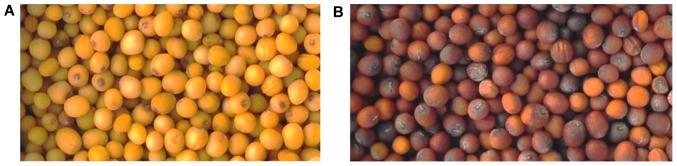
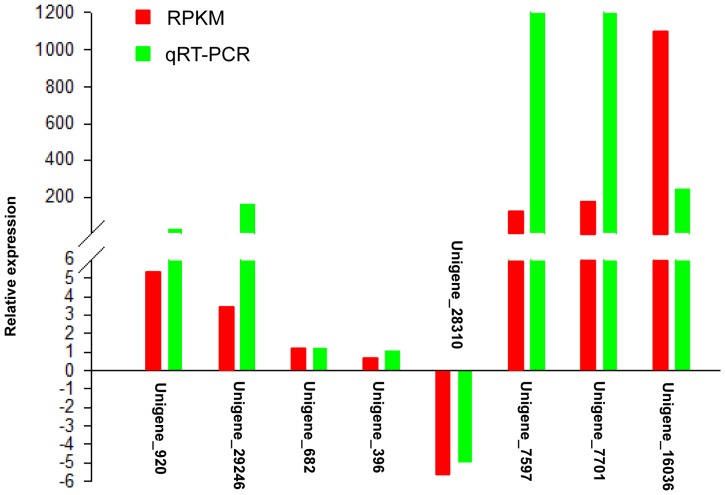
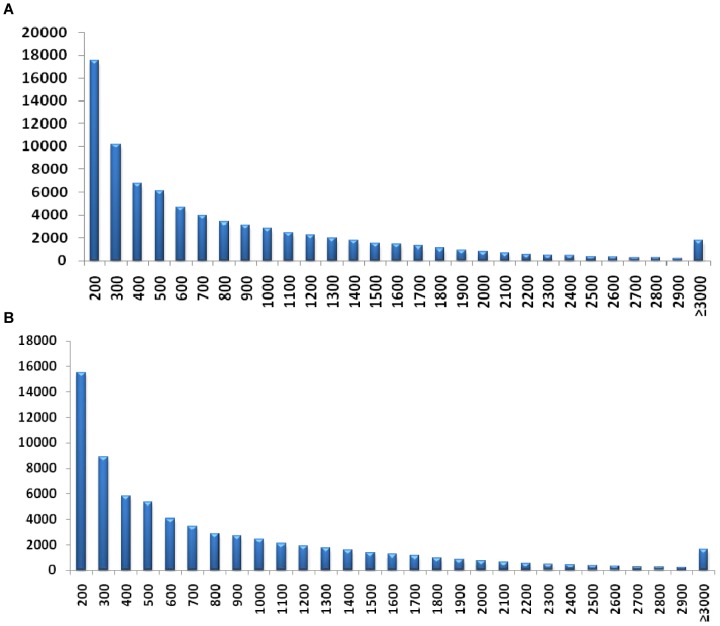
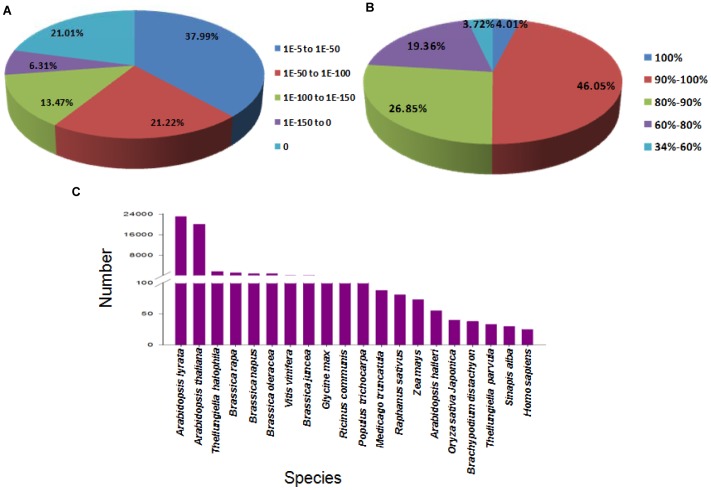
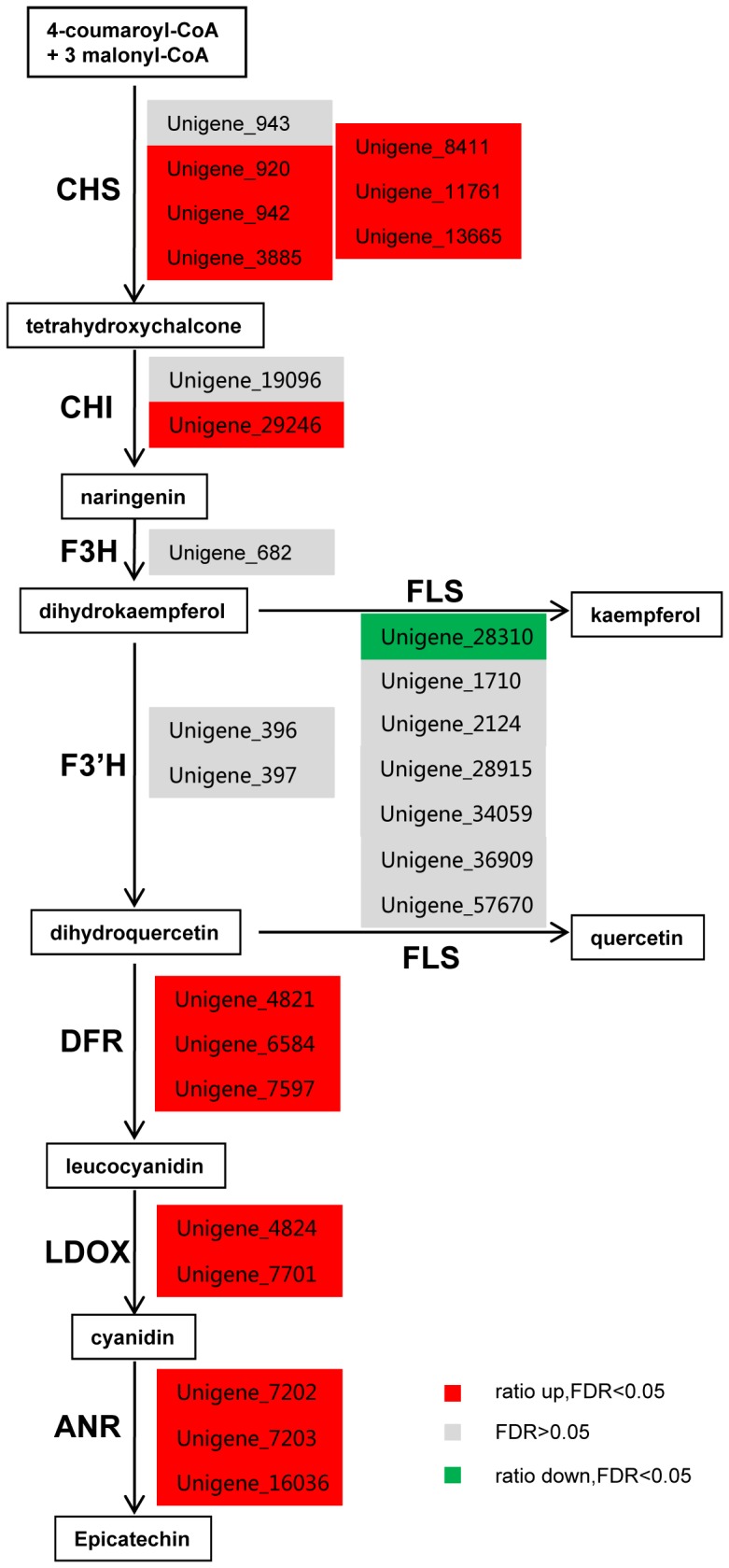
Brassica juncea, a worldwide cultivated crop plant, produces seeds of different colors. Seed pigmentation is due to the deposition in endothelial cells of proanthocyanidins (PAs), end products from a branch of flavonoid biosynthetic pathway. To elucidate the gene regulatory network of seed pigmentation in B. juncea, transcriptomes in seed coat of a yellow-seeded inbred line and its brown-seeded near- isogenic line were sequenced using the next-generation sequencing platform Illumina/Solexa and de novo assembled. Over 116 million high-quality reads were assembled into 69,605 unigenes, of which about 71.5% (49,758 unigenes) were aligned to Nr protein database with a cut-off E-value of 10(-5). RPKM analysis showed that the brown-seeded testa up-regulated 802 unigenes and down-regulated 502 unigenes as compared to the yellow-seeded one. Biological pathway analysis revealed the involvement of forty six unigenes in flavonoid biosynthesis. The unigenes encoding dihydroflavonol reductase (DFR), leucoantho-cyanidin dioxygenase (LDOX) and anthocyanidin reductase (ANR) for late flavonoid biosynthesis were not expressed at all or at a very low level in the yellow-seeded testa, which implied that these genes for PAs biosynthesis be associated with seed color of B. juncea, as confirmed by qRT-PCR analysis of these genes. To our knowledge, it is the first time to sequence the transcriptome of seed coat in Brassica juncea. The unigene sequences obtained in this study will not only lay the foundations for insight into the molecular mechanisms underlying seed pigmentation in B.juncea, but also provide the basis for further genomics research on this species or its allies.
芥菜,一种全球范围内种植的作物,其种子具有不同的颜色。种子颜色是由于内皮细胞中积累了原花青素(PAs),PAs 是类黄酮生物合成途径的一个分支的终产物。为了阐明芥菜种子色素沉着的基因调控网络,使用下一代测序平台 Illumina/Solexa 对黄色种子自交系及其棕色种子近等基因系的种皮进行了转录组测序,并进行了从头组装。超过 1.16 亿个高质量读数被组装成 69605 个基因,其中约 71.5%(49758 个基因)与 Nr 蛋白质数据库比对,截断 E 值为 10(-5)。RPKM 分析表明,与黄色种子相比,棕色种子种皮上调了 802 个基因,下调了 502 个基因。生物途径分析表明,46 个基因参与类黄酮生物合成。在晚期类黄酮生物合成中编码二氢黄酮醇还原酶(DFR)、黄烷酮-3,4-双加氧酶(LDOX)和花青素还原酶(ANR)的基因在黄色种子种皮中根本不表达或表达水平非常低,这表明这些 PAs 生物合成基因与芥菜种子颜色有关,qRT-PCR 分析这些基因也证实了这一点。据我们所知,这是首次对芥菜种皮的转录组进行测序。本研究获得的基因序列不仅将为深入了解芥菜种子色素沉着的分子机制奠定基础,也将为该物种或其近缘种的进一步基因组学研究提供基础。