Department of Mathematics, University of Michigan, Ann Arbor, Michigan, United States of America.
PLoS One. 2013 Aug 19;8(8):e71128. doi: 10.1371/journal.pone.0071128. eCollection 2013.
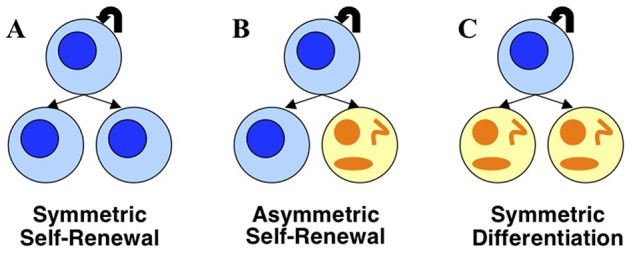
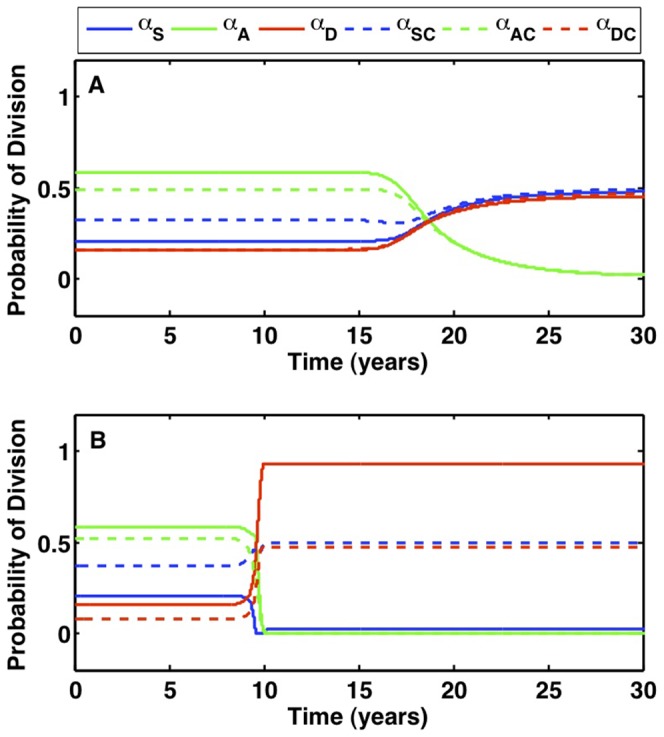
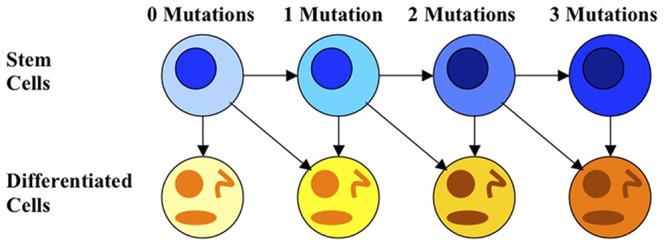
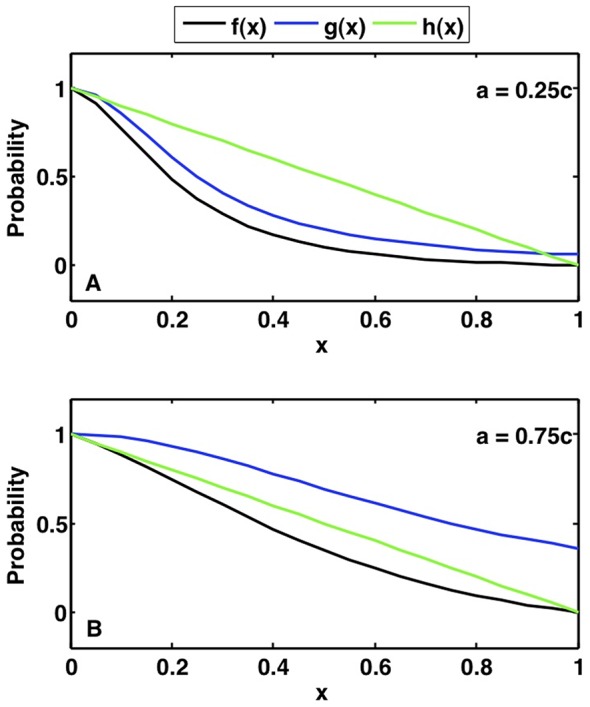
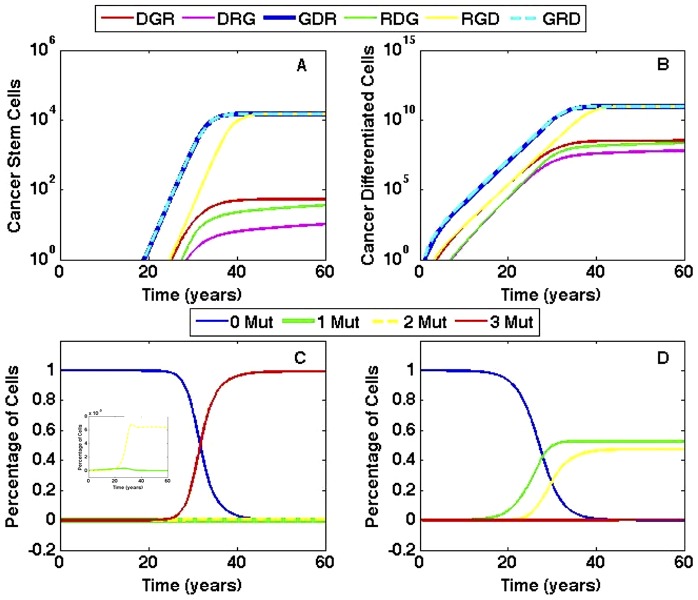
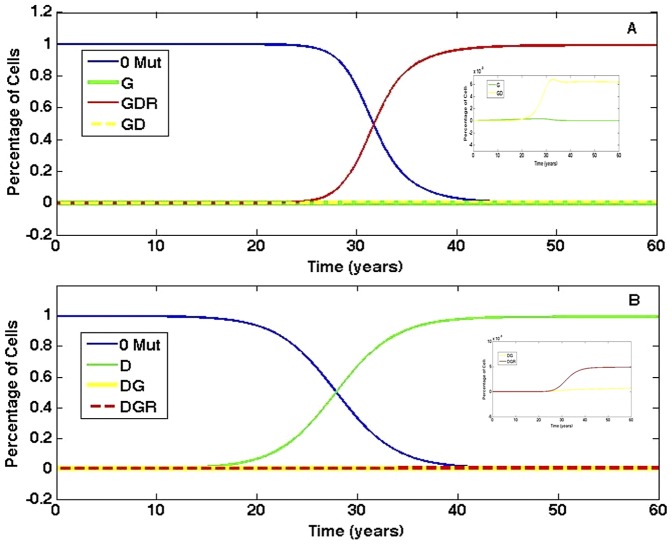
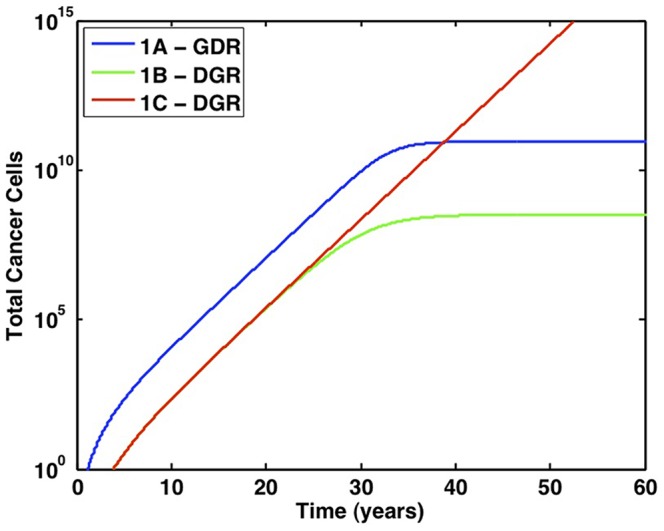
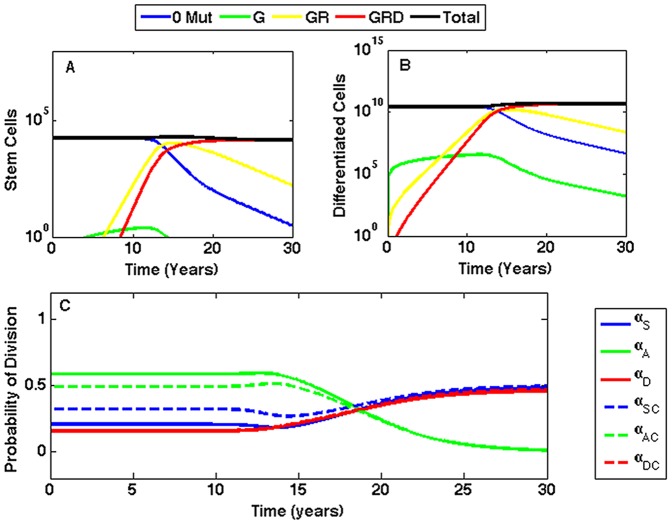
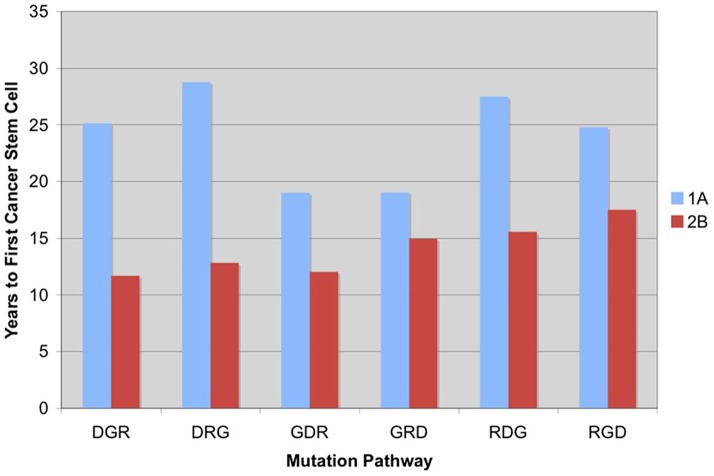
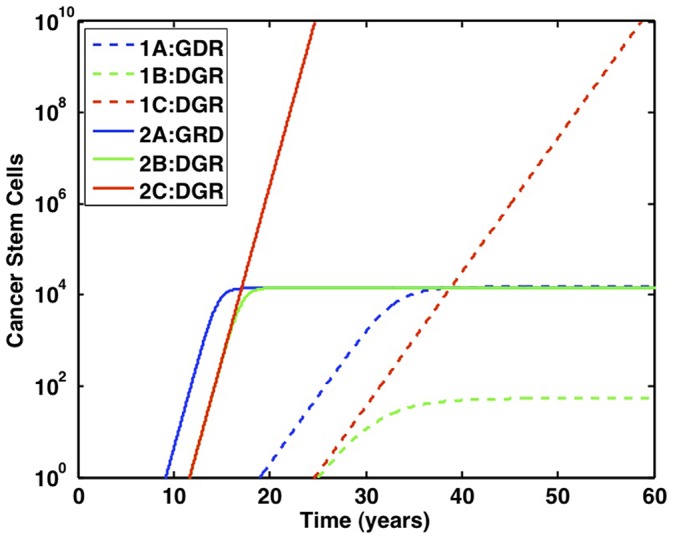
Hierarchical organized tissue structures, with stem cell driven cell differentiation, are critical to the homeostatic maintenance of most tissues, and this underlying cellular architecture is potentially a critical player in the development of a many cancers. Here, we develop a mathematical model of mutation acquisition to investigate how deregulation of the mechanisms preserving stem cell homeostasis contributes to tumor initiation. A novel feature of the model is the inclusion of both extrinsic and intrinsic chemical signaling and interaction with the niche to control stem cell self-renewal. We use the model to simulate the effects of a variety of types and sequences of mutations and then compare and contrast all mutation pathways in order to determine which ones generate cancer cells fastest. The model predicts that the sequence in which mutations occur significantly affects the pace of tumorigenesis. In addition, tumor composition varies for different mutation pathways, so that some sequences generate tumors that are dominated by cancerous cells with all possible mutations, while others are primarily comprised of cells that more closely resemble normal cells with only one or two mutations. We are also able to show that, under certain circumstances, healthy stem cells diminish due to the displacement by mutated cells that have a competitive advantage in the niche. Finally, in the event that all homeostatic regulation is lost, exponential growth of the cancer population occurs in addition to the depletion of normal cells. This model helps to advance our understanding of how mutation acquisition affects mechanisms that influence cell-fate decisions and leads to the initiation of cancers.
分层组织的结构,由干细胞驱动的细胞分化,对于大多数组织的动态维持至关重要,而这种潜在的细胞结构可能是许多癌症发展的关键因素。在这里,我们开发了一个获得突变的数学模型,以研究维持干细胞稳态的机制失调如何导致肿瘤起始。该模型的一个新特点是包括了外在和内在的化学信号以及与生态位的相互作用,以控制干细胞自我更新。我们使用该模型来模拟各种类型和序列的突变的影响,然后比较和对比所有的突变途径,以确定哪些途径最快产生癌细胞。该模型预测,突变发生的顺序显著影响肿瘤发生的速度。此外,不同的突变途径导致肿瘤组成不同,因此一些序列产生的肿瘤主要由具有所有可能突变的癌细胞组成,而另一些则主要由仅有一个或两个突变的更类似于正常细胞的细胞组成。我们还能够表明,在某些情况下,由于在生态位中具有竞争优势的突变细胞取代了健康的干细胞,健康的干细胞会减少。最后,在所有的动态平衡调节都丧失的情况下,除了正常细胞的耗竭之外,癌细胞群体还会呈指数增长。该模型有助于深入了解获得突变如何影响影响细胞命运决策的机制,并导致癌症的发生。