UPMC University of Paris 06, UMR 7144 CNRS, Adaptation et Diversité en Milieu Marin, Station Biologique de Roscoff, Roscoff, France ; Centre National de la Recherche Scientifique, UMR 7144, Station Biologique de Roscoff, Roscoff, France.
PLoS One. 2013 Aug 21;8(8):e71609. doi: 10.1371/journal.pone.0071609. eCollection 2013.
The Ice krill, Euphausia crystallorophias is one of the species at the base of the Southern Ocean food chain. Given their significant contribution to the biomass of the Southern Ocean, it is vitally important to gain a better understanding of their physiology and, in particular, anticipate their responses to climate change effects in the warming seas around Antarctica.
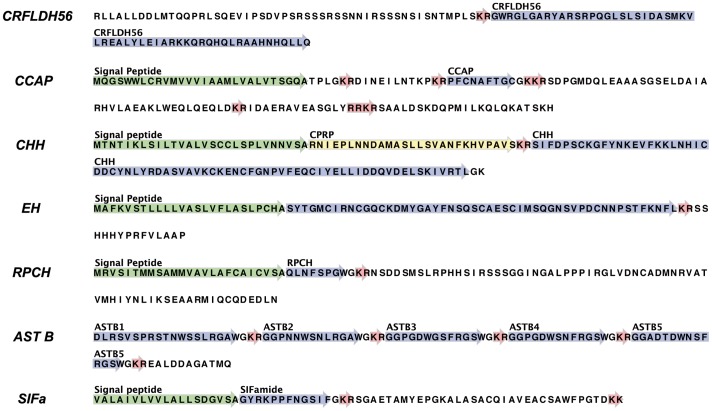
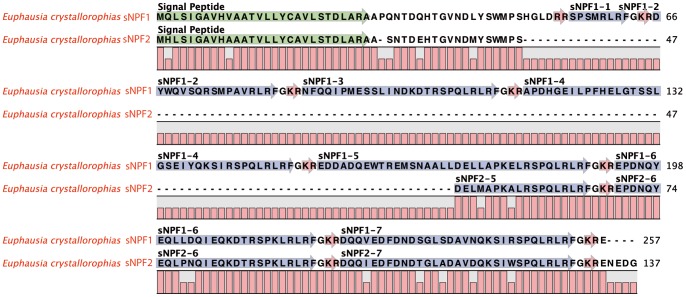
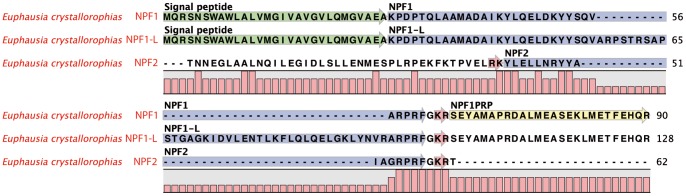
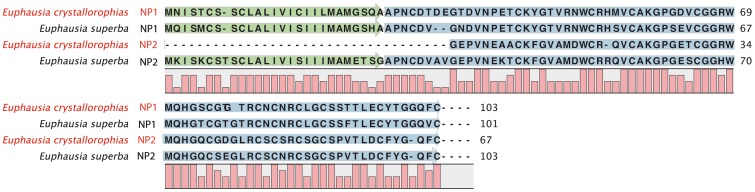
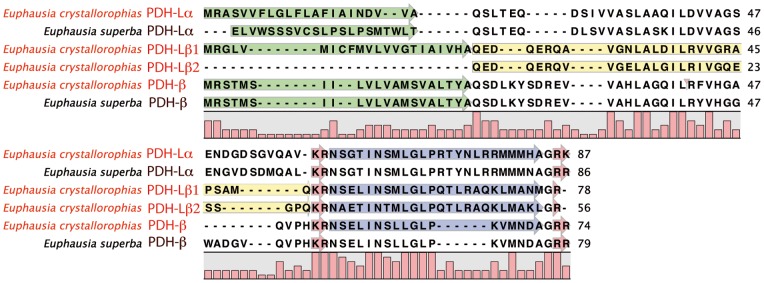
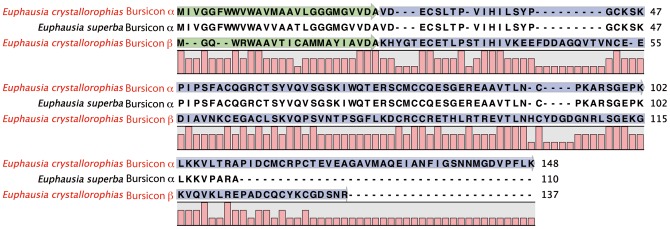
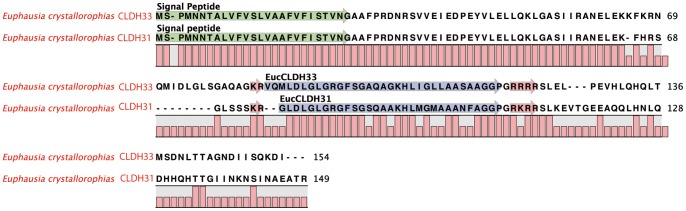
METHODOLOGY/PRINCIPAL FINDINGS: Illumina sequencing was used to produce a transcriptome of the ice krill. Analysis of the assembled contigs via two different methods, produced 36 new pre-pro-peptides, coding for 61 neuropeptides or peptide hormones belonging to the following families: Allatostatins (A, B et C), Bursicon (α and β), Crustacean Hyperglycemic Hormones (CHH and MIH/VIHs), Crustacean Cardioactive Peptide (CCAP), Corazonin, Diuretic Hormones (DH), the Eclosion Hormone (EH), Neuroparsin, Neuropeptide F (NPF), small Neuropeptide F (sNPF), Pigment Dispersing Hormone (PDH), Red Pigment Concentrating Hormone (RPCH) and finally Tachykinin. LC/MS/MS proteomics was also carried out on eyestalk extracts, which are the major site of neuropeptide synthesis in decapod crustaceans. Results confirmed the presence of six neuropeptides and six precursor-related peptides previously identified in the transcriptome analyses.
This study represents the first comprehensive analysis of neuropeptide hormones in a Eucarida non-decapod Malacostraca, several of which are described for the first time in a non-decapod crustacean. Additionally, there is a potential expansion of PDH and Neuropeptide F family members, which may reflect certain life history traits such as circadian rhythms associated with diurnal migrations and also the confirmation via mass spectrometry of several novel pre-pro-peptides, of unknown function. Knowledge of these essential hormones provides a vital framework for understanding the physiological response of this key Southern Ocean species to climate change and provides a valuable resource for studies into the molecular phylogeny of these organisms and the evolution of neuropeptide hormones.
南极磷虾,Euphausia crystallorophias 是南大洋食物链底层的物种之一。鉴于它们对南大洋生物量的巨大贡献,深入了解它们的生理学特性,特别是预测它们对南极洲周围变暖海域气候变化影响的反应,至关重要。
方法/主要发现:使用 Illumina 测序生成南极磷虾的转录组。通过两种不同的方法对组装的连续序列进行分析,产生了 36 种新的前原肽,编码 61 种神经肽或肽激素,属于以下家族:Allatostatins(A、B 和 C)、Bursicon(α 和 β)、甲壳动物高血糖激素(CHH 和 MIH/VIHs)、甲壳动物心脏活性肽(CCAP)、Corazonin、利尿激素(DH)、蜕皮激素(EH)、神经-parsin、神经肽 F(NPF)、小神经肽 F(sNPF)、色素分散激素(PDH)、红色色素浓缩激素(RPCH),最后是速激肽。LC/MS/MS 蛋白质组学也在眼柄提取物上进行,眼柄是甲壳动物蜕皮动物中神经肽合成的主要部位。结果证实了先前在转录组分析中鉴定出的六种神经肽和六种前体相关肽的存在。
本研究代表了首次对真软甲亚纲非十足目软甲动物的神经肽激素进行全面分析,其中一些在非十足目甲壳动物中首次描述。此外,PDH 和神经肽 F 家族成员可能存在潜在扩张,这可能反映了某些与昼夜迁徙相关的生活史特征,如昼夜节律,并且通过质谱法还证实了几种新的前原肽的存在,这些前原肽的功能未知。了解这些必需激素为理解该关键南大洋物种对气候变化的生理反应提供了重要框架,并为研究这些生物的分子系统发育和神经肽激素的进化提供了有价值的资源。