Ludwig Institute for Cancer Research, La Jolla, California, USA.
Nat Genet. 2013 Oct;45(10):1198-206. doi: 10.1038/ng.2746. Epub 2013 Sep 1.
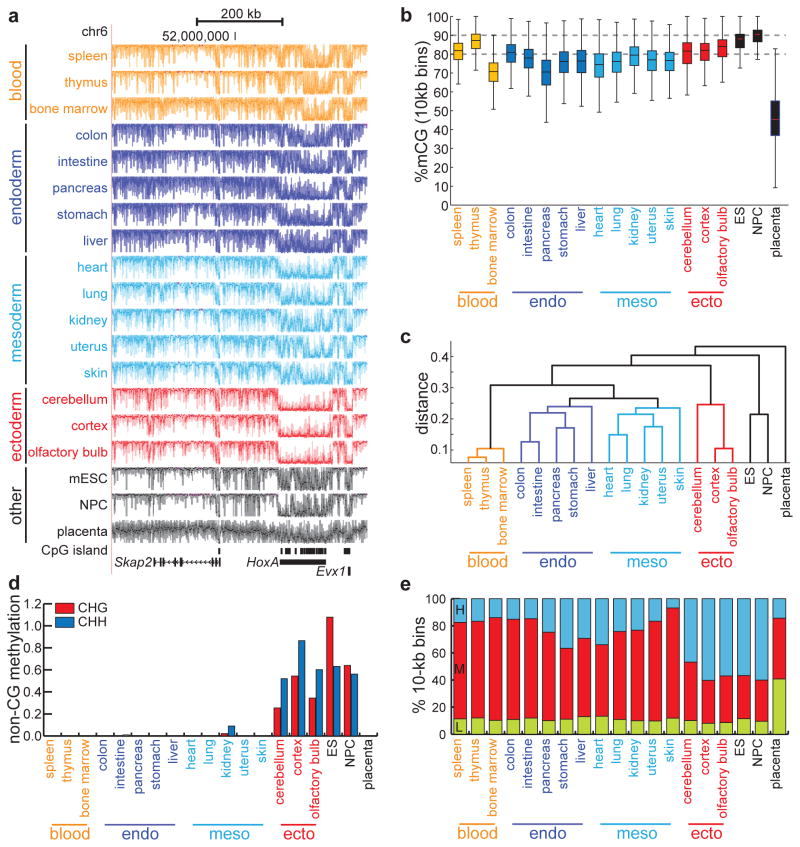
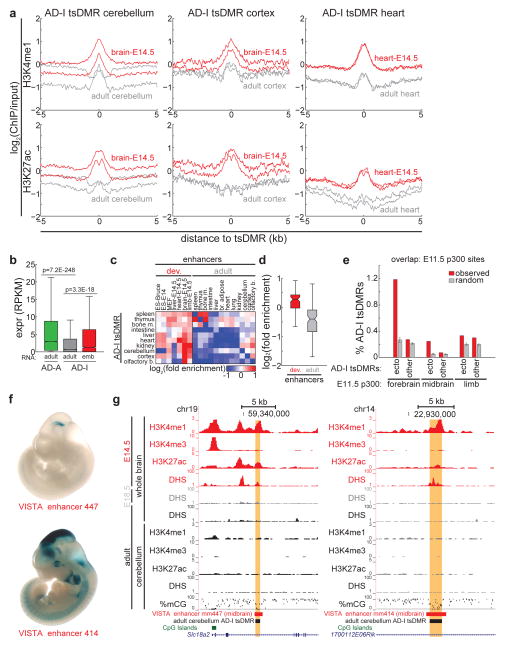
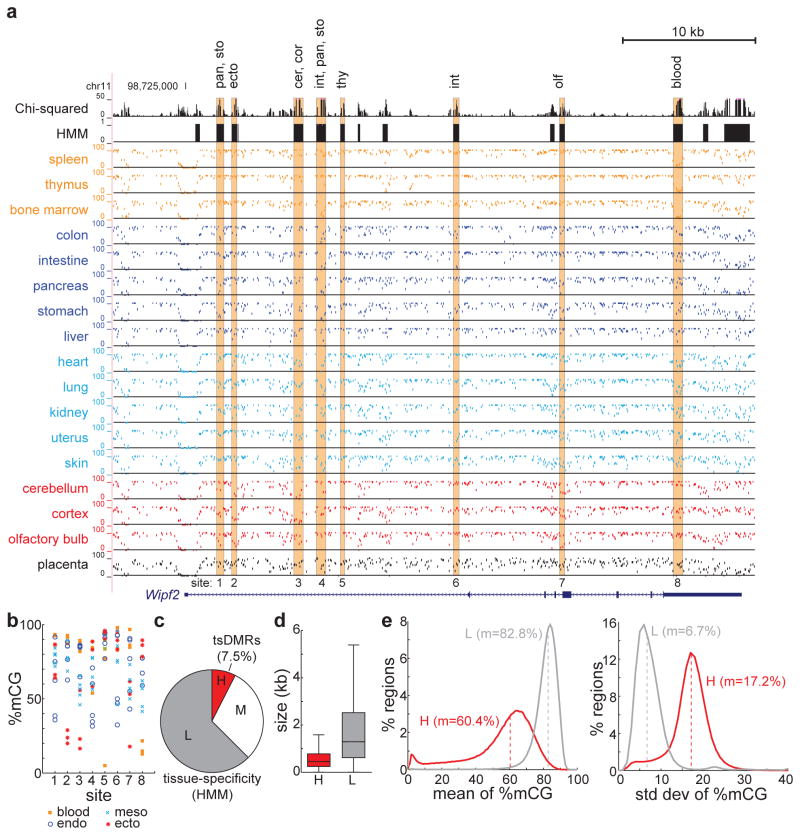
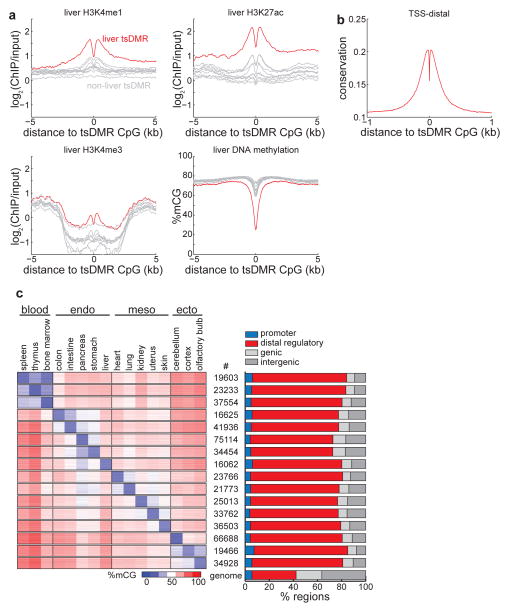
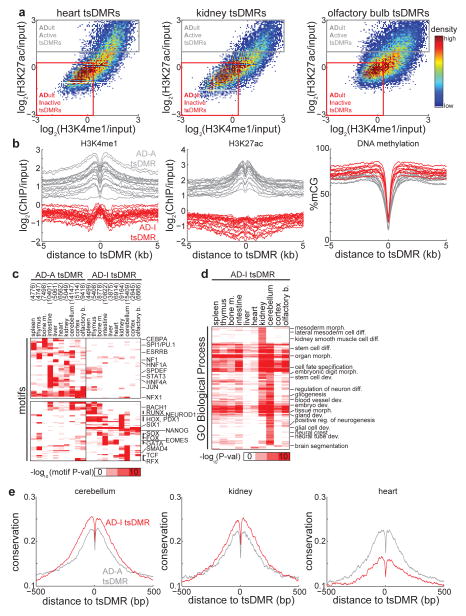
Mammalian development requires cytosine methylation, a heritable epigenetic mark of cellular memory believed to maintain a cell's unique gene expression pattern. However, it remains unclear how dynamic DNA methylation relates to cell type-specific gene expression and animal development. Here, by mapping base-resolution methylomes in 17 adult mouse tissues at shallow coverage, we identify 302,864 tissue-specific differentially methylated regions (tsDMRs) and estimate that >6.7% of the mouse genome is variably methylated. Supporting a prominent role for DNA methylation in gene regulation, most tsDMRs occur at distal cis-regulatory elements. Unexpectedly, some tsDMRs mark enhancers that are dormant in adult tissues but active in embryonic development. These 'vestigial' enhancers are hypomethylated and lack active histone modifications in adult tissues but nevertheless exhibit activity during embryonic development. Our results provide new insights into the role of DNA methylation at tissue-specific enhancers and suggest that epigenetic memory of embryonic development may be retained in adult tissues.
哺乳动物的发育需要胞嘧啶甲基化,这是一种可遗传的表观遗传标记,被认为可以维持细胞独特的基因表达模式。然而,目前尚不清楚动态 DNA 甲基化与特定细胞类型的基因表达和动物发育之间的关系。在这里,通过在浅层覆盖下对 17 种成年小鼠组织进行碱基分辨率的甲基化组图谱绘制,我们鉴定出 302864 个组织特异性差异甲基化区域(tsDMR),并估计超过 6.7%的小鼠基因组是可变甲基化的。支持 DNA 甲基化在基因调控中的突出作用,大多数 tsDMR 发生在远端顺式调控元件上。出乎意料的是,一些 tsDMR 标记了在成年组织中处于休眠状态但在胚胎发育中活跃的增强子。这些“残余”增强子在成年组织中呈低甲基化状态且缺乏活性组蛋白修饰,但在胚胎发育过程中仍具有活性。我们的研究结果为 DNA 甲基化在组织特异性增强子中的作用提供了新的见解,并表明胚胎发育的表观遗传记忆可能在成年组织中保留下来。