Department of Surgery and Cancer, Imperial College London, Imperial Centre for Translational and Experimental Medicine, London W12 0NN, UK School of Biological Sciences, University of Essex, Colchester, UK.
J Mol Endocrinol. 2013 Nov 7;51(3):301-12. doi: 10.1530/JME-13-0169. Print 2013 Dec.
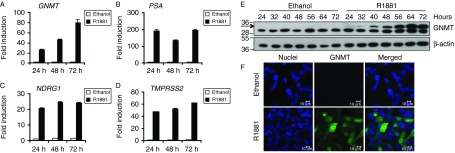
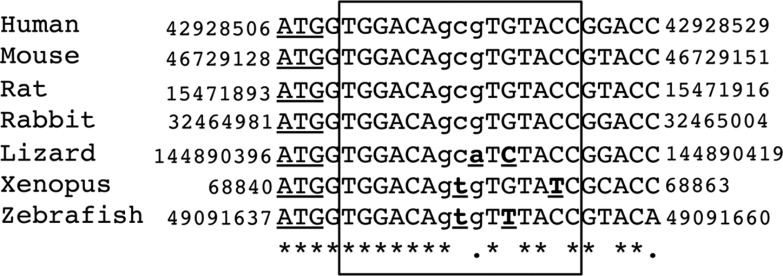
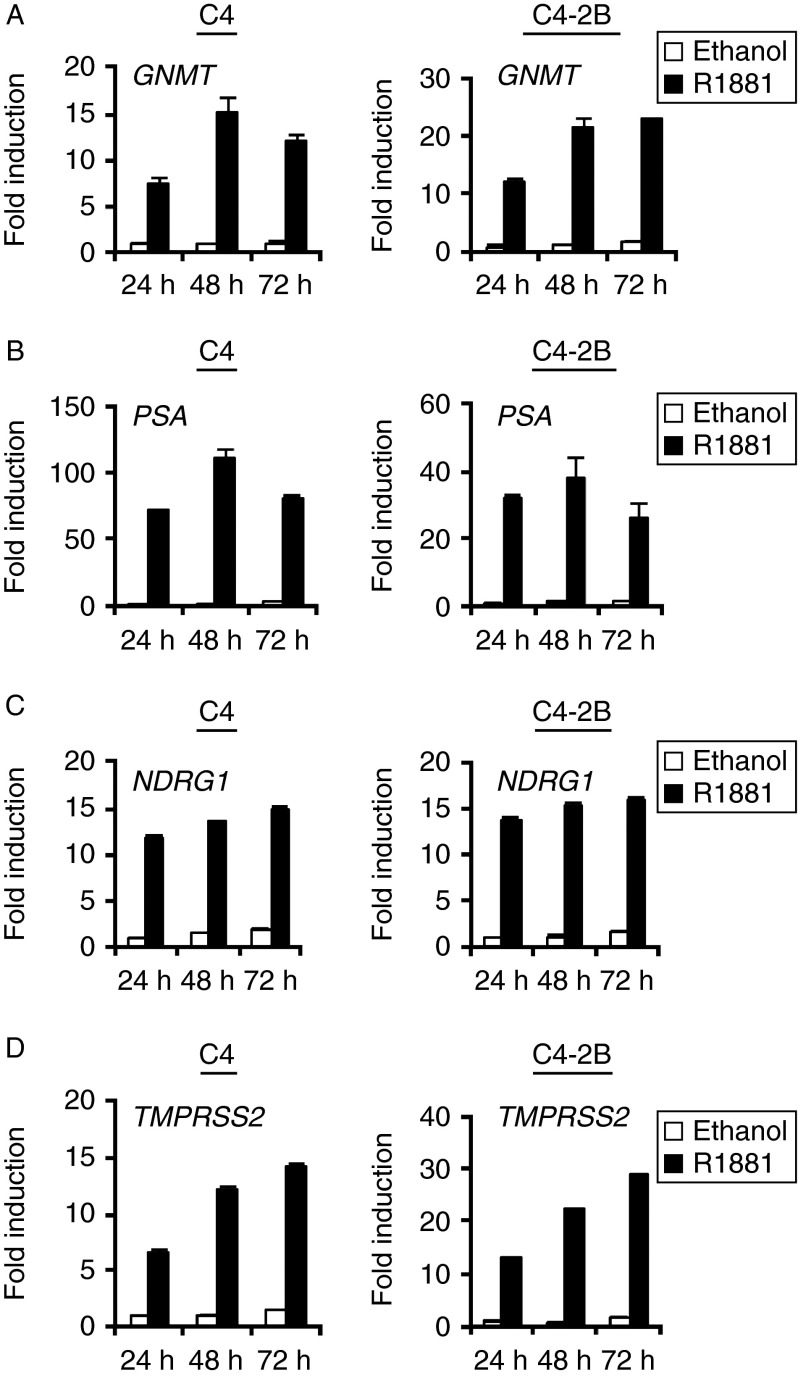
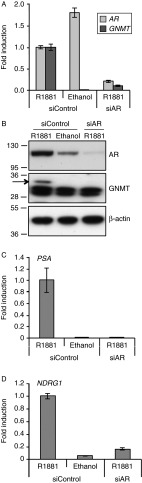
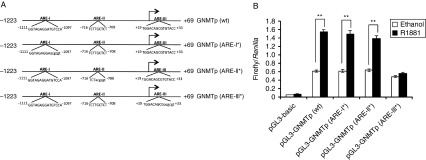
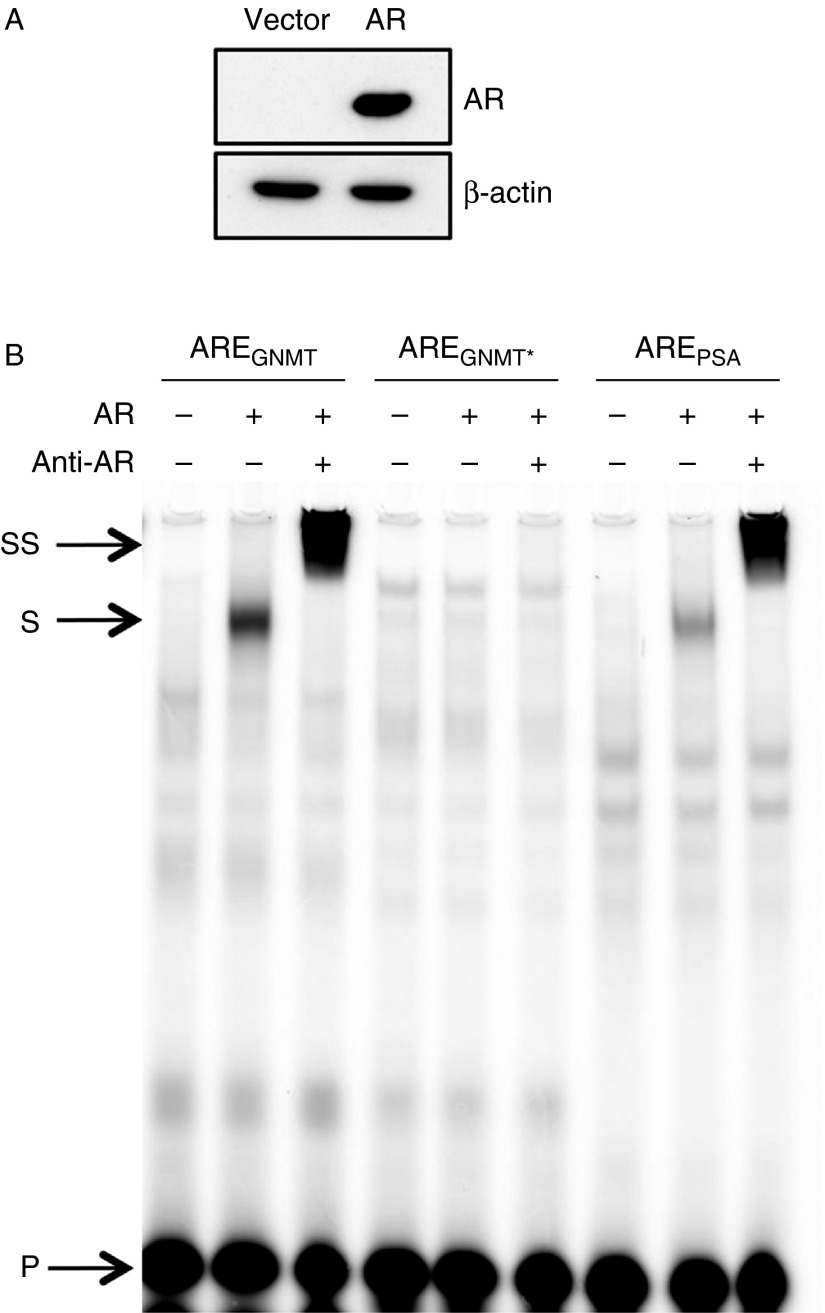
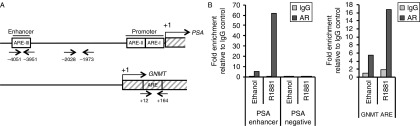
The development and growth of prostate cancer is dependent on androgens; thus, the identification of androgen-regulated genes in prostate cancer cells is vital for defining the mechanisms of prostate cancer development and progression and developing new markers and targets for prostate cancer treatment. Glycine N-methyltransferase (GNMT) is a S-adenosylmethionine-dependent methyltransferase that has been recently identified as a novel androgen-regulated gene in prostate cancer cells. Although the importance of this protein in prostate cancer progression has been extensively addressed, little is known about the mechanism of its androgen regulation. Here, we show that GNMT expression is stimulated by androgen in androgen receptor (AR) expressing cells and that the stimulation occurs at the mRNA and protein levels. We have identified an androgen response element within the first exon of the GNMT gene and demonstrated that AR binds to this element in vitro and in vivo. Together, these studies identify GNMT as a direct transcriptional target of the AR. As this is an evolutionarily conserved regulatory element, this highlights androgen regulation as an important feature of GNMT regulation.
前列腺癌的发生和发展依赖于雄激素;因此,鉴定前列腺癌细胞中的雄激素调节基因对于明确前列腺癌发生和发展的机制以及开发新的前列腺癌治疗标志物和靶点至关重要。甘氨酸 N-甲基转移酶(GNMT)是一种 S-腺苷甲硫氨酸依赖性甲基转移酶,最近被鉴定为前列腺癌细胞中的一种新型雄激素调节基因。尽管该蛋白在前列腺癌进展中的重要性已被广泛研究,但对于其雄激素调节的机制知之甚少。在这里,我们显示 GNMT 的表达受雄激素受体 (AR) 表达细胞中的雄激素刺激,并且这种刺激发生在 mRNA 和蛋白质水平上。我们已经在 GNMT 基因的第一个外显子中鉴定出一个雄激素反应元件,并证明 AR 在体外和体内结合到该元件上。这些研究共同将 GNMT 鉴定为 AR 的直接转录靶标。由于这是一个进化上保守的调节元件,这突出了雄激素调节是 GNMT 调节的一个重要特征。