Piotrowski T, Kaczmarek K, Bajon T, Ryczkowski A, Jodda A, Kaźmierska J
Department of Electroradiology, University of Medical Sciences, Poznan, Poland.
Technol Cancer Res Treat. 2014 Dec;13(6):583-91. doi: 10.7785/tcrtexpress.2013.600258. Epub 2013 Aug 31.
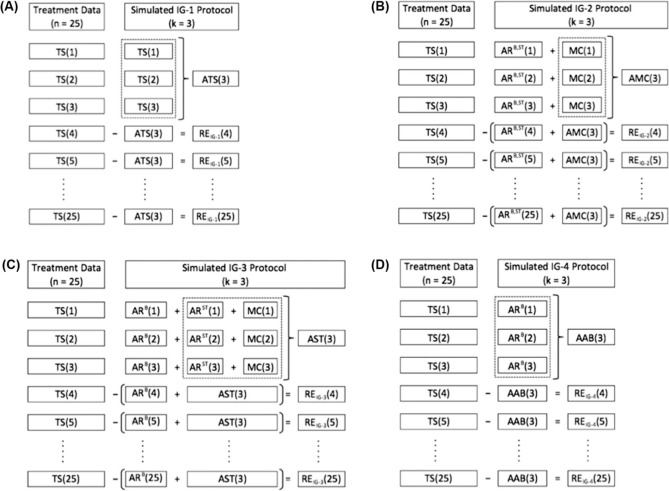
In this study, set-up accuracy and time consumption of different image-guidance protocols used for prostate cancer patients were compared. Set-up corrections from 60 prostate cancer patients treated on helical tomotherapy (HT) were used to simulate four types of image-guidance protocols which were based on: (i) a limited number of imaging sessions (IG-1), (ii) reduced registration tasks during daily imaging (IG-2), or (iii) and (iv) mixed methods of imaging (IG-3, IG-4). Each protocol was evaluated for three referencing scenarios based on the first fraction, first three fractions and first five fractions. Residual set-up error, the difference between the average set-up correction and the actual correction required, was used to evaluate the accuracy of each protocol. The first five fractions referencing scenario provides the highest reduction of the margins for each image-guidance protocol evaluated in this study. The first type of protocol is the shortest way to the effective correction of the systematic component of set-up error. For the second type of the protocol, the control of the residual errors is better and, as a result, the reduction of the margins is more significant than that obtained for the first one. Moreover, the second type of the protocol provides the highest accuracy of delivered dose. The result obtained for the fourth type of protocol does not decrease the calculated margins or increase their accuracy in correspondence to the no image guidance scheme. The fourth type of the protocol is not recommended as a protocol to be used to increase the conformity of the dose. The choice of the rest protocols should be validated in the context of (i) institutional practice regarding patient set-up procedure and its time consumption, (ii) acceptable balance between the amount of the dose delivered to the organ at risk and the additional imaging dose and (iii) patient anatomical conditions.
在本研究中,对用于前列腺癌患者的不同图像引导方案的设置精度和时间消耗进行了比较。利用60例接受螺旋断层放疗(HT)的前列腺癌患者的设置校正数据,模拟了四种基于以下情况的图像引导方案:(i)有限次数的成像 sessions(IG-1),(ii)日常成像期间减少的配准任务(IG-2),或(iii)和(iv)混合成像方法(IG-3、IG-4)。基于首次分割、前三次分割和前五次分割,对每个方案进行了三种参考场景的评估。残余设置误差,即平均设置校正与所需实际校正之间的差值,用于评估每个方案的准确性。在本研究中评估的每个图像引导方案中,前五次分割参考场景可实现最大程度的边界缩减。第一种方案是有效校正设置误差系统成分的最短途径。对于第二种方案,对残余误差的控制更好,因此边界缩减比第一种方案更显著。此外,第二种方案提供了最高的剂量递送精度。第四种方案所获得的结果与无图像引导方案相比,并未减小计算出的边界或提高其准确性。不建议将第四种方案用作增加剂量适形性的方案。其余方案的选择应在以下背景下进行验证:(i)机构关于患者设置程序及其时间消耗的实践,(ii)输送至危及器官的剂量与额外成像剂量之间的可接受平衡,以及(iii)患者的解剖状况。