Department of Psychiatry and Neurology, Phramongkutklao Hospital, Bangkok, Thailand.
Neuropsychiatr Dis Treat. 2013;9:1249-56. doi: 10.2147/NDT.S47711. Epub 2013 Aug 22.
This study aimed to determine time to relapse and remission of mood episodes in Thai patients with bipolar disorder (BD). The Thai Bipolar Disorder Registry was a multicenter, prospective, naturalistic, observational study conducted in Thailand. Participants were adult inpatients or outpatients with Diagnostic and Statistical Manual of Mental Disorders bipolar disorder. The diagnosis of bipolar disorder, current psychiatric comorbidity, mood relapse, and mood remission were determined by using the Mini International Neuropsychiatric Interview. Relapse and remission were assessed every 2 months.
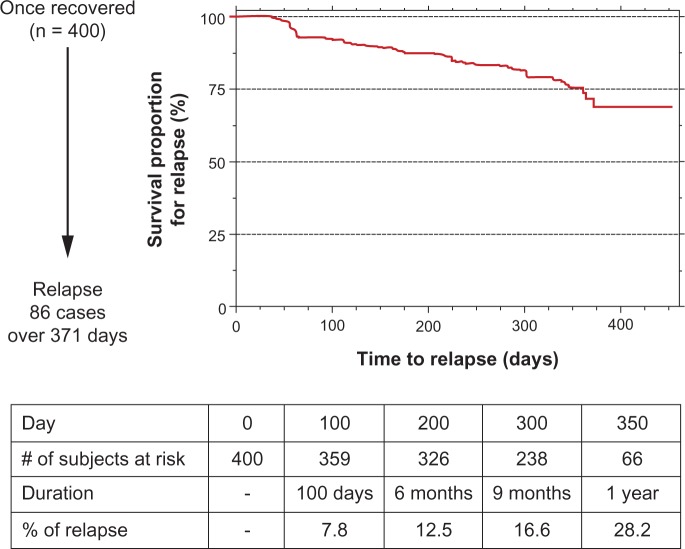
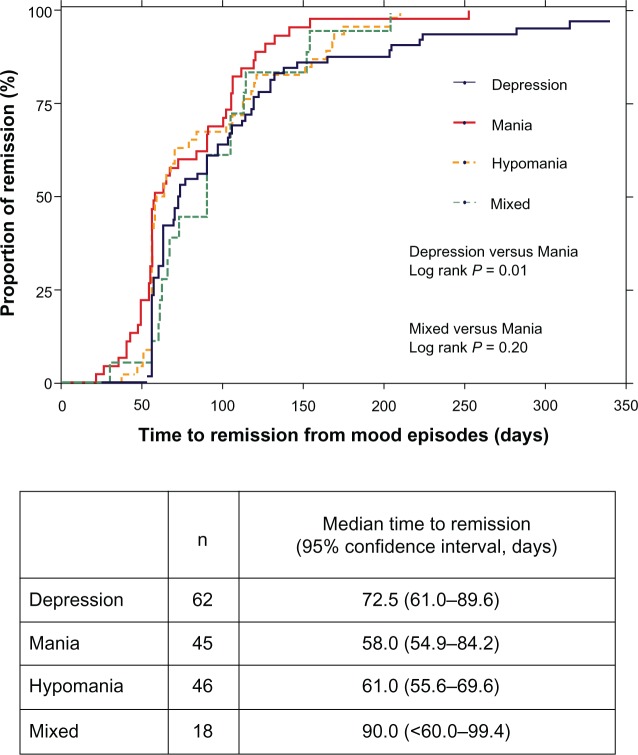
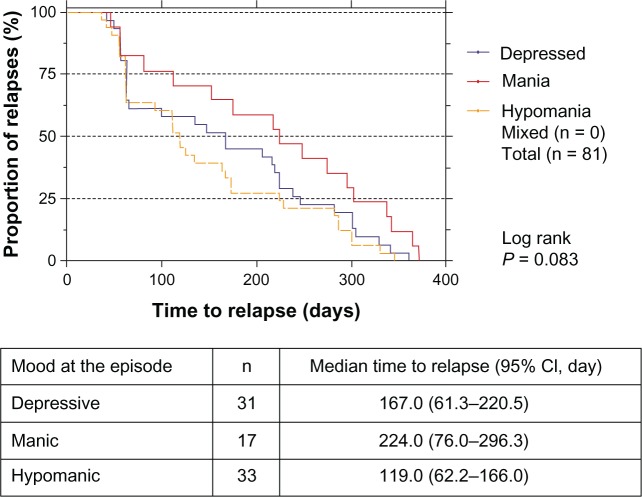
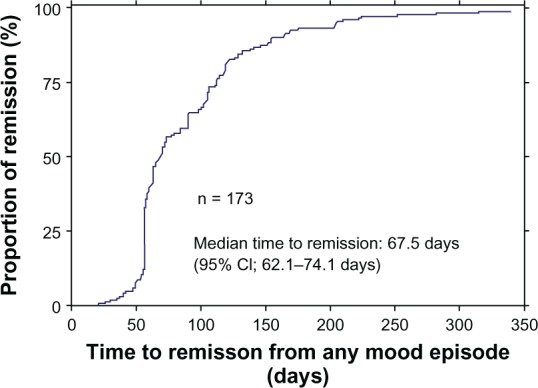
Of 424 BD participants, 404 (95.3%) were BD I, and 258 (60.8%) were female. At entry, 260 (61.3%) had recovered, and 49 (11.6%) were recovering. During 1-year follow-up (381.7 person-years), 92 participants (21.7%) had 119 relapses or 0.31 (95% confidence interval 0.25-0.35) episodes per person-year. Among 119 relapses, 58 (48.7%), 39 (32.7%), and 21 (17.6%) of them were depressive, hypomanic, and manic episodes, respectively. Using the Kaplan-Meier method, we found that 25% of the participants relapsed in 361 days. Of the 400 participants who reached remission, 113 (28.2%) had mood relapses. Of 173 mood events accountable for remission analysis, the median time to remission was 67.5 days (72.5 days for depressive episodes versus 58.0 days for manic episodes, log rank P = 0.014).
The 1-year relapse rate in Thai patients with BD was 21.7% or 0.31 episodes per person-year. About one-fifth of recovered patients had mood relapses within 371 days. On average, a mood episode would remit in 67.5 days.
本研究旨在确定泰国双相情感障碍(BD)患者情绪发作的复发和缓解时间。泰国双相情感障碍登记处是一项在泰国进行的多中心、前瞻性、自然观察性研究。参与者为成年住院或门诊患者,符合《精神障碍诊断与统计手册》中双相情感障碍的诊断标准。双相情感障碍的诊断、当前精神病合并症、情绪复发和情绪缓解均由 Mini 国际神经精神访谈确定。每 2 个月评估一次复发和缓解情况。
424 名 BD 参与者中,404 名(95.3%)为 BD I 型,258 名(60.8%)为女性。入组时,260 名(61.3%)已康复,49 名(11.6%)正在康复中。在 1 年的随访期间(381.7 人年),92 名参与者(21.7%)出现 119 次复发或每人每年 0.31(95%置信区间 0.25-0.35)次发作。在 119 次复发中,分别有 58(48.7%)、39(32.7%)和 21(17.6%)例为抑郁、轻躁狂和躁狂发作。使用 Kaplan-Meier 法,我们发现 25%的参与者在 361 天内复发。在达到缓解的 400 名参与者中,有 113 名(28.2%)出现情绪复发。在可用于缓解分析的 173 次情绪事件中,缓解的中位时间为 67.5 天(抑郁发作的缓解时间为 72.5 天,躁狂发作的缓解时间为 58.0 天,对数秩检验 P=0.014)。
泰国 BD 患者的 1 年复发率为 21.7%或每人每年 0.31 次发作。大约五分之一的已康复患者在 371 天内出现情绪复发。平均而言,一次情绪发作将在 67.5 天内缓解。