Ingle Nilesh P, Xue Lian, Reineke Theresa M
Department of Chemistry, University of Minnesota , Minneapolis, Minnesota 55455, United States.
Mol Pharm. 2013 Nov 4;10(11):4120-35. doi: 10.1021/mp400115y. Epub 2013 Sep 30.
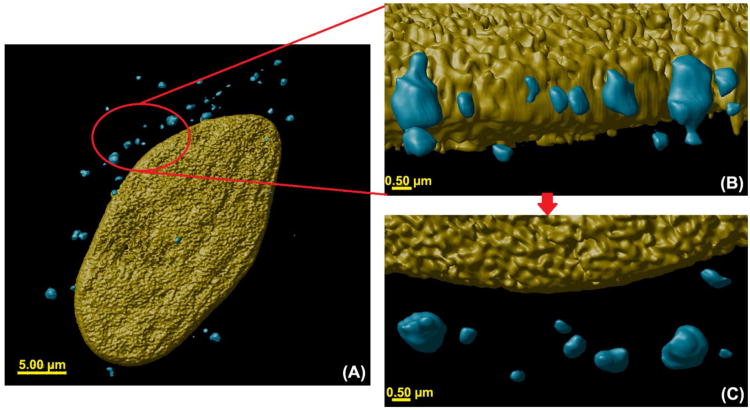
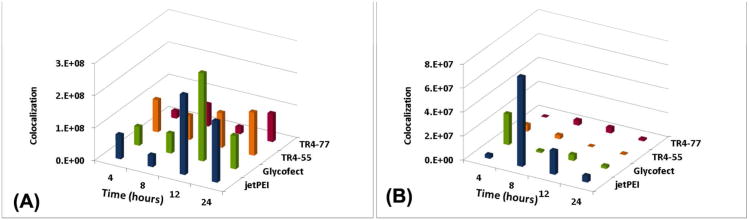
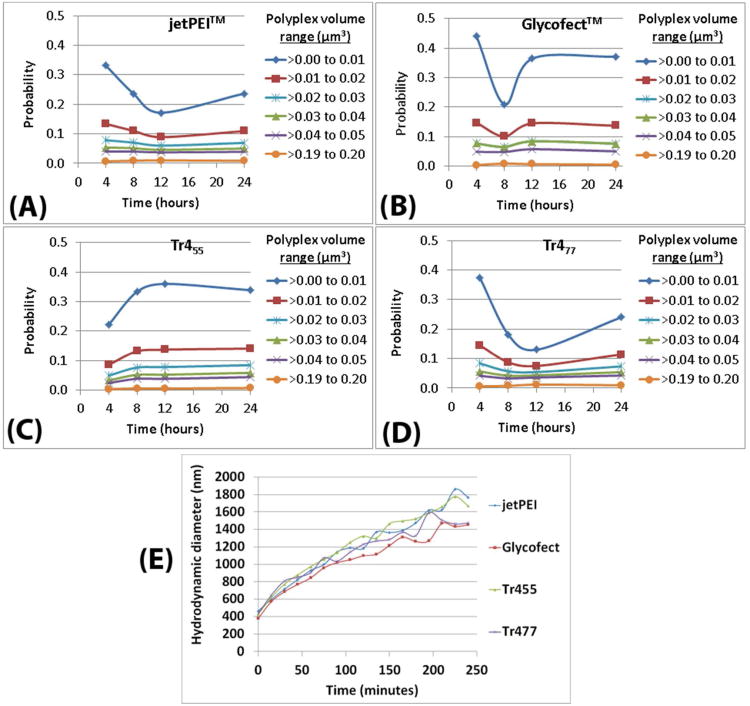
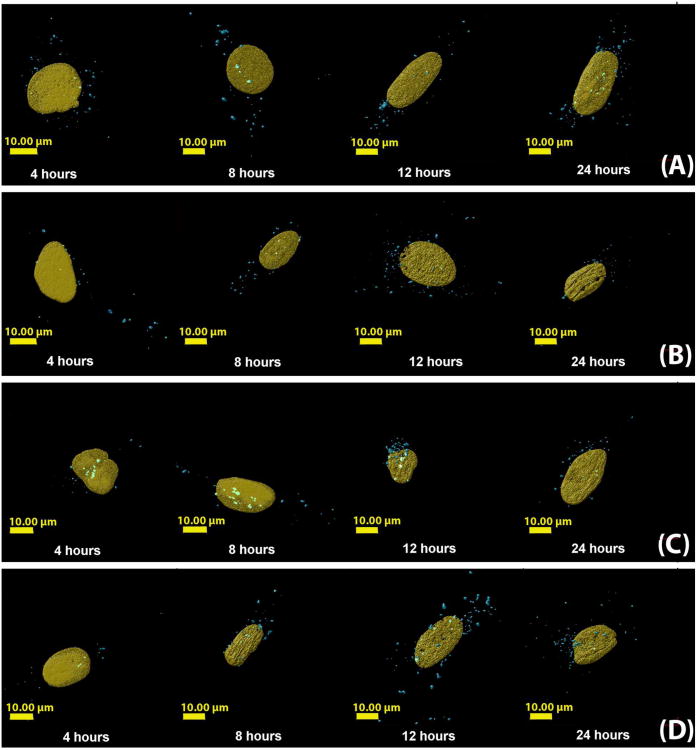
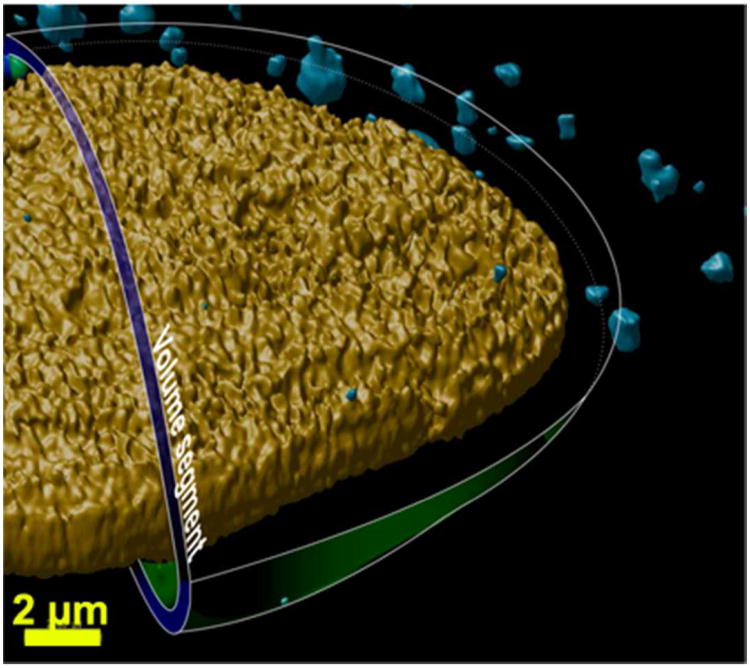
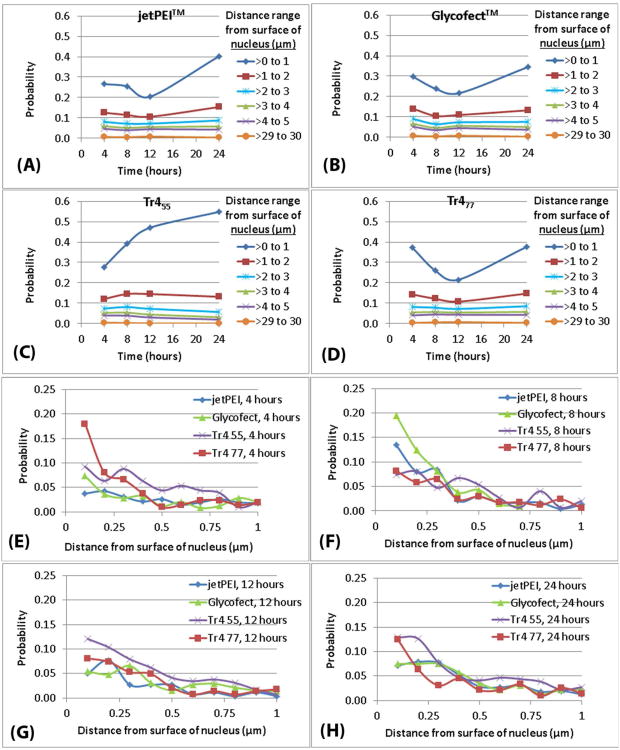
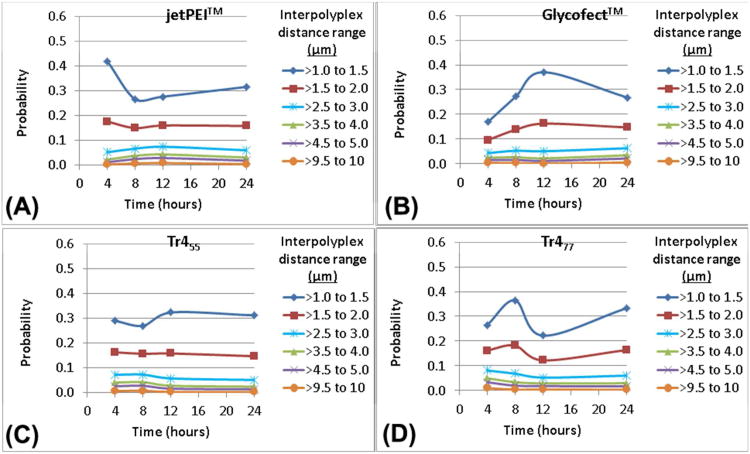
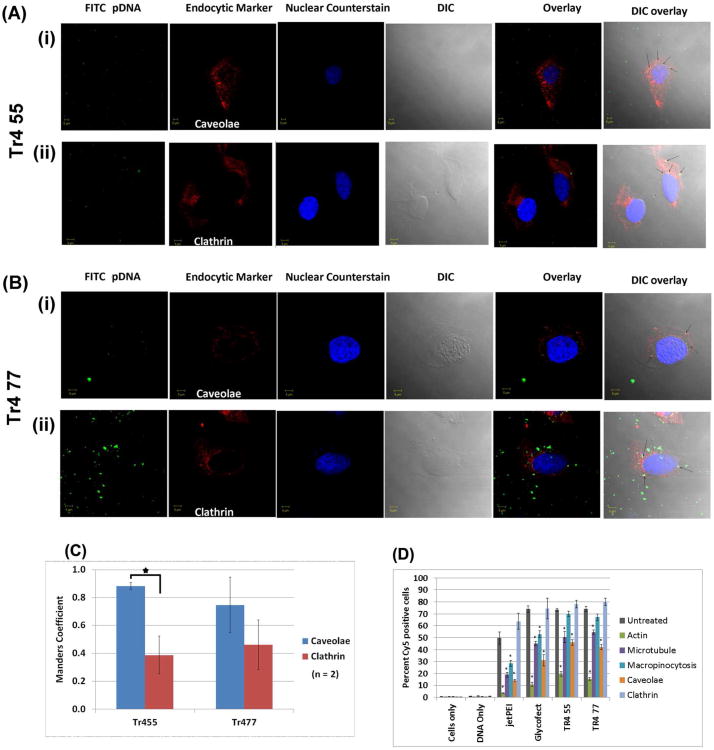
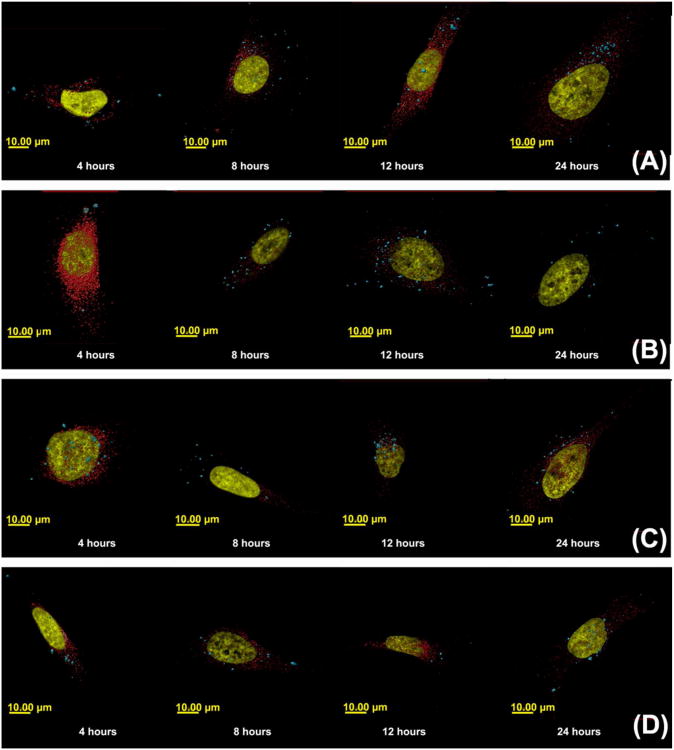
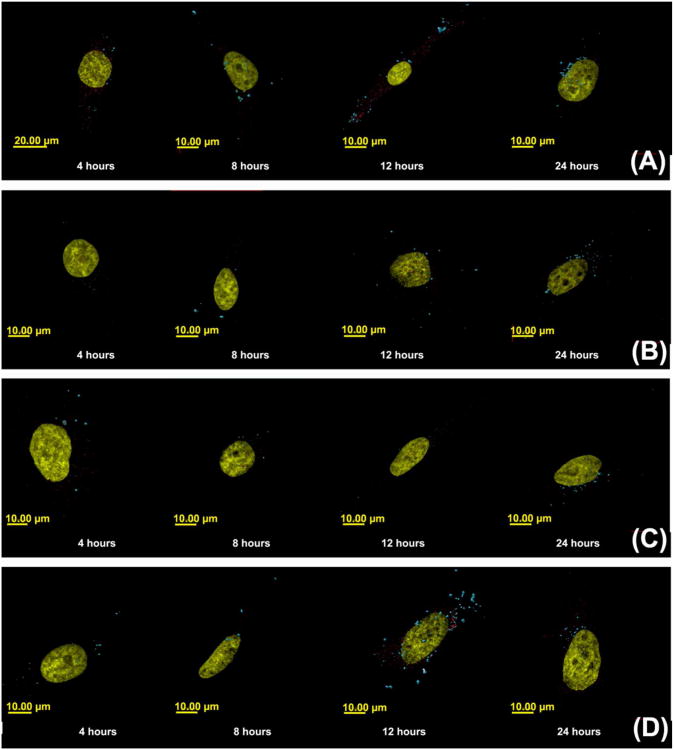
Synthetic polymers are ubiquitous in the development of drug and polynucleotide delivery vehicles, offering promise for personalized medicine. However, the polymer structure plays a central yet elusive role in dictating the efficacy, safety, mechanisms, and kinetics of therapeutic transport in a spatial and temporal manner. Here, we decipher the intracellular pathways pertaining to shape, size, location, and mechanism of four structurally divergent polymer vehicles (Tr455, Tr477, jetPEI, and Glycofect) that create colloidal nanoparticles (polyplexes) when complexed with fluorescently labeled plasmid DNA (pDNA). Multiple high resolution tomographic images of whole HeLa (human cervical adenocarcinoma) cells were captured via confocal microscopy at 4, 8, 12, and 24 h. The images were reconstructed to visualize and quantify trends in situ in a four-dimensional spatiotemporal manner. The data revealed heretofore-unseen images of polyplexes in situ and structure-function relationships, i.e., Glycofect polyplexes are trafficked as the smallest polyplex complexes and Tr455 polyplexes have expedited translocation to the perinuclear region. Also, all of the polyplex types appeared to be preferentially internalized and trafficked via early endosomes affiliated with caveolae, a Rab-5-dependent pathway, actin, and microtubules.
合成聚合物在药物和多核苷酸递送载体的开发中无处不在,为个性化医疗带来了希望。然而,聚合物结构在以空间和时间方式决定治疗性转运的功效、安全性、机制和动力学方面起着核心但难以捉摸的作用。在这里,我们解析了四种结构不同的聚合物载体(Tr455、Tr477、jetPEI和Glycofect)的细胞内途径,这些载体与荧光标记的质粒DNA(pDNA)复合时会形成胶体纳米颗粒(多聚体)。在4、8、12和24小时通过共聚焦显微镜捕获了整个HeLa(人宫颈腺癌)细胞的多个高分辨率断层图像。对图像进行重建,以四维时空方式原位可视化和量化趋势。数据揭示了多聚体原位迄今未见的图像以及结构-功能关系,即Glycofect多聚体作为最小的多聚体复合物被转运,而Tr455多聚体加速转运至核周区域。此外,所有类型的多聚体似乎都优先通过与小窝相关的早期内体、Rab-5依赖性途径、肌动蛋白和微管内化和转运。