Institute of Bioinformatics, University of Münster, Münster, Germany.
PLoS Comput Biol. 2013;9(8):e1003210. doi: 10.1371/journal.pcbi.1003210. Epub 2013 Aug 29.
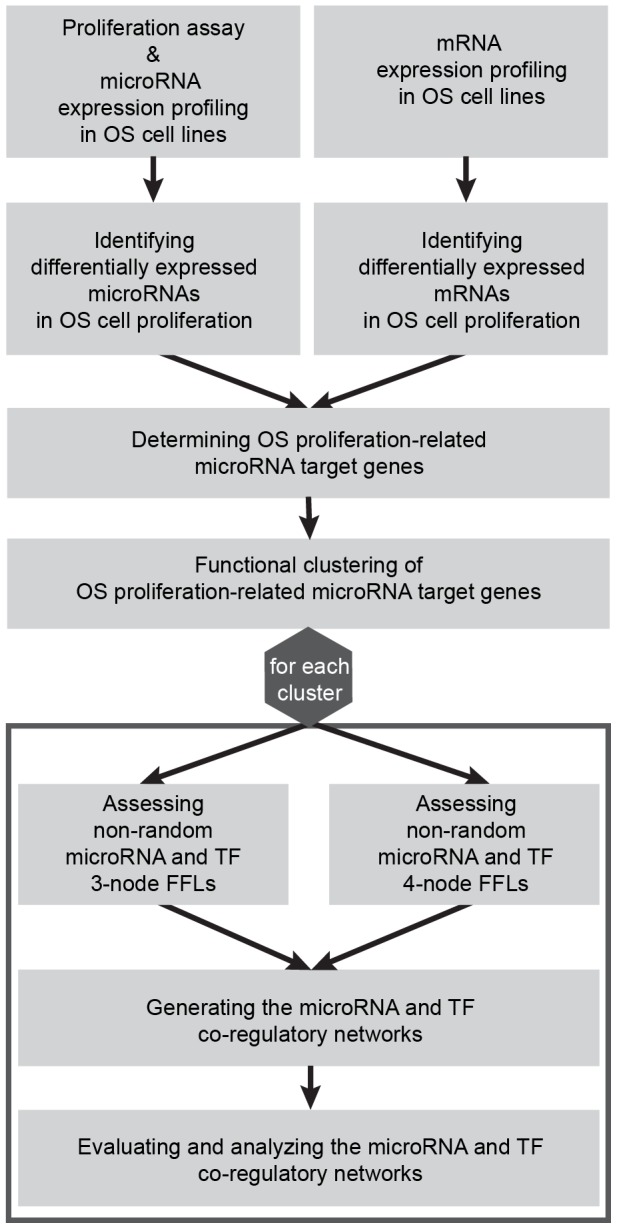
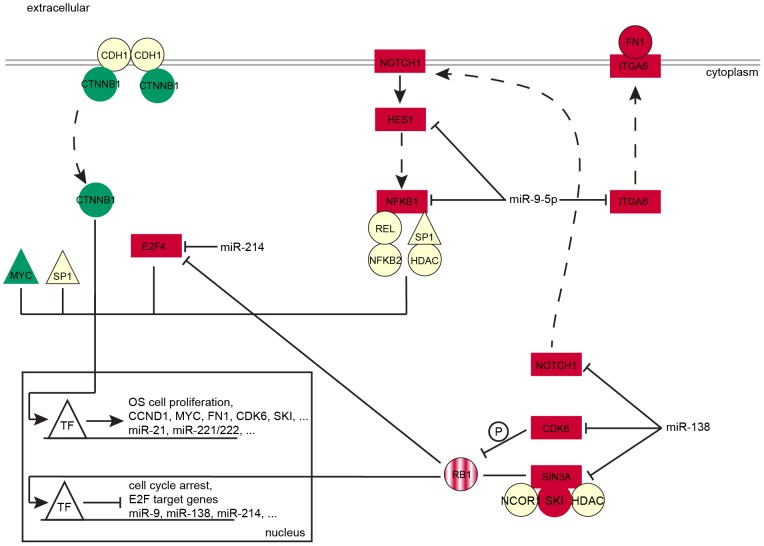
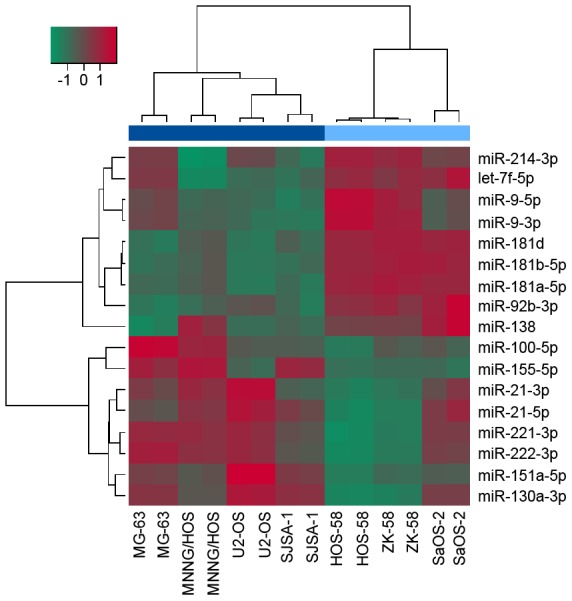
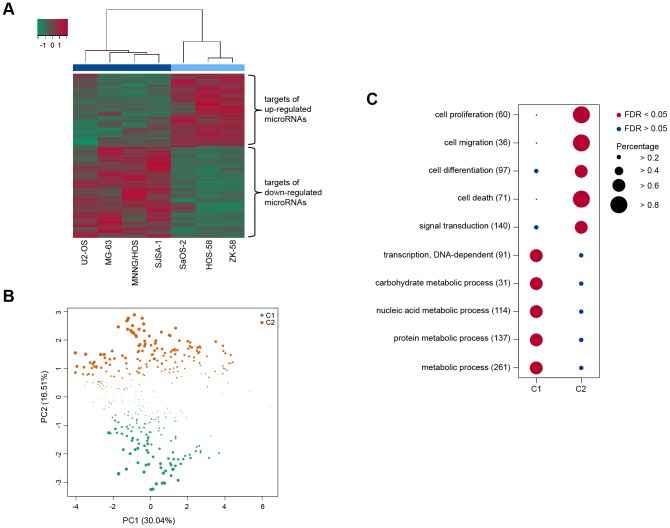
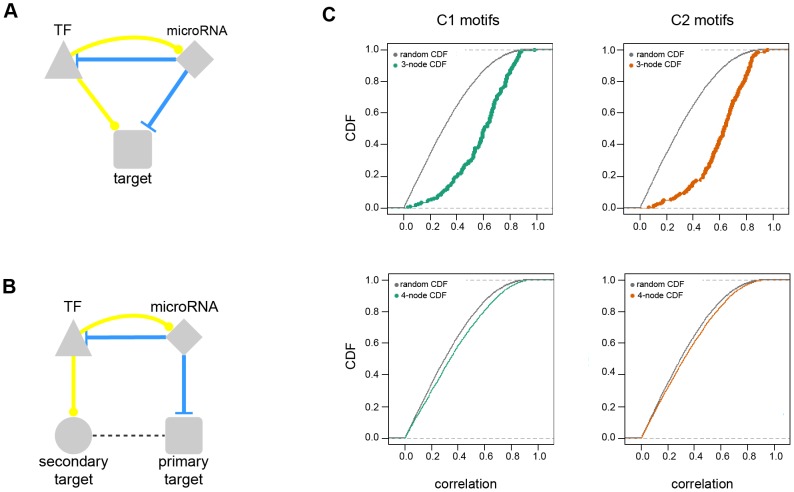
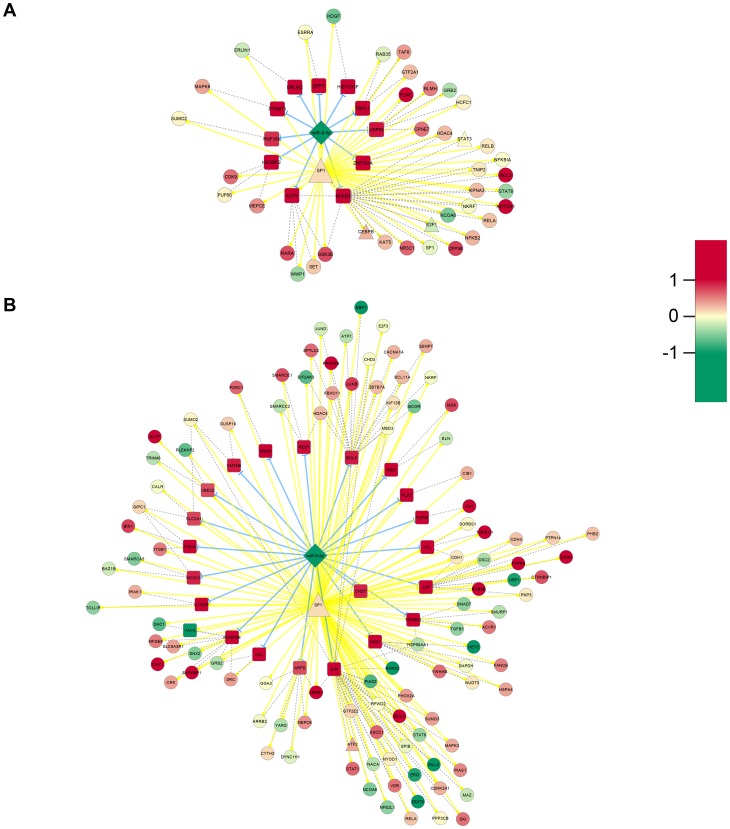
Osteosarcomas (OS) are complex bone tumors with various genomic alterations. These alterations affect the expression and function of several genes due to drastic changes in the underlying gene regulatory network. However, we know little about critical gene regulators and their functional consequences on the pathogenesis of OS. Therefore, we aimed to determine microRNA and transcription factor (TF) co-regulatory networks in OS cell proliferation. Cell proliferation is an essential part in the pathogenesis of OS and deeper understanding of its regulation might help to identify potential therapeutic targets. Based on expression data of OS cell lines divided according to their proliferative activity, we obtained 12 proliferation-related microRNAs and corresponding target genes. Therewith, microRNA and TF co-regulatory networks were generated and analyzed regarding their structure and functional influence. We identified key co-regulators comprising the microRNAs miR-9-5p, miR-138, and miR-214 and the TFs SP1 and MYC in the derived networks. These regulators are implicated in NFKB- and RB1-signaling and focal adhesion processes based on their common or interacting target genes (e.g., CDK6, CTNNB1, E2F4, HES1, ITGA6, NFKB1, NOTCH1, and SIN3A). Thus, we proposed a model of OS cell proliferation which is primarily co-regulated through the interactions of the mentioned microRNA and TF combinations. This study illustrates the benefit of systems biological approaches in the analysis of complex diseases. We integrated experimental data with publicly available information to unravel the coordinated (post)-transcriptional control of microRNAs and TFs to identify potential therapeutic targets in OS. The resulting microRNA and TF co-regulatory networks are publicly available for further exploration to generate or evaluate own hypotheses of the pathogenesis of OS (http://www.complex-systems.uni-muenster.de/co_networks.html).
骨肉瘤(OS)是一种具有多种基因组改变的复杂骨肿瘤。这些改变会影响几个基因的表达和功能,因为其潜在的基因调控网络发生了剧烈变化。然而,我们对关键基因调节剂及其对 OS 发病机制的功能后果知之甚少。因此,我们旨在确定 OS 细胞增殖中的 microRNA 和转录因子(TF)共同调控网络。细胞增殖是 OS 发病机制的一个重要部分,对其调节的更深入了解可能有助于确定潜在的治疗靶点。根据根据增殖活性对 OS 细胞系进行划分的表达数据,我们获得了 12 个与增殖相关的 microRNA 及其相应的靶基因。在此基础上,生成并分析了 microRNA 和 TF 共同调控网络的结构及其功能影响。我们确定了关键的共同调节剂,包括衍生网络中的 microRNA miR-9-5p、miR-138 和 miR-214 以及 TF SP1 和 MYC。这些调节剂基于其共同或相互作用的靶基因(例如 CDK6、CTNNB1、E2F4、HES1、ITGA6、NFKB1、NOTCH1 和 SIN3A),参与 NFKB 和 RB1 信号传导和焦点粘附过程。因此,我们提出了一个 OS 细胞增殖的模型,该模型主要通过所提到的 microRNA 和 TF 组合的相互作用进行共同调控。本研究说明了系统生物学方法在分析复杂疾病中的益处。我们整合了实验数据和公开可用的信息,以揭示 microRNA 和 TF 的协调(转录后)控制,以确定 OS 中的潜在治疗靶点。生成的 microRNA 和 TF 共同调控网络可公开获取,以进一步探索,从而产生或评估 OS 发病机制的自身假设(http://www.complex-systems.uni-muenster.de/co_networks.html)。