Department of Psychiatry and Psychology, Maastricht University Medical Centre, South Limburg Mental Health Research and Teaching Network, EURON, Maastricht, The Netherlands.
PLoS One. 2013 Aug 23;8(8):e72778. doi: 10.1371/journal.pone.0072778. eCollection 2013.
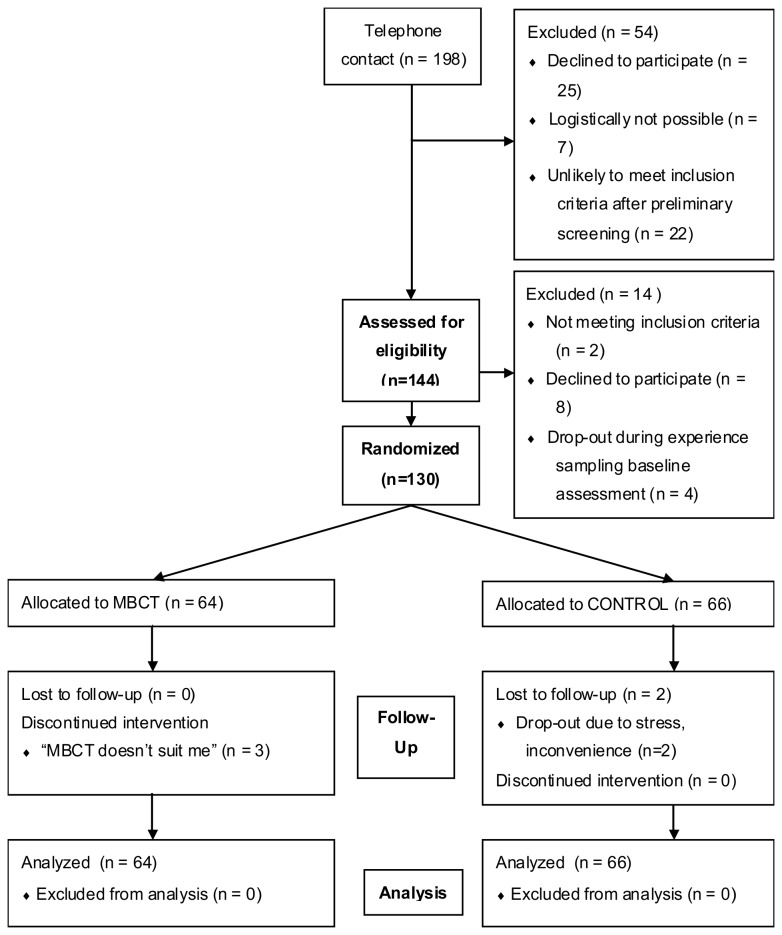
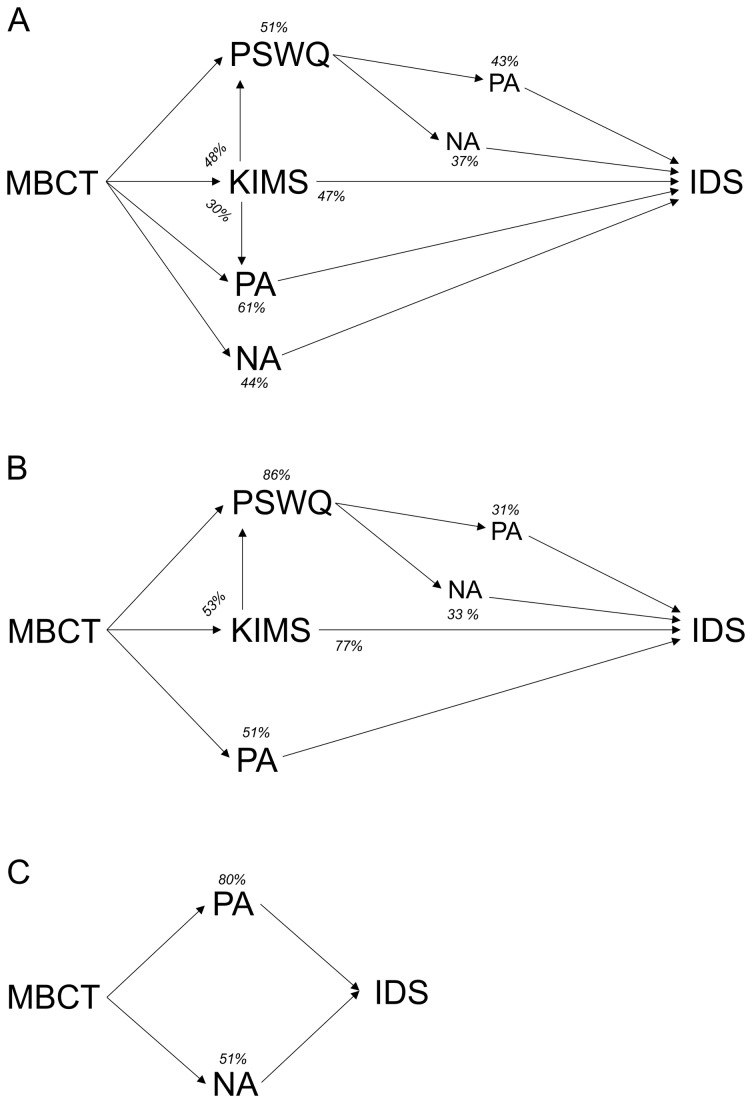
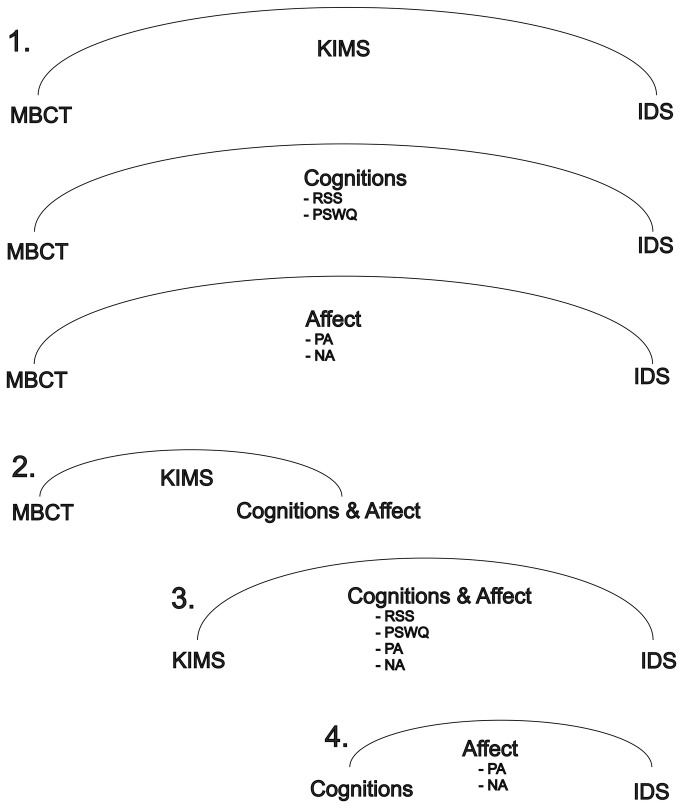
Mindfulness based cognitive therapy (MBCT) is a non-pharmacological intervention to reduce current symptoms and to prevent recurrence of major depressive disorder. At present, it is not well understood which underlying mechanisms during MBCT are associated with its efficacy. The current study (n = 130) was designed to examine the roles of mindfulness skills, rumination, worry and affect, and the interplay between those factors, in the mechanisms of change in MBCT for residual depressive symptoms. An exploratory but systematic approach was chosen using Sobel-Goodman mediation analyses to identify mediators on the pathway from MBCT to reduction in depressive symptoms. We replicated earlier findings that therapeutic effects of MBCT are mediated by changes in mindfulness skills and worry. Second, results showed that changes in momentary positive and negative affect significantly mediated the efficacy of MBCT, and also mediated the effect of worry on depressive symptoms. Third, within the group of patients with a prior history of ≤ 2 episodes of MDD, predominantly changes in cognitive and to a lesser extent affective processes mediated the effect of MBCT. However, within the group of patients with a prior history of ≥ 3 episodes of MDD, only changes in affect were significant mediators for the effect of MBCT.
[corrected] Nederlands Trial Register NTR1084.
摘要:正念认知疗法(MBCT)是一种非药物干预手段,可减轻当前的抑郁症状并预防复发性重度抑郁障碍。目前,人们对 MBCT 中哪些潜在机制与其疗效相关还不甚了解。本研究(n=130)旨在探讨正念技能、反刍、担忧和情绪在 MBCT 缓解残留抑郁症状的作用机制中的作用,以及这些因素之间的相互作用。本研究采用 Sobel-Goodman 中介分析对中介因素进行了探索性但系统的分析,以确定从 MBCT 到抑郁症状减轻的路径上的中介因素。我们复制了先前的发现,即 MBCT 的治疗效果是通过正念技能和担忧的变化来介导的。其次,结果表明,瞬间正性和负性情绪的变化显著介导了 MBCT 的疗效,并且也介导了担忧对抑郁症状的影响。第三,在既往有≤2 次 MDD 发作史的患者组中,主要是认知过程的变化,其次是情感过程的变化,介导了 MBCT 的效果。然而,在既往有≥3 次 MDD 发作史的患者组中,只有情绪变化是 MBCT 效果的显著中介因素。
临床试验注册号:[更正]荷兰临床试验注册处 NTR1084。