Center for Biodefense and Emerging Infectious Diseases, University of Texas Medical Branch, Galveston, Texas, USA.
PLoS Negl Trop Dis. 2013 Aug 29;7(8):e2411. doi: 10.1371/journal.pntd.0002411. eCollection 2013.
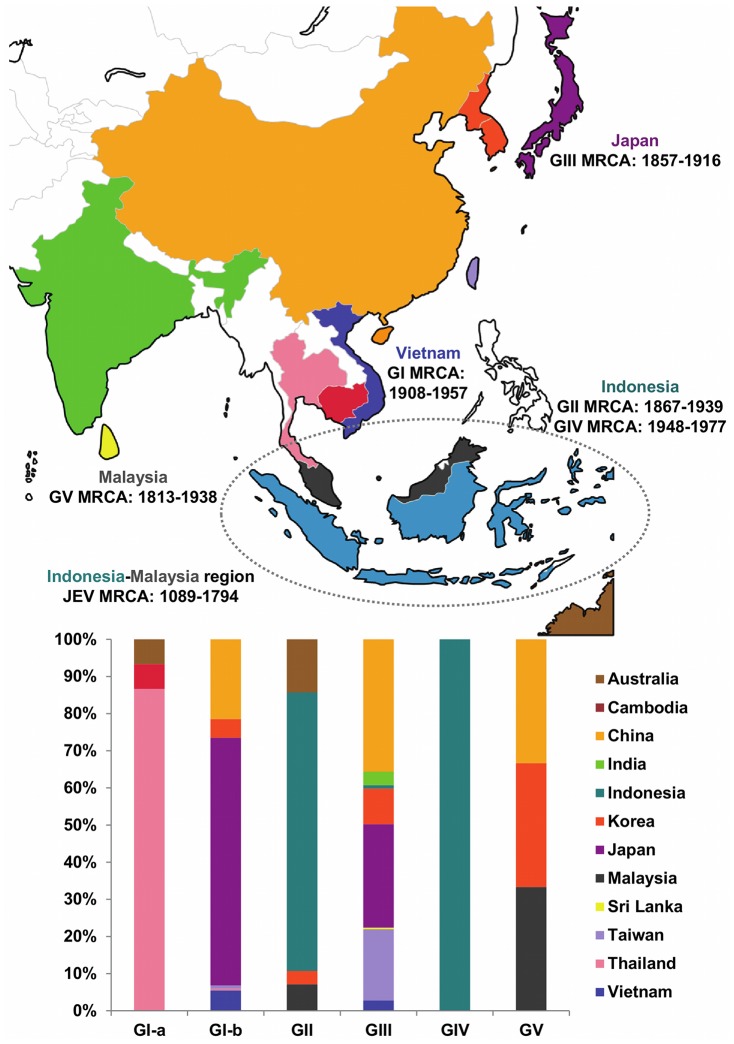
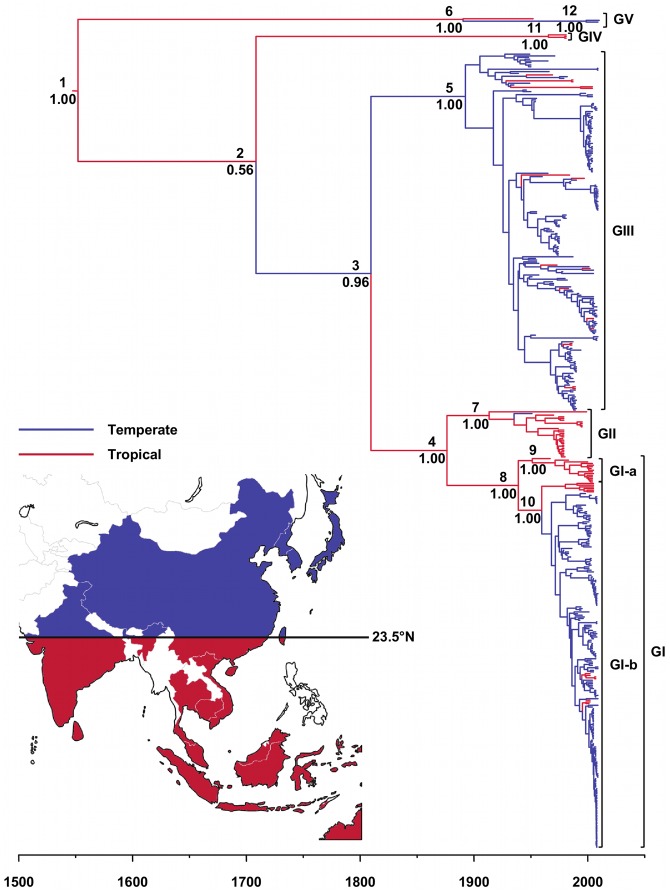
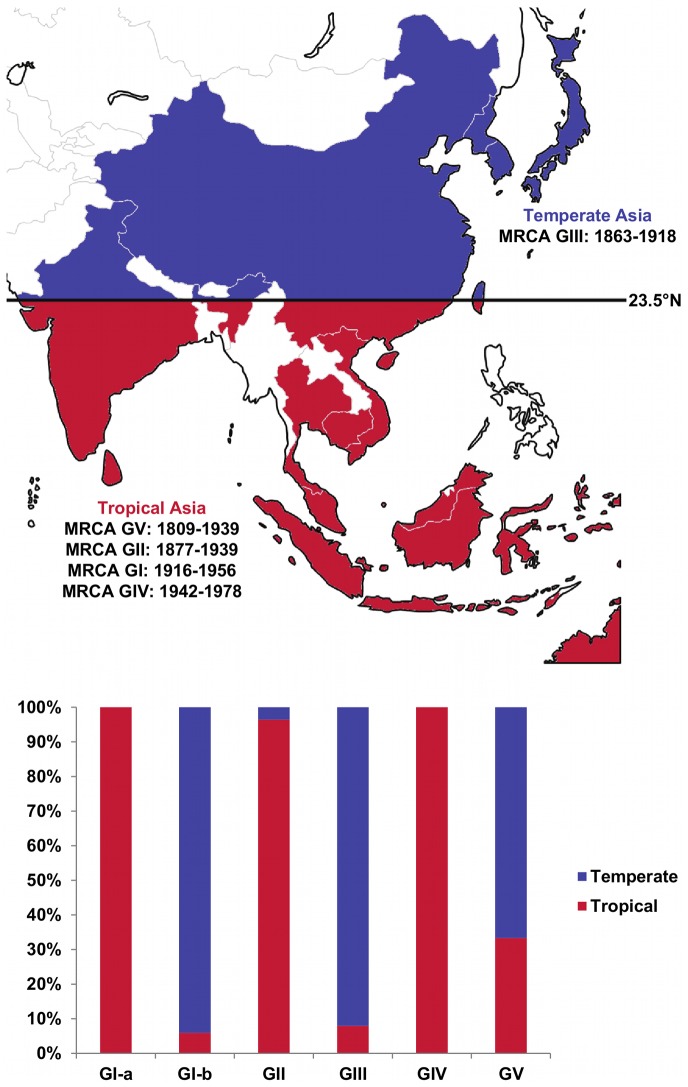
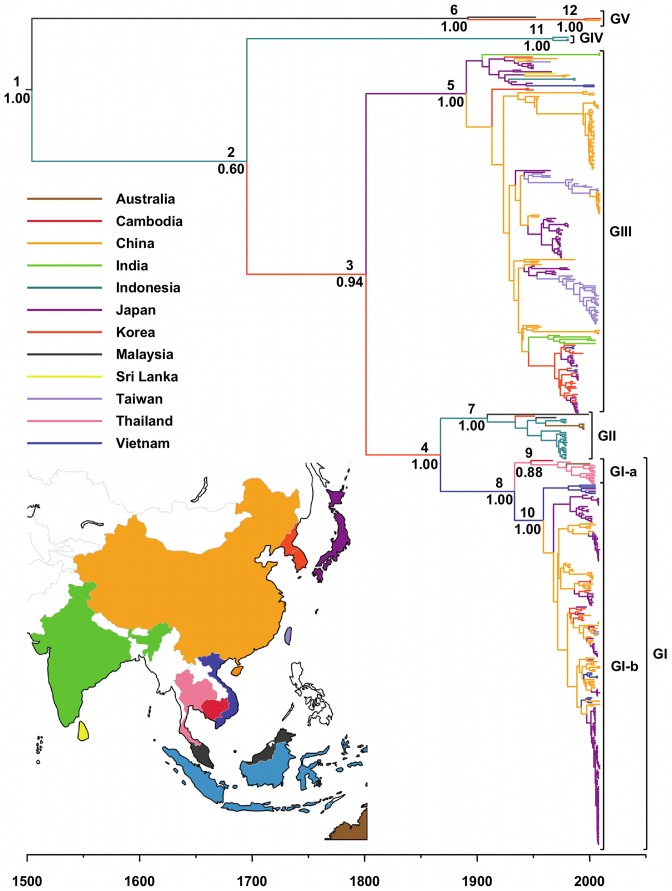
The circulation of vector-borne zoonotic viruses is largely determined by the overlap in the geographical distributions of virus-competent vectors and reservoir hosts. What is less clear are the factors influencing the distribution of virus-specific lineages. Japanese encephalitis virus (JEV) is the most important etiologic agent of epidemic encephalitis worldwide, and is primarily maintained between vertebrate reservoir hosts (avian and swine) and culicine mosquitoes. There are five genotypes of JEV: GI-V. In recent years, GI has displaced GIII as the dominant JEV genotype and GV has re-emerged after almost 60 years of undetected virus circulation. JEV is found throughout most of Asia, extending from maritime Siberia in the north to Australia in the south, and as far as Pakistan to the west and Saipan to the east. Transmission of JEV in temperate zones is epidemic with the majority of cases occurring in summer months, while transmission in tropical zones is endemic and occurs year-round at lower rates. To test the hypothesis that viruses circulating in these two geographical zones are genetically distinct, we applied Bayesian phylogeographic, categorical data analysis and phylogeny-trait association test techniques to the largest JEV dataset compiled to date, representing the envelope (E) gene of 487 isolates collected from 12 countries over 75 years. We demonstrated that GIII and the recently emerged GI-b are temperate genotypes likely maintained year-round in northern latitudes, while GI-a and GII are tropical genotypes likely maintained primarily through mosquito-avian and mosquito-swine transmission cycles. This study represents a new paradigm directly linking viral molecular evolution and climate.
虫媒动物传染病病毒的传播在很大程度上取决于病毒传播媒介和病毒储存宿主在地理分布上的重叠。而病毒特定谱系的分布则受哪些因素影响,目前还不是很清楚。日本脑炎病毒(JEV)是全世界最重要的虫媒病毒病原体,主要在脊椎动物(禽类和猪)宿主和库蚊传播媒介之间传播。JEV 共有 5 个基因型:GI-V。近年来,GI 取代 GIII 成为主要的 JEV 基因型,而 GV 在几乎 60 年未检测到病毒循环后再次出现。JEV 广泛分布于亚洲大部分地区,北起西伯利亚沿海,南至澳大利亚,西至巴基斯坦,东至塞班岛。温带地区的 JEV 传播呈流行趋势,大多数病例发生在夏季,而热带地区的传播呈地方性,全年以较低的速率传播。为了检验病毒在这两个地理区域循环的假设,我们应用贝叶斯系统地理学、分类数据分析和系统发育与特征关联测试技术,对迄今为止收集到的最大 JEV 数据集进行了分析,该数据集代表了 487 个分离株的包膜(E)基因,这些分离株来自 12 个国家,跨越 75 年。结果表明,GIII 和最近出现的 GI-b 是温带基因型,可能在高纬度地区全年流行,而 GI-a 和 GII 是热带基因型,可能主要通过蚊虫-禽类和蚊虫-猪传播循环维持。这项研究代表了一种新的范例,直接将病毒分子进化与气候联系起来。