Kang Suk-Ho, Chang Juhea, Son Ho-Hyun
Department of Conservative Dentistry, Seoul National University School of Dentistry and Dental Research Institute, Seoul, Korea.
Restor Dent Endod. 2013 Aug;38(3):134-40. doi: 10.5395/rde.2013.38.3.134. Epub 2013 Aug 23.
There has been a growing interest in glass ceramic systems with good esthetics, high fracture resistance and bonding durability, and simplified fabrication techniques using CAD/CAM. The aim of this study is to compare flexural strength before and after heat treatment of two lithium disilicate CAD/CAM blocks, IPS e.max CAD (Ivoclar Vivadent) and Rosetta SM (Hass), and to observe their crystalline structures.
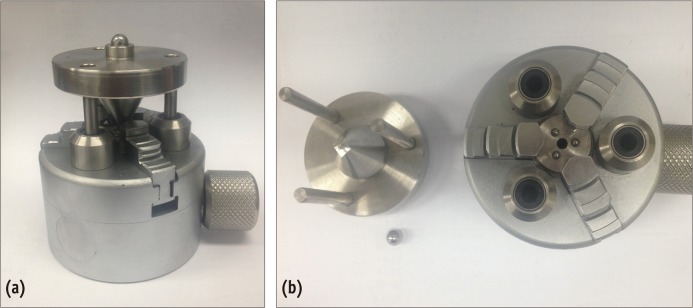
Biaxial flexural strength was tested according to ISO 6872 with 20 disc form specimens sliced from each block before and after heat treatment. Also, the crystalline structures were observed using field-emission scanning microscopy (FE-SEM, Hitachi) and x-ray diffraction (XRD, Rigaku) analysis. The mean values of the biaxial flexural strength were analyzed by the Mann-Whitney U test at a significance level of p = 0.05.
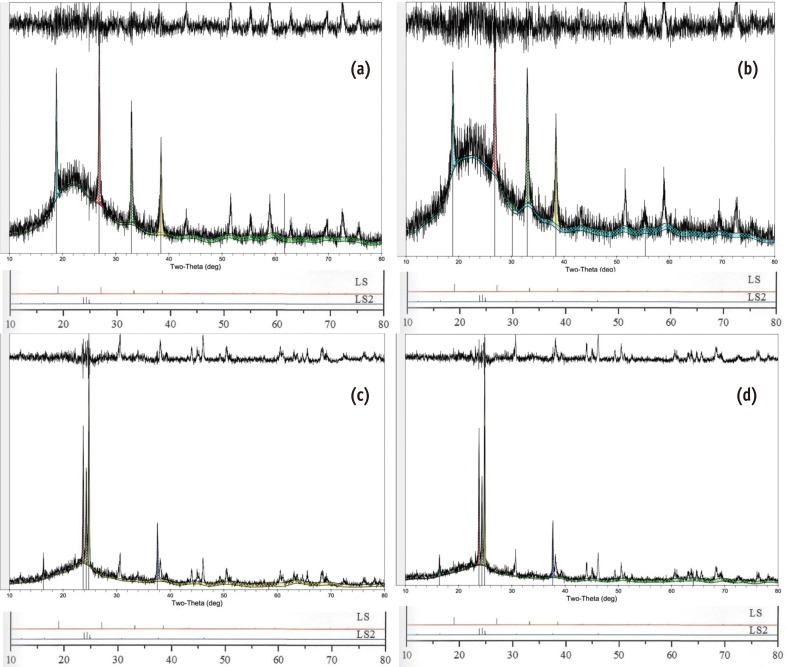
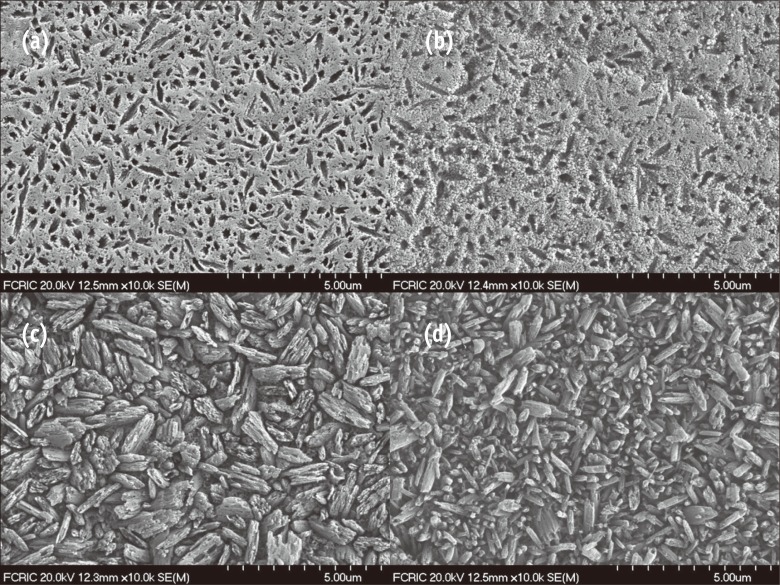
There were no statistically significant differences in flexural strength between IPS e.max CAD and Rosetta SM either before heat treatment or after heat treatment. For both ceramics, the initial flexural strength greatly increased after heat treatment, with significant differences (p < 0.05). The FE-SEM images presented similar patterns of crystalline structure in the two ceramics. In the XRD analysis, they also had similar patterns, presenting high peak positions corresponding to the standard lithium metasilicate and lithium disilicate at each stage of heat treatment.
IPS e.max CAD and Rosetta SM showed no significant differences in flexural strength. They had a similar crystalline pattern and molecular composition.
人们对具有良好美学效果、高抗折性和粘结耐久性以及采用CAD/CAM简化制造技术的玻璃陶瓷系统的兴趣与日俱增。本研究的目的是比较两种二硅酸锂CAD/CAM块体IPS e.max CAD(义获嘉伟瓦登特公司)和Rosetta SM(哈斯公司)热处理前后的抗弯强度,并观察它们的晶体结构。
根据ISO 6872对热处理前后从每个块体切下的20个圆盘状试样进行双轴抗弯强度测试。此外,使用场发射扫描显微镜(FE-SEM,日立公司)和X射线衍射(XRD,理学公司)分析观察晶体结构。双轴抗弯强度的平均值采用曼-惠特尼U检验进行分析,显著性水平为p = 0.05。
IPS e.max CAD和Rosetta SM在热处理前或热处理后的抗弯强度均无统计学显著差异。对于两种陶瓷,热处理后初始抗弯强度均大幅提高,差异显著(p < 0.05)。FE-SEM图像显示两种陶瓷的晶体结构模式相似。在XRD分析中,它们也有相似的模式,在热处理的每个阶段都呈现出与标准偏硅酸锂和二硅酸锂相对应的高衍射峰位置。
IPS e.max CAD和Rosetta SM在抗弯强度上无显著差异。它们具有相似的晶体模式和分子组成。