Centre for Integrative Physiology, University of Edinburgh, Hugh Robson Building, George Square, Edinburgh EH8 9XD, UK.
Dev Biol. 2013 Oct 15;382(2):530-7. doi: 10.1016/j.ydbio.2013.08.023. Epub 2013 Sep 5.
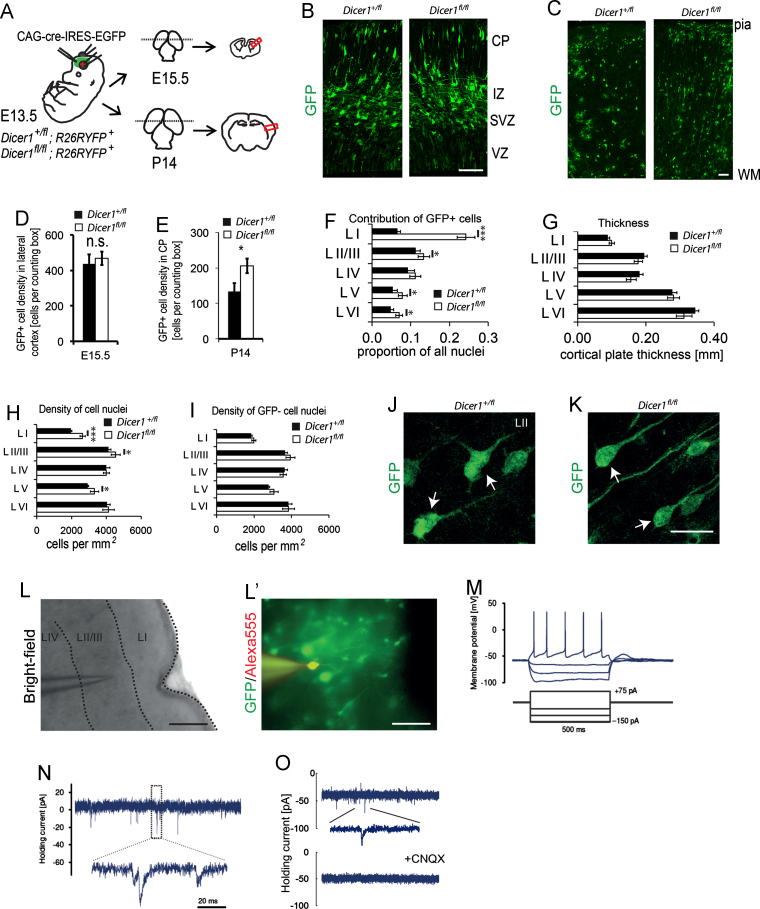
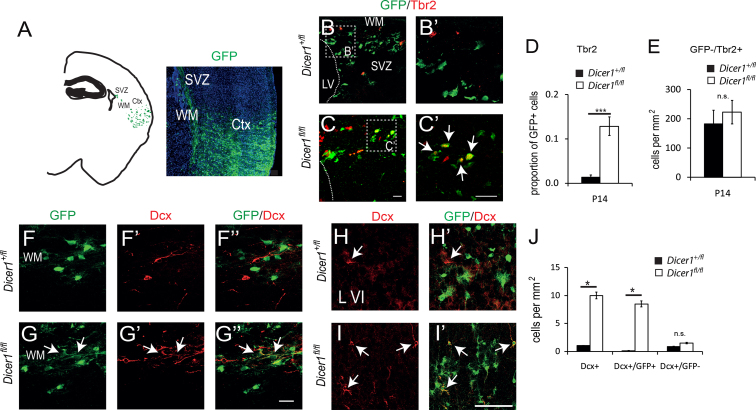
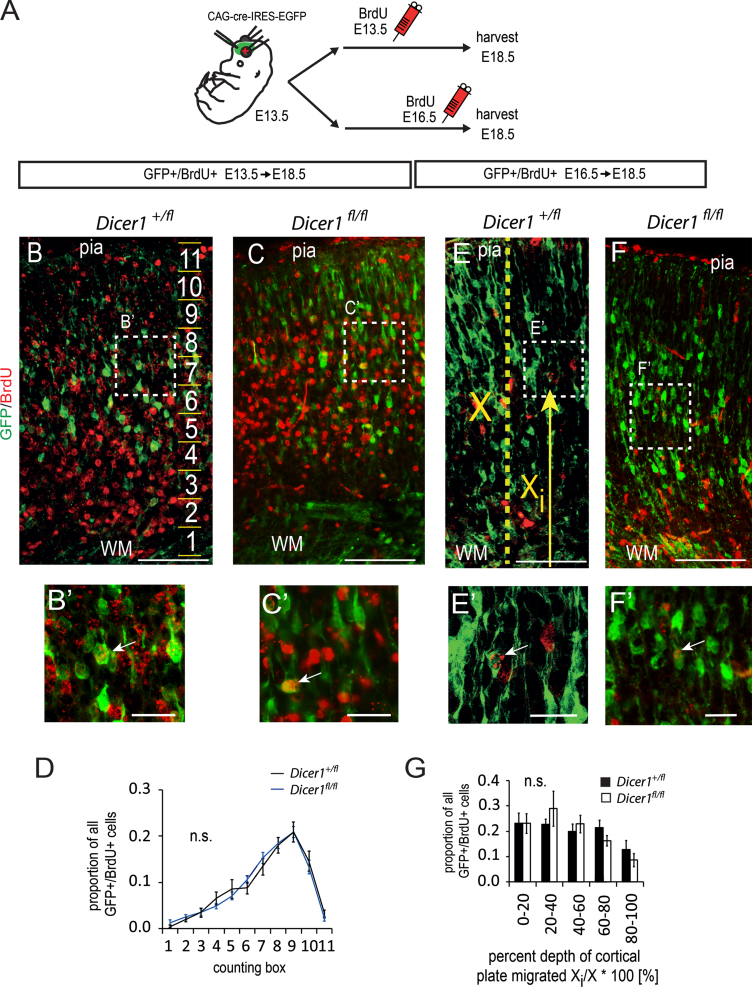
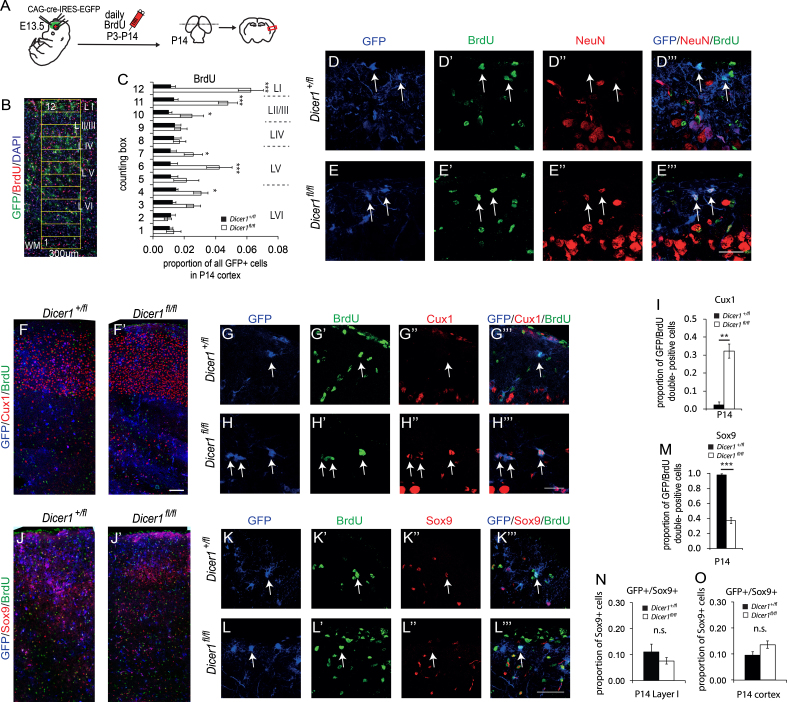
Radial glia of the mouse cerebral cortex emerge from neuroepithelial stem cells around embryonic day 11 and produce excitatory cortical neurons until a few days before birth. The molecular mechanisms that regulate the end of cortical neurogenesis remain largely unknown. Here we investigated if the Dicer-dependent microRNA (miRNA) pathway is involved. By electroporating a cre-recombinase expression vector into the cortex of E13.5 embryos carrying a conditional allele of Dicer1, we induced mosaic recombination causing Dicer1 deletion and reporter activation in a subset of radial glia. We analysed the long-term fates of their progeny. We found that mutant radial glia produced abnormally large numbers of Cux1-positive neurons, many of which populated the superficial cortical layers. Injections of the S-phase marker bromodeoxyuridine between postnatal days 3 and 14 showed that much of this population was generated postnatally. Our findings suggest a role for Dicer-dependent processes in limiting the timespan of cortical neurogenesis.
小鼠大脑皮层的放射状胶质细胞起源于胚胎第 11 天左右的神经上皮干细胞,并产生兴奋性皮质神经元,直到出生前几天。调节皮质神经发生结束的分子机制在很大程度上仍然未知。在这里,我们研究了 Dicer 依赖性 microRNA (miRNA) 途径是否参与其中。通过将 Cre 重组酶表达载体电穿孔到携带 Dicer1 条件性等位基因的 E13.5 胚胎的皮层中,我们诱导了嵌合体重组,导致 Dicer1 的缺失和报告基因在一小部分放射状胶质细胞中的激活。我们分析了它们后代的长期命运。我们发现,突变的放射状胶质细胞产生了异常数量的 Cux1 阳性神经元,其中许多分布在皮质的浅层。在出生后第 3 天至 14 天之间注射 S 期标记物溴脱氧尿苷表明,其中大部分是在出生后产生的。我们的研究结果表明,Dicer 依赖性过程在限制皮质神经发生的时间跨度方面起着重要作用。