Laboratory of GlycoNanotechnology, Biofunctional Nanomaterials Unit, CIC biomaGUNE, San Sebastián, Spain.
PLoS One. 2013 Aug 27;8(8):e73027. doi: 10.1371/journal.pone.0073027. eCollection 2013.
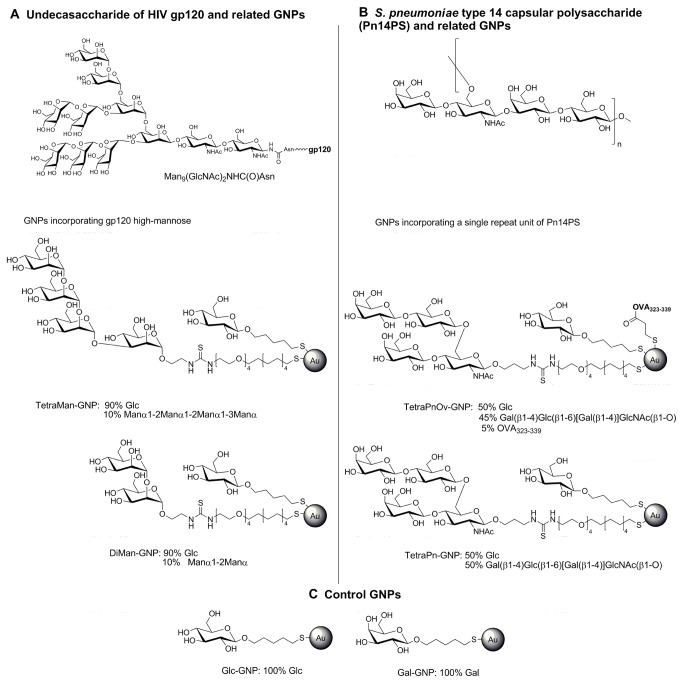
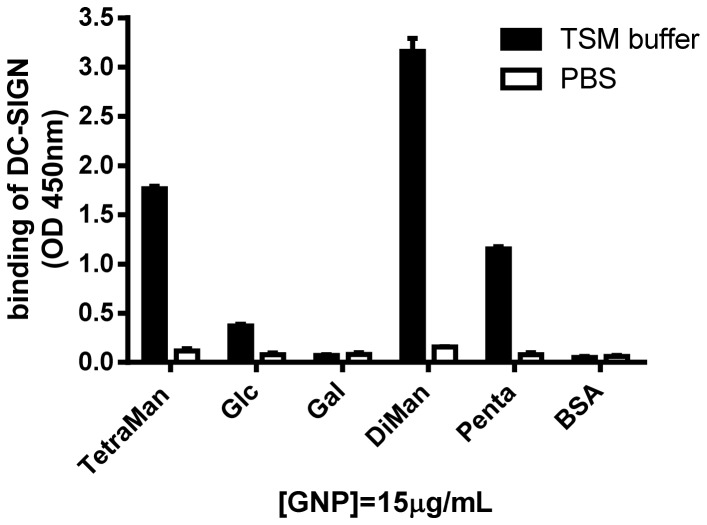
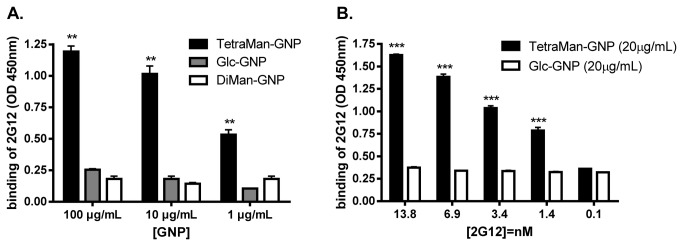
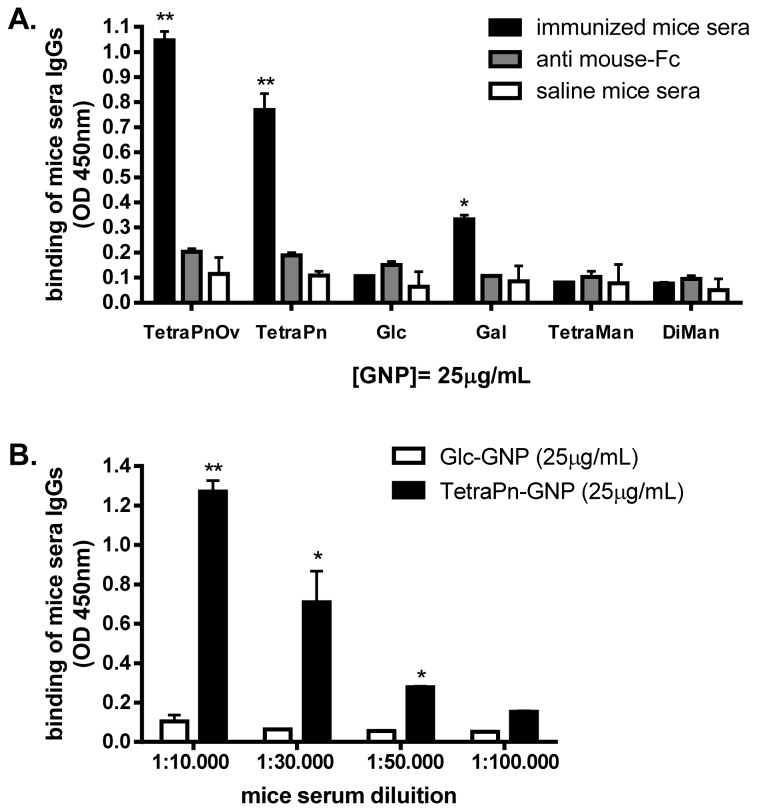
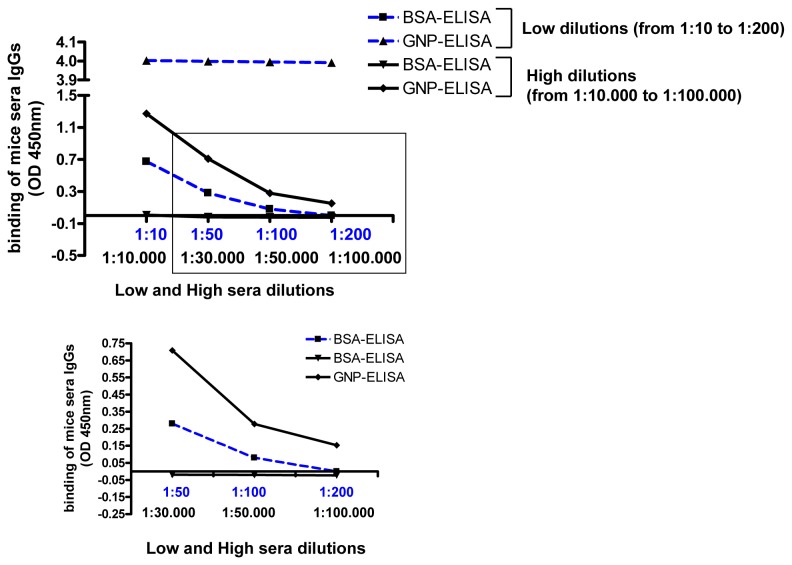
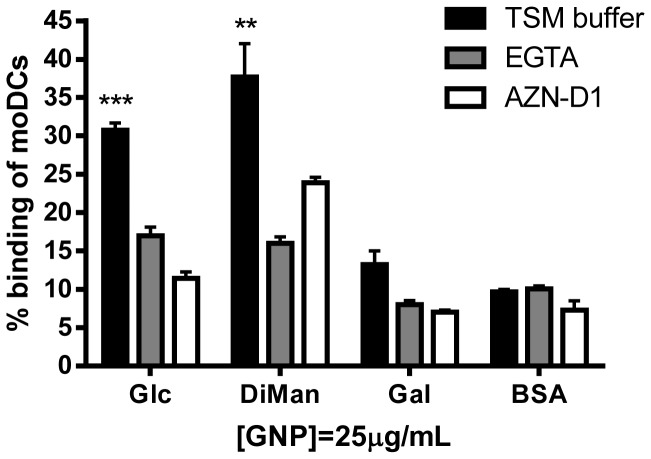
Improved detection of anti-carbohydrate antibodies is a need in clinical identification of biomarkers for cancer cells or pathogens. Here, we report a new ELISA approach for the detection of specific immunoglobulins (IgGs) against carbohydrates. Two nanometer gold glyconanoparticles bearing oligosaccharide epitopes of HIV or Streptococcus pneumoniae were used as antigens to coat ELISA-plates. A ~3,000-fold improved detection of specific IgGs in mice immunized against S. pneumoniae respect to the well known BSA-glycoconjugate ELISA was achieved. Moreover, these multivalent glyconanoparticles have been employed in solid phase assays to detect the carbohydrate-dependent binding of human dendritic cells and the lectin DC-SIGN. Multivalent glyconanoparticles in ELISA provide a versatile, easy and highly sensitive method to detect and quantify the binding of glycan to proteins and to facilitate the identification of biomarkers.
提高对碳水化合物抗体的检测能力是临床鉴定癌细胞或病原体生物标志物的一项需求。在这里,我们报告了一种新的 ELISA 方法,用于检测针对碳水化合物的特异性免疫球蛋白 (IgG)。两种纳米金糖纳米粒子带有 HIV 或肺炎链球菌的寡糖表位,被用作包被 ELISA 板的抗原。与众所周知的 BSA-糖缀合物 ELISA 相比,针对肺炎链球菌免疫的小鼠中特异性 IgG 的检测灵敏度提高了约 3000 倍。此外,这些多价糖纳米粒子已被用于固相测定,以检测人树突状细胞和凝集素 DC-SIGN 对碳水化合物的依赖性结合。ELISA 中的多价糖纳米粒子提供了一种通用、简单和高度敏感的方法,用于检测和定量聚糖与蛋白质的结合,并有助于鉴定生物标志物。