Department of Orthopedics, Tongji Hospital, Tongji Medical College, Huazhong University of Science and Technology, Wuhan, Hubei, P R China.
PLoS One. 2013 Aug 30;8(8):e72738. doi: 10.1371/journal.pone.0072738. eCollection 2013.
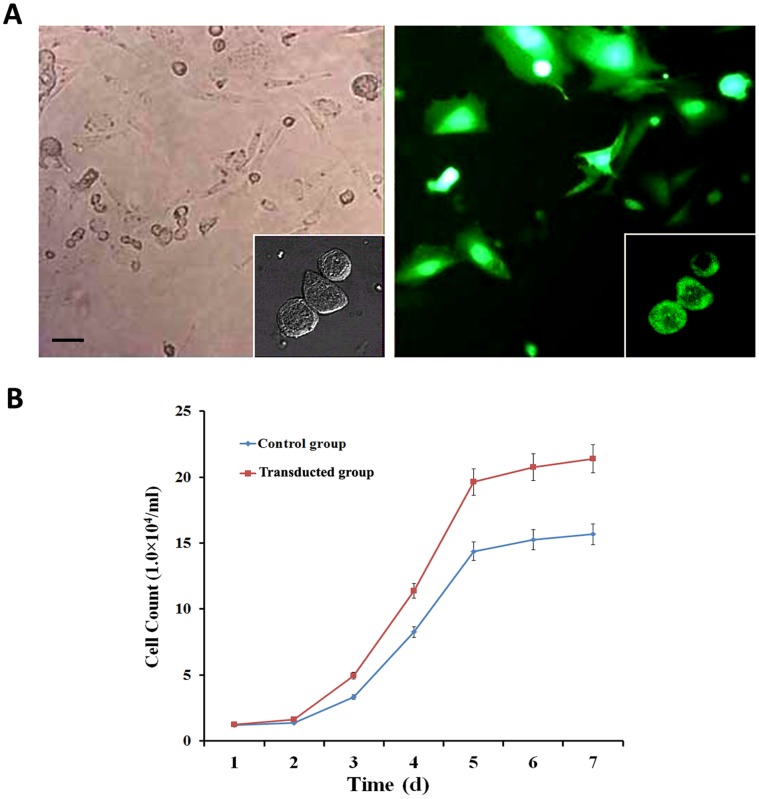
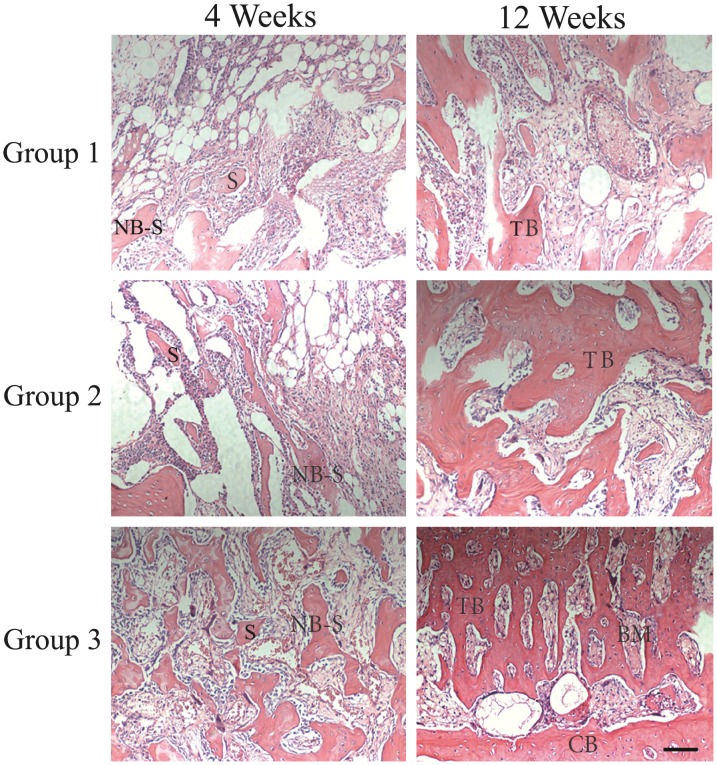
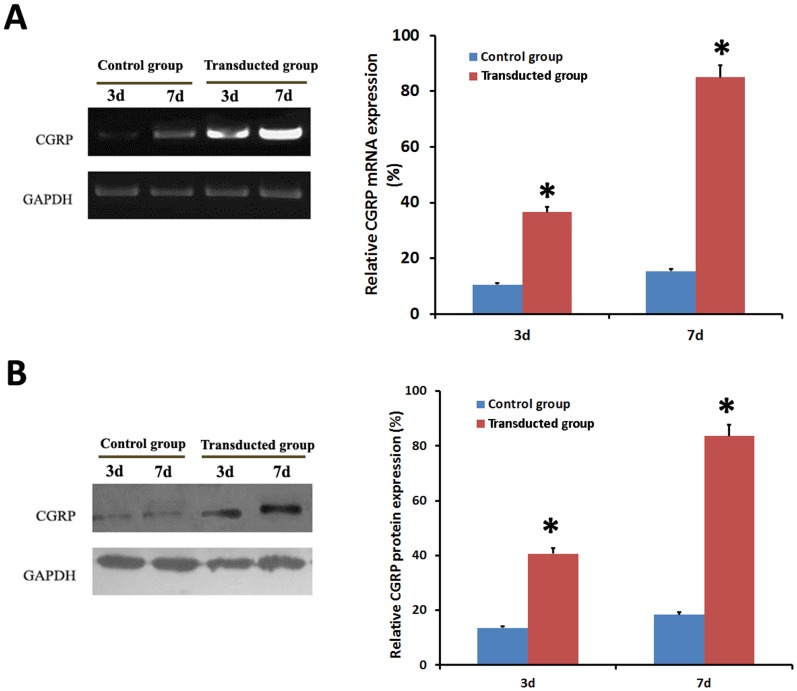
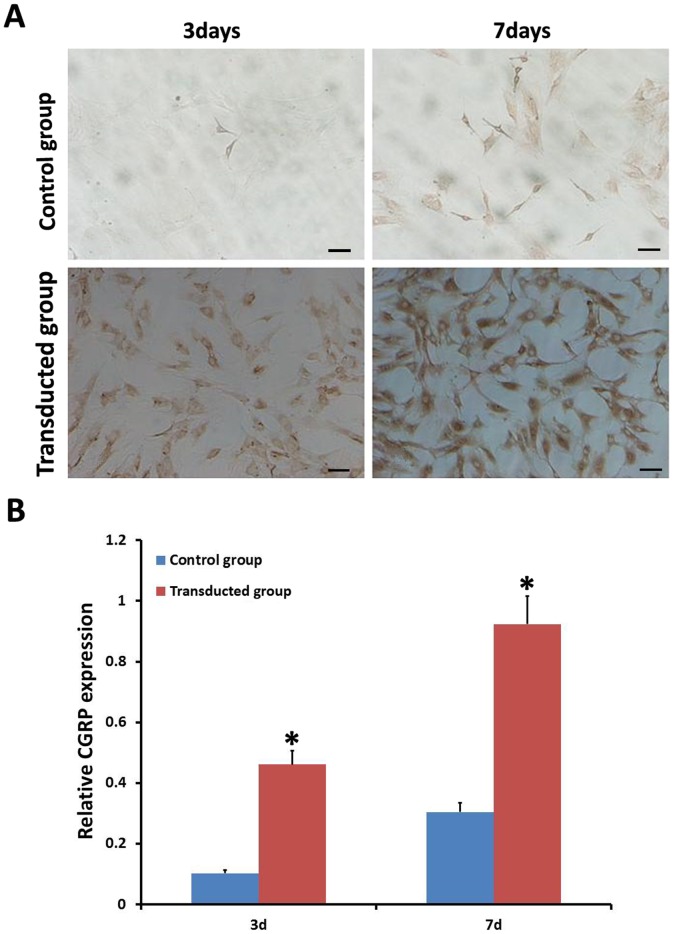
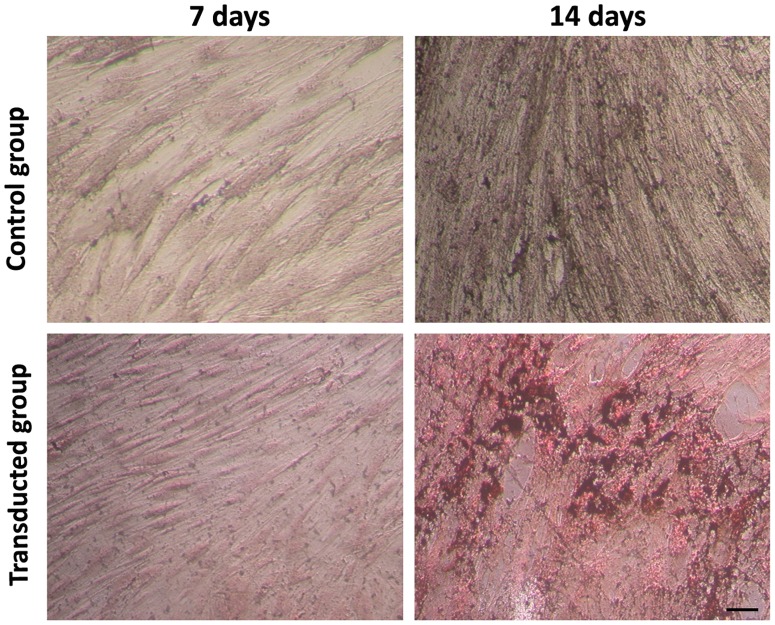
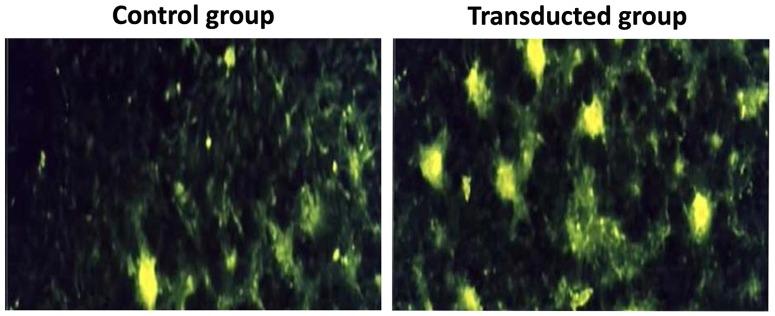
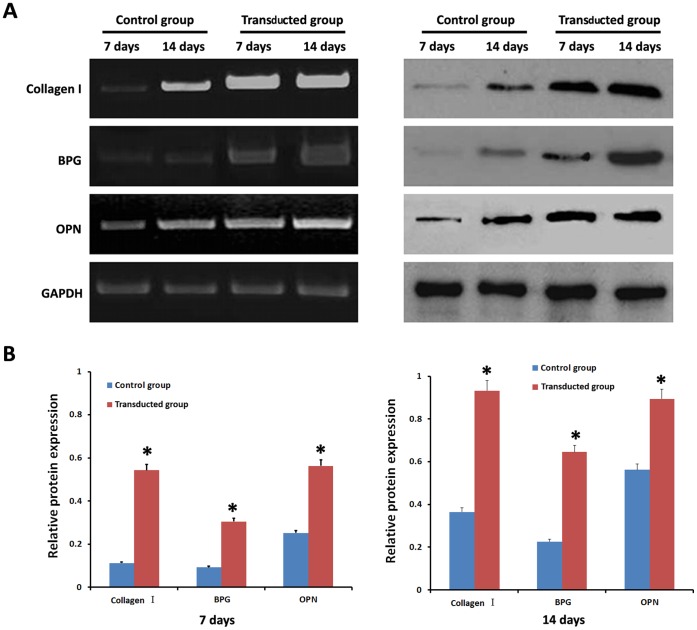
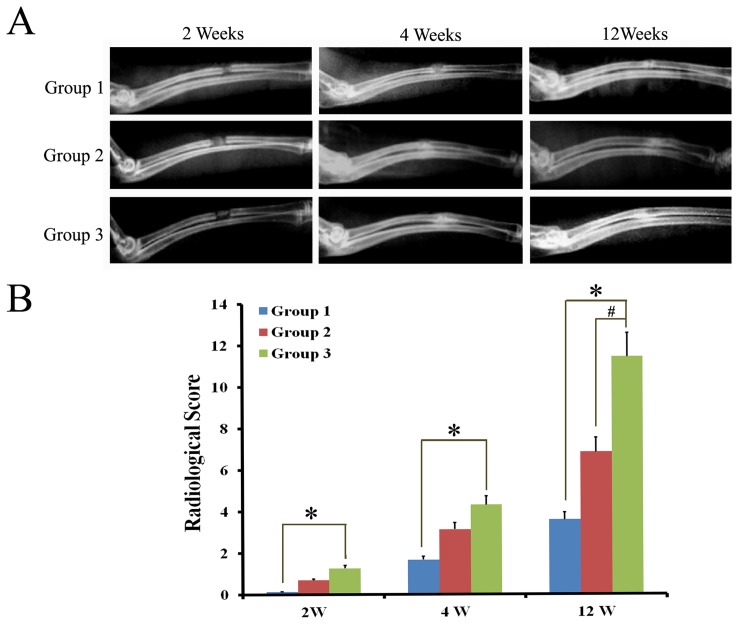
Calcitonin gene-related peptide (CGRP) promotes osteoblast recruitment and osteogenic activity. However, no evidence suggests that CGRP could affect the differentiation of stem cells toward osteoblasts. In this study, we genetically modified adipose-derived stem cells (ADSCs) by introducing the CGRP gene through adenoviral vector transduction and investigated on cellular proliferation and osteoblast differentiation in vitro and osteogenesis in vivo as well. For the in vitro analyses, rat ADSCs were transducted with adenoviral vectors containing the CGRP gene (Ad-CGRP) and were cultured in complete osteoblastic medium. The morphology, proliferative capacity, and formation of localized regions of mineralization in the cells were evaluated. The expression of alkaline phosphatase (ALP) and special markers of osteoblasts, such as Collagen I, Osteocalcin (BPG) and Osteopontin (OPN), were measured by cytochemistry, MMT, RT-PCR, and Western blot. For the in vivo analyses, the Ad-CGRP-ADSCs/Beta-tricalcium phosphate (β-TCP) constructs were implanted in rat radial bone defects for 12 weeks. Radiography and histomorphology evaluations were carried out on 4 weeks and 12 weeks. Our analyses indicated that heterogeneous spindle-shaped cells and localized regions of mineralization were formed in the CGRP-transduced ADSCs (the transduced group). A higher level of cellular proliferation, a high expression level of ALP on days 7 and 14 (p<0.05), and increased expression levels of Collagen I, BPG and OPN presented in transduced group (p<0.05). The efficiency of new bone formation was dramatically enhanced in vivo in Ad-CGRP-ADSCs/β-TCP group but not in β-TCP group and ADSCs/β-TCP group. Our results reveal that ADSCs transduced with an Ad-CGRP vector have stronger potential to differentiate into osteoblasts in vitro and are able to regenerate a promising new tissue engineering bone in vivo. Our findings suggest that CGRP-transduced ADSCs may serve as seed cells for bone tissue engineering and provide a potential way for treating bone defects.
降钙素基因相关肽 (CGRP) 可促进成骨细胞募集和成骨活性。然而,没有证据表明 CGRP 可以影响干细胞向成骨细胞的分化。在这项研究中,我们通过腺病毒载体转导将 CGRP 基因导入脂肪来源的干细胞 (ADSCs) 中,并在体外研究了细胞增殖和成骨分化以及体内成骨情况。对于体外分析,用含有 CGRP 基因的腺病毒载体 (Ad-CGRP) 转导大鼠 ADSCs 并在完全成骨培养基中培养。评估细胞的形态、增殖能力和局部矿化区域的形成。通过细胞化学、MMT、RT-PCR 和 Western blot 测量碱性磷酸酶 (ALP) 的表达和成骨细胞的特殊标志物,如 I 型胶原、骨钙素 (BPG) 和骨桥蛋白 (OPN)。对于体内分析,将 Ad-CGRP-ADSCs/β-磷酸三钙 (β-TCP) 构建体植入大鼠桡骨缺损中 12 周。在 4 周和 12 周时进行 X 射线和组织形态学评估。我们的分析表明,在 CGRP 转导的 ADSCs 中形成了异质的纺锤形细胞和局部矿化区域(转导组)。细胞增殖水平较高,第 7 天和第 14 天 ALP 表达水平较高(p<0.05),转导组 Collagen I、BPG 和 OPN 的表达水平增加(p<0.05)。在 Ad-CGRP-ADSCs/β-TCP 组中,新骨形成的效率在体内显著提高,但在β-TCP 组和 ADSCs/β-TCP 组中没有提高。我们的结果表明,用 Ad-CGRP 载体转导的 ADSCs 具有更强的体外向成骨细胞分化的潜力,并能够在体内再生有前途的新型组织工程骨。我们的发现表明,CGRP 转导的 ADSCs 可用作骨组织工程的种子细胞,并为治疗骨缺损提供了一种潜在方法。